
Grid-Forming 1MWh Solar Storage: Benefits & Drawbacks for Utility Grids
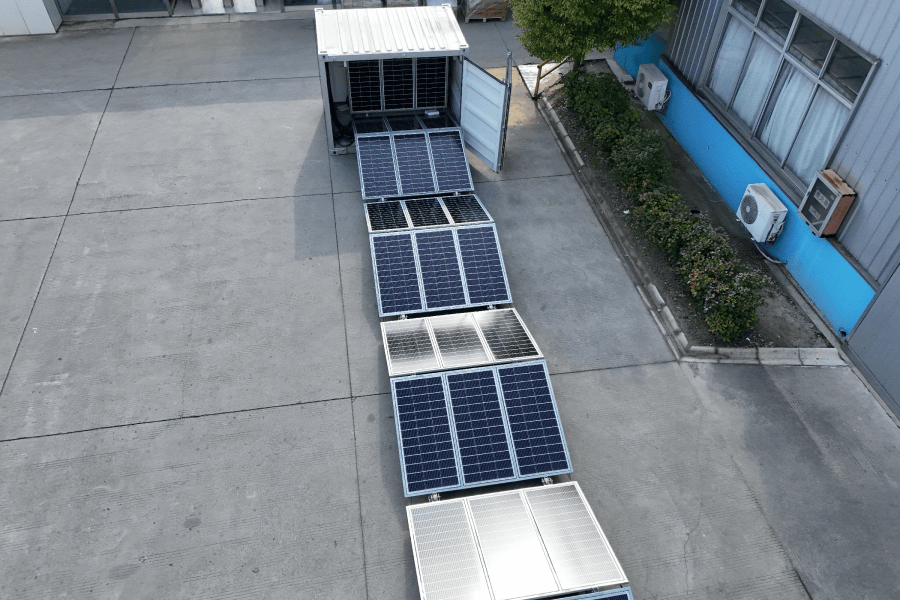
Let's Talk Grid-Forming 1MWh Solar Storage for the Public Grid
Hey there. If you're reading this, you're likely looking at integrating a significant chunk of solar energy into the public grid, and you've heard "grid-forming" is the new buzzword. I've been on-site from California to North Rhine-Westphalia, commissioning these systems, and honestly, the hype is real - but so are the complexities. Let's cut through the marketing and talk about what a 1MWh grid-forming solar storage system really means for your utility, its benefits, and the drawbacks you need to plan for.
Quick Navigation
- The Problem: More Solar, Less Stability
- The Reality: When the Grid Gets Fragile
- The Solution: Grid-Forming 1MWh Storage Enters the Chat
- The Real Benefits (Beyond the Brochure)
- The Honest Drawbacks (What They Don't Always Tell You)
- A Real-World Case: Learning from the Field
- The Expert's View: Making It Work for You
The Problem: More Solar, Less Stability
Here's the universal headache I see: utilities are pushing hard on solar PV. But as the IEA reports, solar and wind are set to contribute over 35% of global generation by 2025. That's fantastic, until a cloud passes over or the sun sets. The grid, built for steady power from spinning turbines, now has to deal with a flood of "inverter-based resources" that traditionally just follow the grid's lead (that's grid-following mode). They're passive. When grid voltage or frequency wobbles - and it will - these older systems might just trip offline, making the problem worse. You're left with a greener but much more fragile network.
The Reality: When the Grid Gets Fragile
This isn't theoretical. I was on a site in the Southwest US where a sudden drop in solar output from a large farm, combined with a line fault, caused a cascading frequency dip. The conventional battery storage on-site just watched it happen - its programming was to wait for a stable signal to follow. It was useless in that black-start scenario. The financial and reputational cost of even minutes of outage for a public utility is staggering. You're not just managing electrons; you're managing public trust and regulatory compliance. Every time reliability drops, the pushback against the renewable transition grows louder.
The Solution: Grid-Forming 1MWh Storage Enters the Chat
This is where a 1MWh grid-forming battery energy storage system (BESS) changes the game. Think of it not as a backup, but as an active grid citizen. Instead of waiting for a signal, it can create its own stable voltage and frequency waveform. It acts like a digital "virtual synchronous machine," providing the inertia and stability services that we're losing as we retire thermal plants. A 1MWh unit is a sweet spot - large enough to provide meaningful grid support (frequency regulation, voltage control, black-start capability) for a substation or a critical feeder, but modular enough to be deployed without a decade of permitting.

The Real Benefits (Beyond the Brochure)
Let's get specific on what you gain:
- True Grid Resilience: It can black-start a darkened section of the grid. I've seen it bring critical infrastructure back online in under 5 minutes after a fault. It also shores up frequency during sudden solar drops, acting as a shock absorber.
- Unlocking More Renewables: By providing stability services, it acts as a grid reinforcement tool. This means you can interconnect more solar onto a weak feeder without the cost of a full transmission upgrade. The NREL has shown how grid-forming inverters can increase renewable hosting capacity.
- Multi-Revenue Streams: This isn't just a cost center. Beyond energy arbitrage, it can be contracted for frequency response (like FFR or Reg D in the US), voltage support, and capacity services. The 1MWh size is perfect for stacking these value streams.
- Future-Proofing: With standards like IEEE 1547-2018 in the US and grid codes in Europe now mandating certain grid-support functions, a grid-forming BESS puts you ahead of the curve. Our systems at Highjoule are designed from the chip level up to meet and exceed UL 9540 and IEC 62933 standards, which is something I insist on for any public grid application.
The Honest Drawbacks (What They Don't Always Tell You)
Now, let's have that coffee-chat honesty. This tech isn't a magic bullet.
- Higher Upfront Cost & Complexity: The power conversion system (PCS) for grid-forming is more sophisticated. You're paying for advanced software and hardware that can perform real-time grid modeling. The engineering, protection coordination studies, and commissioning are more involved. It's not just a "plug-and-play" battery.
- Thermal Management is Critical: Operating in grid-forming mode, especially during high C-rate events (like discharging at 1.5C or 2C to arrest a frequency drop), generates significant heat. If the thermal management system (the cooling, the airflow design inside the container) isn't top-notch, you'll degrade the batteries faster. At Highjoule, we've learned that liquid cooling isn't a luxury here; it's a necessity for a 1MWh unit expected to perform under grid-stress conditions.
- Interoperability Hurdles: The system needs to talk seamlessly with existing grid SCADA, protection relays, and other assets. I've spent weeks on-site debugging communication protocols. It requires utilities to have or develop new internal expertise.
- LCOE Considerations: The Levelized Cost of Energy storage might look higher initially. The key is to calculate the total value - including deferred grid upgrades, earned ancillary service revenue, and avoided outage costs. The business case is there, but it requires a more holistic spreadsheet.
A Real-World Case: Learning from the Field
Let me give you a concrete example. We deployed a 1.2MWh grid-forming BESS for a municipal utility in California. Their challenge: a feeder with 80% solar penetration was experiencing daily voltage swells and occasional "protection blinding" issues during faults.
The Challenge: Integrate storage that could regulate voltage proactively and provide fault current during events, all while fitting into a tight substation footprint.
The Highjoule Solution: We provided a containerized system with grid-forming inverters, liquid-cooled battery racks for consistent performance in desert heat, and a control system pre-configured to the utility's DNP3 protocol. The crucial detail was tuning the inverter's virtual impedance settings on-site to match the specific feeder characteristics - something you can't do from a manual.
The Outcome: Voltage regulation is now within a tight band, the hosting capacity for rooftop solar on that feeder increased by an estimated 25%, and the system has successfully performed several simulated black-start drills. The utility's engineers now treat it as a core grid asset, not just a battery.

The Expert's View: Making It Work for You
So, is a 1MWh grid-forming solar storage system right for your public utility grid? Honestly, if you're facing stability issues or have ambitious renewable targets, it's becoming a necessity, not an option. The drawbacks are mainly about smart integration, not the technology itself.
My advice from the field:
- Start with a Pilot: A 1MWh system is an excellent pilot scale. It's big enough to prove value and small enough to manage risk.
- Demand Compliance & Safety: Don't compromise on UL/IEC certifications. For grid-forming, look for additional certifications specific to the inverter's grid-support functions. This is non-negotiable for public safety and insurance.
- Plan for the Whole Lifecycle: Factor in advanced thermal management (like our liquid-cooled designs) to protect your investment, and partner with a provider who offers local operational support. The worst thing is a "set-it-and-forget-it" mentality with a grid-forming asset.
- Think in Value, Not Just Cost: Work with your team or a partner like Highjoule to model the full value stack - reliability, revenue, and renewables integration.
The grid is changing from the bottom up. The question isn't really if you'll need grid-forming storage, but how you'll implement it to build a grid that's not just cleaner, but smarter and tougher. What's the one grid stability challenge keeping you up at night?
Tags: UL Standard Renewable Energy Integration LCOE Grid-forming BESS Grid Stability Public Utility Grid 1MWh Energy Storage
Author
James Zhang
20+ years agricultural energy storage engineer / Highjoule CTO