
Grid-Forming Solar Container Benefits and Drawbacks for Rural Electrification
Contents
- The Real Problem Isn't Just Power, It's a "Grid"
- Why This Hurts Your Project's Bottom Line
- Enter the Solution: The Grid-Forming Solar Container
- The Tangible Benefits (Beyond the Brochure)
- The Honest Drawbacks (What They Don't Always Tell You)
- Making It Work: An Expert's Field Guide
The Real Problem Isn't Just Power, It's a "Grid"
Let's be honest. When we talk about electrifying remote areas - whether it's a cluster of villages in the Philippines or an off-grid industrial site in Texas - the conversation usually starts with solar panels and batteries. "We'll generate power and store it," the thinking goes. But having spent over two decades on sites from the Australian Outback to remote parts of Europe, I can tell you the core challenge isn't just generation or storage. It's creating a stable, reliable, and forgiving mini-grid from scratch. That's the real engineering puzzle.
Traditional, grid-following inverters need an existing, stable grid signal to sync with. In a remote location, there is no such signal. You're building the heartbeat of the system yourself. This is where the concept of a grid-forming solar container - an all-in-one unit combining PV generation, battery storage, and crucially, grid-forming inverters - becomes more than just a product. It's a fundamental shift in approach.
Why This Hurts Your Project's Bottom Line
I've seen this firsthand. A project uses standard, grid-following equipment for a microgrid. The moment a large load kicks in (say, a water pump or machinery), the voltage and frequency can dip or swing wildly. This causes sensitive equipment to trip, lights to flicker, and frankly, erodes user trust in the entire system. The Levelized Cost of Energy (LCOE) isn't just about capex; it's about reliability. If your power quality is poor, the economic activity you're trying to enable - the whole reason for the project - stalls.
According to the National Renewable Energy Laboratory (NREL), maintaining frequency stability is the single biggest technical hurdle for high-penetration renewable microgrids. It's not a niche concern; it's the barrier between a pilot project and a long-term, bankable asset.
The High Cost of Instability
- Equipment Damage: Unstable frequency and voltage shorten the lifespan of connected loads, from refrigeration units to manufacturing tools.
- Lost Productivity: Downtime and restarts in commercial or industrial settings directly hit revenue.
- O&M Complexity: Troubleshooting a unstable microgrid requires highly skilled personnel, which is scarce and expensive in remote locations.
Enter the Solution: The Grid-Forming Solar Container
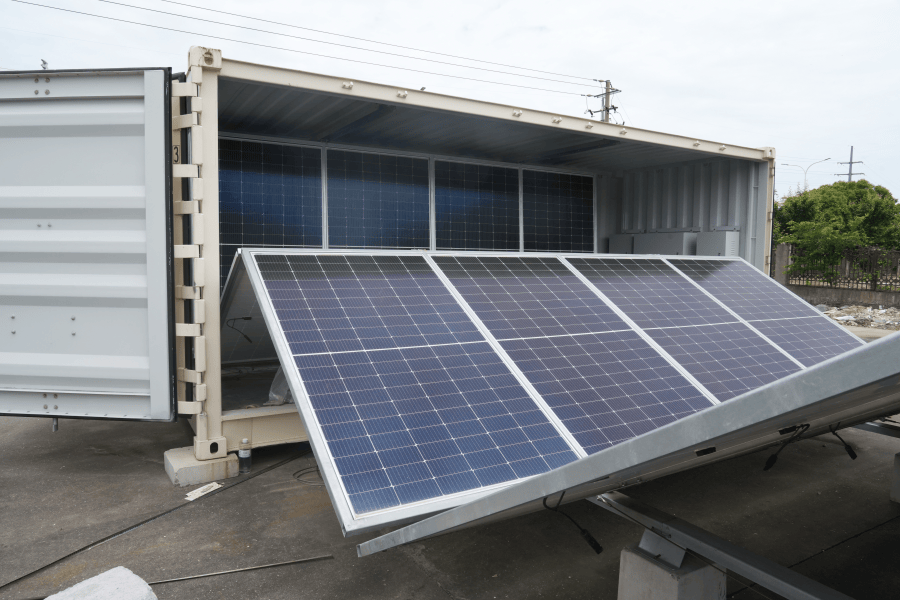
So, what's the shift? Instead of treating the battery inverter and solar inverter as separate components hoping for a grid, a grid-forming container becomes the grid. The power electronics inside create a stable voltage and frequency waveform that other sources and loads can follow. It's the maestro of the energy orchestra.
Think of it like this: a traditional system waits for a drumbeat to follow. A grid-forming system is the drumbeat. This capability is now being packaged into robust, containerized solutions - pre-assembled, pre-tested, and shipped ready to provide "plug-and-play" grid services. This is a game-changer for rapid, standardized deployment.

The Tangible Benefits (Beyond the Brochure)
Based on deployments I've supervised, the benefits are profound, especially when you look at total project lifecycle.
- Instant Grid Creation: The most obvious one. It provides black-start capability and establishes a stable grid for other distributed energy resources (DERs) to connect to. Honestly, it turns months of complex system integration into a more manageable process.
- Superior Resilience: These inverters can handle large, sudden load changes - like a heavy motor starting - without collapsing. They use advanced algorithms to "stiffen" the grid electronically. I've seen a container seamlessly absorb the start-up surge of a 50HP pump where a traditional system would have faltered.
- Simplified Integration: It allows for easier mixing of different generation sources (solar, maybe a backup diesel genset) because they all follow the signal from the BESS. This reduces interconnection studies and headaches.
- Reduced Long-Term LCOE: While capex might be higher, the reduced downtime, lower maintenance costs, and extended equipment life for connected loads significantly lower the overall cost of energy over 10-15 years. It makes the project more financeable.
The Honest Drawbacks (What They Don't Always Tell You)
No solution is perfect. Being upfront about challenges is what separates a sales pitch from expert advice.
- Higher Upfront Cost: The power electronics and control software are more advanced. You're paying for that intelligence and capability upfront. For a purely cost-minimized, basic lighting project, it might be overkill.
- Complexity in Standards & Compliance: In markets like the US and EU, you're not just dealing with product standards like UL 9540 for the BESS. You're now a grid operator. This can trigger additional interconnection, safety, and performance standards (like IEEE 1547 in the US) that add to design and approval timelines. You need a provider, like Highjoule, that designs to these standards from day one.
- Thermal Management is Critical: Packing high-power, grid-forming inverters and batteries into a container demands a top-tier thermal management system. A poor design leads to derating (reduced output) in heat and shortened component life. We've learned that overspecifying the HVAC isn't an expense; it's an insurance policy.
- Dependence on Skilled Local Partners: While the container itself is "plug-and-play," understanding its grid-forming functions for maintenance and troubleshooting requires a different skillset than a standard solar installer. Investing in local partner training is non-negotiable for long-term success.
Making It Work: An Expert's Field Guide
So, how do you maximize the benefits and mitigate the drawbacks? It comes down to smart specification and partnership.
1. Demand True Grid-Forming, Not Just a Label: Some inverters claim "grid-forming" but only work in a limited mode. Ask for detailed specs on voltage and frequency control, fault ride-through capability, and black-start sequence. Look for compliance with the latest grid codes.
2. Design for the C-Rate & Duty Cycle: The battery's C-rate (charge/discharge speed) must match the grid-forming duty. You need bursts of power for grid stabilization, not just slow discharge. A system designed for 0.5C might be cheaper but will fail under real microgrid conditions. Specify for the real-world load profile, not just nameplate capacity.
3. Case in Point: The German Agri-Energy Park. We deployed a Highjoule grid-forming container for an off-grid agricultural research park in Northern Germany. The challenge was powering sensitive climate-control greenhouses and lab equipment with only solar and wind. The grid-forming BESS created a stable grid that was more reliable than the local utility, with a power quality that met strict IEC 61000 standards. The key was co-designing the container's control logic with the site's energy manager from the start.

4. Plan for the Full Lifecycle: The lowest LCOE comes from considering 20 years of operation. This means choosing a container with:
| Modular Design | For easy capacity expansion or component replacement. |
| Remote Monitoring | So experts like our team can support local technicians. |
| Proven Safety Architecture | Passive fire suppression, gas venting, and full UL/IEC certification aren't optional. |
The potential of grid-forming solar containers for rural and remote electrification is immense. It's a technology that finally matches the ambition of creating truly robust, renewable-powered grids anywhere. The question for a project developer isn't just "can we power this?", but "what kind of grid do we want to build?" Getting the answer right from the start saves a fortune - and a lot of headaches - down the line. What's the most demanding load profile you're trying to support in your next off-grid project?
Tags: UL Standard BESS Energy Storage Solar Container Rural Electrification Grid-forming
Author
James Zhang
20+ years agricultural energy storage engineer / Highjoule CTO