
High-voltage DC 5MWh BESS for Rural Electrification: Lessons for Global Grids
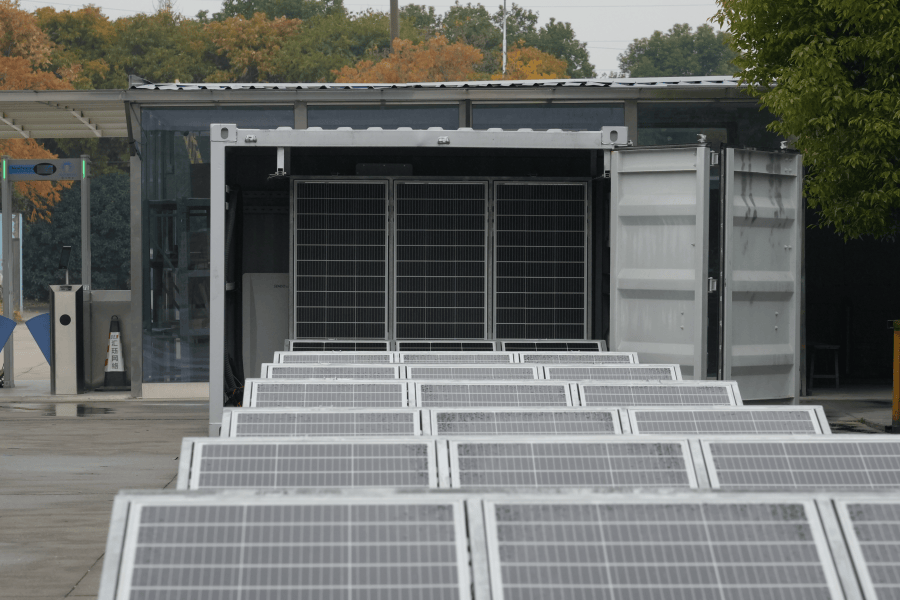
Table of Contents
- The Universal Rural Grid Challenge
- A Real-World Lab: The Philippines Case Study
- Why High-voltage DC Shines in Tough Environments
- The Flip Side: Honest Drawbacks & Mitigations
- From the Field: Thermal, C-rate, and LCOE Insights
- What This Means for Your US or European Project
The Universal Rural Grid Challenge
Let's be honest. Whether you're looking at an island in the Philippines or a remote community in the American Southwest, the core challenges of rural electrification are painfully similar. You've got long, inefficient distribution lines, high transmission losses, and often, a grid that's just not robust enough to handle new loads or integrate renewables smoothly. I've seen this firsthand on site. The traditional approach - throwing more copper at the problem, building new substations - is astronomically expensive and takes years.
And here's the agitation: The energy transition isn't waiting. According to the International Energy Agency (IEA), achieving global energy and climate goals means connecting hundreds of millions more people to reliable, clean power, mostly in underserved areas. The old playbook simply doesn't scale.
A Real-World Lab: The Philippines Case Study
This is where projects like the high-voltage DC 5MWh utility-scale Battery Energy Storage Systems (BESS) being deployed in the Philippines become a fascinating, real-world laboratory for folks like us in the US and Europe. The scenario is a classic stress test: geographically dispersed islands, frequent typhoons, high ambient temperatures, and a pressing need to firm up solar PV output. The solution they're piloting? Containerized, high-voltage DC-coupled BESS units.

One project I've followed closely involves a 5MWh system supporting a solar farm on a Philippine island. The challenge was twofold: reduce costly diesel generation and provide instant grid stability to prevent blackouts during sudden load changes or cloud cover. The HV DC architecture was chosen specifically to minimize AC/DC conversion losses from the solar arrays, a crucial efficiency gain when every kilowatt-hour counts.
Why High-voltage DC Shines in Tough Environments
So, what are the clear benefits emerging from these deployments?
- Higher Efficiency, Lower Losses: By keeping the solar PV and battery storage on a common DC bus, you skip multiple power conversion steps. Honestly, in a 5MWh system, this can translate to 2-3% higher round-trip efficiency compared to traditional AC-coupled systems. Over 20 years, that's massive.
- Reduced Balance-of-System (BOS) Costs: Fewer inverters and transformers mean a simpler, more compact footprint. For remote sites where every shipped component costs a fortune, this is a game-changer for the overall LCOE (Levelized Cost of Energy).
- Inherently Faster Response: DC-coupled systems can react to grid frequency dips in milliseconds. In the Philippine case, this inertia-less response is critical for islanded grids that lack the rotational inertia of large coal or gas plants.
- Scalability for Microgrids: The modular, containerized approach means you can start with a 5MWh unit and add more as demand grows, a perfect fit for developing rural economies.
The Flip Side: Honest Drawbacks & Mitigations
Now, let's have that coffee-chat realism. It's not all sunshine. The drawbacks are real, but understanding them is how we engineer better solutions.
- Complexity in Protection & Safety: High-voltage DC fault currents are harder to interrupt than AC. You need specialized breakers and protection schemes that meet rigorous safety standards like UL 4128 for DC systems. This was a key learning curve for early adopters.
- Supply Chain & Expertise: Finding technicians in remote areas trained on HV DC systems is tough. The mitigation? Design for remote monitoring and diagnostics. At Highjoule, for instance, we build systems with redundant sensor networks and cloud-based dashboards so our team in Houston or Berlin can support local crews.
- Thermal Management Stress: Packing high-power density into a container in a 35C tropical climate pushes cooling systems to the limit. A poorly designed thermal management system will degrade battery life faster than anything else.
From the Field: Thermal, C-rate, and LCOE Insights
Let me break down a few technical points in plain English. When we talk about C-rate, we're really talking about the "speed" of the battery. A 1C rate means a 5MWh battery can discharge its full capacity over one hour. For grid stability, you often need a high C-rate (like 1C or 2C) for short, powerful bursts. But higher C-rates generate more heat. That's why thermal management isn't just about air conditioning; it's about precise cell-level cooling to prevent hot spots that cause premature aging.

All of this feeds directly into the LCOE. A cheaper battery that degrades in 5 years because it overheats is far more expensive than a properly cooled, UL 9540-certified system that lasts 15+ years. The Philippine projects reinforce this: upfront cost optimization can backfire brutally in harsh environments.
What This Means for Your US or European Project
You might be thinking, "That's interesting, but my project is in Texas or Germany." Here's the connection. The lessons from the Philippines are accelerating technology maturity for all of us. The ruggedization, the high-efficiency DC architectures, the extreme focus on safety and remote ops - these are exactly what's needed for cost-effective grid-edge storage in California, for resilient microgrids in Europe, or for smoothing wind output in the North Sea.
The standards are aligning too. A HV DC BESS built for tropical storms must also meet UL, IEC, and IEEE standards for the US and EU markets. The core engineering principles - safety by design, lifecycle cost optimization, and grid code compliance - are universal. At Highjoule, when we develop a system for a remote microgrid or a European industrial park, we're drawing from the same deep well of field-proven experience: designing for real-world chaos, not just a spec sheet.
So, the next time you evaluate a BESS for a challenging site, ask your vendor: How does your thermal management handle a 40C ambient day after day? Can your protection system handle a DC fault as safely as an AC one? The answers will tell you if they've learned the lessons that projects in places like the Philippines are teaching us all.
What's the biggest environmental challenge your next storage project faces?
Tags: UL Standard BESS LCOE Rural Electrification Utility-Scale Energy Storage Grid Stability High-voltage DC
Author
James Zhang
20+ years agricultural energy storage engineer / Highjoule CTO