
Benefits and Drawbacks of High-voltage DC Off-grid Solar Generator for Public Utility Grids
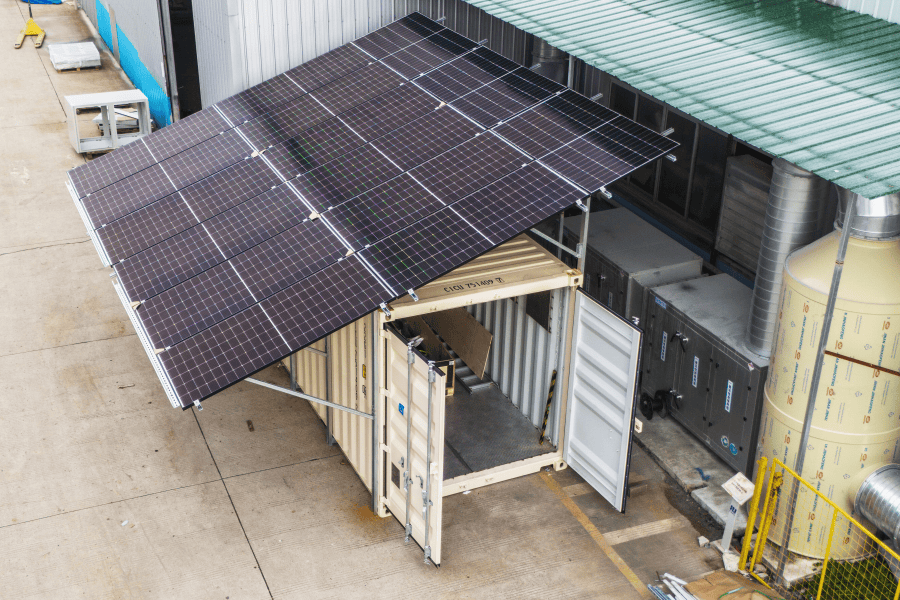
Table of Contents
- The Grid's New Challenge: More Renewables, Less Stability
- Why High-voltage DC Off-grid Solar Generators Are Getting a Second Look
- The Benefits Breakdown: It's More Than Just Voltage
- The Real-World Drawbacks: What We Don't Talk About Enough
- A Case in Point: Lessons from a German Grid-Stabilization Project
- Making the Right Call: Is High-voltage DC Off-grid Right for Your Grid?
The Grid's New Challenge: More Renewables, Less Stability
Let's be honest. If you're managing utility-scale assets in North America or Europe right now, you're living a paradox. You're under immense pressure to integrate more solar and wind, which is fantastic. But every new intermittent megawatt you connect adds a layer of complexity to the one thing that must be rock-solid: grid stability. I've seen this firsthand on site - a sudden cloud cover over a large solar farm, or a drop in wind, and suddenly you're scrambling. The traditional answer has been spinning reserves (think: gas peaker plants), but that's expensive, carbon-intensive, and frankly, a bit of a step backwards.
The data backs this up. According to the International Energy Agency (IEA), achieving net-zero goals will require a tenfold increase in global energy storage capacity by 2030, with grids being a primary driver. The question isn't if we need massive storage, but what form delivers reliability without breaking the bank or introducing new risks.
Why High-voltage DC Off-grid Solar Generators Are Getting a Second Look
This is where the conversation around High-voltage DC Off-grid Solar Generators gets interesting. We're not talking about a small rooftop system. We're talking about a self-contained, utility-scale asset. Picture a large solar array directly coupled with a massive battery bank, operating on a DC bus at 1000V, 1500V, or even higher, and designed to island itself from the main grid. It's a concept that's been around, but recent tech advances are making people in boardrooms take a serious, hard look.
The Benefits Breakdown: It's More Than Just Voltage
So, what's the real appeal? From an engineering and financial perspective, the benefits are substantial:
- Higher Efficiency, Lower Losses: This is the big one. By keeping everything on a high-voltage DC bus - from the PV strings to the battery racks - you slash conversion losses. Every time you convert from DC to AC or step voltage up/down, you lose energy as heat. Minimizing these conversions can boost round-trip efficiency by several percentage points. Over a 20-year asset life, that's a mountain of saved megawatt-hours and a significantly improved Levelized Cost of Storage (LCOS).
- Black Start & Grid-Forming Capability: This is a superpower for grid operators. After an outage, these systems can act as a "seed" to restart sections of the grid without relying on distant power plants. Their inverters are designed to create a stable voltage and frequency waveform from scratch - a true grid-forming resource. Honestly, in areas prone to wildfires or extreme weather, this isn't just a feature; it's a critical resilience asset.
- Simplified Design & Potential Cost Savings: Fewer massive central inverters, fewer transformers, less medium-voltage AC switchgear. The balance-of-plant can be simpler. While the batteries themselves are still a major cost, the reduced "other stuff" (BOS) can improve the project's overall economics.
- Direct Integration with Modern BESS: Today's utility-scale battery containers from leading providers are inherently DC systems. At Highjoule, our containerized BESS units are designed around high-voltage DC architecture. Pairing them directly with a DC solar array feels?- natural. It streamlines integration and allows for more granular control over the entire energy block.

The Real-World Drawbacks: What We Don't Talk About Enough
Now, over coffee, I have to give you the full picture. These aren't plug-and-play solutions, and the drawbacks are why they haven't taken over the world yet.
- Component Availability & Ecosystem Maturity: The ecosystem for 1500V+ DC solar components is growing, but it's not as vast as the AC world. Finding DC combiners, disconnects, and circuit breakers rated for those voltages and fault currents can be trickier and more expensive. You need partners with deep supply chain knowledge.
- Arc Flash & Safety Protocols: A high-voltage DC arc is a different beast than an AC arc - it doesn't naturally cross zero, so it can sustain itself and is incredibly hazardous. Safety designs, from arc-fault detection circuits to specialized PPE and maintenance procedures, are non-negotiable and must be engineered to the highest standards, like UL 1741 and IEC 62933.
- Limited Market for DC Power: It's an off-grid generator, but what are you powering? The entire world runs on AC. If your primary goal is to feed the traditional AC grid, you still need an inverter. The "off-grid" benefit is situational - it's golden for microgrids or black start, but less relevant if you're just doing peak shaving.
- Operational Complexity: Managing the state of charge (SOC) of a massive battery bank that's also directly coupled to a highly variable PV source requires sophisticated energy management systems (EMS). You're balancing battery health (avoiding extreme C-rates), PV curtailment, and grid demands all at once. The thermal management system also has to be top-notch, as inefficiencies concentrate in a more compact power conversion footprint.
A Case in Point: Lessons from a German Grid-Stabilization Project
Let me ground this with a real example. A few years back, we worked with a municipal utility in North Rhine-Westphalia, Germany. They had grid congestion issues due to wind curtailment and needed local inertia and fast frequency response. They piloted a high-voltage DC off-grid system co-located with an existing wind farm.
The Challenge: Provide sub-100ms frequency response and black-start capability for a critical industrial load, all while navigating the strict VDE-AR-N 4110 grid code.
The Solution & The Reality: We deployed a 4 MWh Highjoule BESS (1500V DC architecture) with a dedicated, DC-coupled solar canopy. The efficiency gains were real - they measured a 3.8% improvement in round-trip efficiency compared to a similarly rated AC-coupled design. The black-start tests were a resounding success.
But here's the insight: the biggest hurdles weren't technical; they were regulatory and operational. Getting certification for the DC protection scheme took longer. Training the utility's maintenance crew on the new safety protocols was a major, but crucial, undertaking. The project was a success because it was treated as a holistic system - tech, safety, and people - from day one.
Making the Right Call: Is High-voltage DC Off-grid Right for Your Grid?
So, where does this leave you? The Benefits and Drawbacks of High-voltage DC Off-grid Solar Generator for Public Utility Grids present a clear trade-off: superior efficiency and resilience potential versus higher upfront complexity and a need for specialized expertise.
My advice? Consider it strongly if your primary drivers are:
1) Extreme efficiency targets that directly impact your LCOS model.
2) Grid resilience and black-start capability are mandated or critically valuable.
3) You're building a new, self-contained microgrid from the ground up.
If your project is a straightforward, grid-following storage asset for energy arbitrage, a traditional AC-coupled or lower-voltage DC system might be the more straightforward path.
Ultimately, the technology is ready. The question is: is your project's ecosystem - from your team's expertise to your regulatory landscape - ready for it? That's the calculation every forward-thinking grid operator needs to make today.
Tags: BESS LCOE UL Standards IEC Standards Renewable Energy US Market Europe Market Grid Stability High-voltage DC Off-grid Solar Generator Utility Grid
Author
James Zhang
20+ years agricultural energy storage engineer / Highjoule CTO