
Environmental Impact of Black Start Mobile Power for Construction Sites
Contents
- The Diesel Habit on Site: A Problem We All See
- Beyond Fuel Cost: The Real Environmental Agitation
- The Mobile Power Solution: More Than Just Backup
- A Real-World Case: A German Site Goes Quiet
- Expert Insight: What Makes a Good Mobile BESS?
- Making the Shift: What to Look For
The Diesel Habit on Site: A Problem We All See
Honestly, if you've been on a construction site in the last 20 years, you know the soundtrack. It's not just the beeping of trucks; it's the constant, low-frequency rumble of diesel generators. They're the default, the reliable workhorse. But here's the thing I've seen firsthand on site after site, from Texas to North Rhine-Westphalia: we're using a sledgehammer to crack a nut. We fire up a 500kW diesel genset to power a 50kW office trailer and a few tools because "it's what we have." The fuel trucks roll in, the emissions pour out, and the noise becomes a permanent background. It works, but the environmental and social cost is mounting, and frankly, the economics are starting to look shaky.
Beyond Fuel Cost: The Real Environmental Agitation
Let's move past just talking about fuel prices. The real agitation comes from the multiplier effect of this habit. The International Energy Agency (IEA) has highlighted that diesel generators are a significant source of local air pollutants like NOx and particulate matter C the stuff that affects the health of your crew and the surrounding community. On a remote site, you might think it doesn't matter, but regulations are tightening everywhere.
Then there's the carbon footprint. It's not just about Scope 1 emissions from burning the diesel. Think about the logistics: the fuel extraction, refining, and transportation all add layers of indirect impact before it even reaches your tank. When a project manager asks me about sustainability goals, running diesel 24/7 for temporary power is a massive hole in that plan. And let's not forget noise pollution. In urban or semi-urban sites, that generator rumble is a primary source of complaints, leading to restricted operating hours and project delays. The environmental impact isn't a single issue; it's a tangled web of air quality, carbon, noise, and community relations.
The Mobile Power Solution: More Than Just Backup
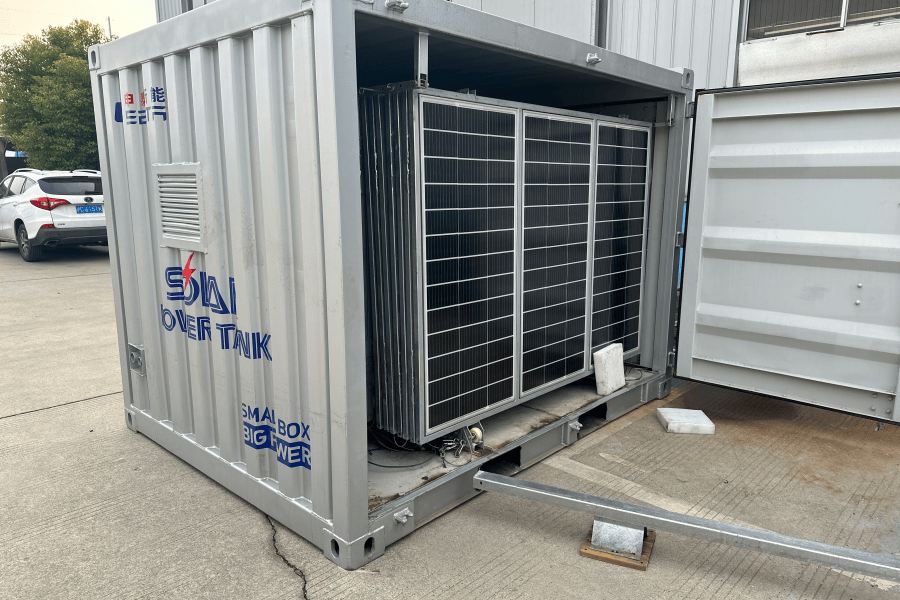
This is where the conversation gets interesting. We're not just talking about swapping a diesel generator for a big, static battery. The solution is a Black Start Capable Mobile Power Container. The key words here are "Black Start" and "Mobile."
Mobile means it's on a trailer, just like the generators you're used to. It can be deployed in hours, moved between sites as needed, and doesn't require permanent foundations. But the "Black Start" capability is the game-changer for environmental impact. It means the unit can start itself and a site's critical loads from a dead stop, without needing an external grid connection or C you guessed it C a diesel generator to kickstart it. This turns it from a supplemental device into the primary power source. You charge it overnight from the grid (ideally when green energy is plentiful) or pair it with temporary solar panels on site. During the day, it silently powers your operations. The diesel genset? It becomes a rarely used backup, sitting silent 95% of the time. That's where the dramatic environmental wins happen: massive displacement of diesel burn.
A Real-World Case: A German Site Goes Quiet
I remember a project for a utility company in Germany, upgrading a substation near a residential area. The challenge was brutal: provide continuous, reliable power for critical testing equipment and site offices for 8 weeks, but adhere to strict local noise ordinances that prohibited diesel generators after 6 PM and on weekends.
The old way would have been a nightmare of delays. Our solution was a 40-foot Highjoule mobile BESS container with black start capability. We positioned it once, connected it to a low-voltage grid connection for overnight charging, and that was it. During the day, it powered everything silently. The black start feature was crucial because during certain isolation tests, we had to simulate a complete power loss; our unit seamlessly restored power to the control cabins within milliseconds. The client's feedback was telling: zero noise complaints from the neighborhood, zero diesel deliveries, and they completed the work on schedule. The carbon savings were a bonus they could directly report in their sustainability dashboard.

Expert Insight: What Makes a Good Mobile BESS?
From a technical standpoint, not all mobile containers are equal for this job. When we design these for Highjoule, we focus on three things beyond the basic spec.
First is the C-rate. Think of this as the "power muscle" of the battery. A high C-rate means the system can deliver a large burst of power quickly C essential for starting up big motors or tools on a construction site, mimicking that instant-on capability of a diesel gen. A low C-rate battery might have the energy capacity, but it can't deliver it fast enough, forcing you to oversize the system.
Second, and non-negotiable, is Thermal Management. A container sitting in the Texas sun or a Canadian winter is under huge stress. Passive cooling isn't enough. We use a liquid-cooled system that actively manages each battery cell's temperature. This does two things: it extends the battery's life dramatically (improving the overall Levelized Cost of Energy - LCOE), and it ensures safety and performance reliability day in, day out. A thermally unstable system is a liability.
Third is compliance. For the US market, UL 9540 certification for the energy storage system and UL 1973 for the batteries are your baseline for safety. In Europe, you're looking at IEC 62619. A mobile unit isn't a toy; it's a piece of serious electrical equipment that must be built to these rigorous standards. Honestly, I wouldn't deploy anything less on my sites.
Making the Shift: What to Look For
So, if you're considering the environmental impact of your temporary site power, the shift is clear. Look for a provider that offers a true, integrated solution, not just a box of batteries on a trailer. It's about the engineering behind it.
At Highjoule, our mobile power containers are built with that on-site reality in mind. The black start controller, the high C-rate cells, the military-grade thermal management C they're all designed to let you confidently turn off the diesel. We handle the local grid connection logistics, the commissioning, and we have local service teams for maintenance because, let's be real, if something goes wrong on a tight schedule, you need someone there fast.
The question isn't really about technology anymore; it's proven. The question is, when will your next project be the one that runs cleaner, quieter, and smarter? What's the first piece of equipment on your site that you'd like to hear less of?
Tags: UL Standard BESS LCOE Black Start Environmental Impact Mobile Power Construction Site
Author
James Zhang
20+ years agricultural energy storage engineer / Highjoule CTO