
LFP Pre-Integrated PV Container Benefits & Drawbacks for Rural Electrification
Contents
- The Rural Power Challenge: It's Not Just a Philippines Story
- The All-in-One Box Solution: Why Everyone's Looking at Pre-Integrated Containers
- LFP Chemistry: Why It Wins for Remote, Hot, and Sensitive Sites
- The Real Benefits (Beyond the Brochure)
- The Drawbacks: Honest Talk from the Field
- Making It Work: Expert Insights for Your Project
The Rural Power Challenge: It's Not Just a Philippines Story
Let's be honest. When we talk about bringing reliable power to remote villages in the Philippines or anywhere else in Southeast Asia, the core challenges sound eerily familiar to project developers in Texas, California, or off-grid communities in Europe. I've seen this firsthand on site, from island grids in Greece to remote industrial sites in the US Midwest. The problems are universal: high cost of grid extension, reliance on expensive and polluting diesel gensets, and the logistical nightmare of deploying complex technology in places with limited skilled labor and harsh environments.
According to the International Energy Agency (IEA), nearly 760 million people globally still lacked electricity access in 2022, with a significant concentration in rural areas. The economic and social cost of this is staggering. The traditional model - shipping separate containers for batteries, inverters, transformers, and climate control, then trying to wire it all up on a dusty, humid site - is a recipe for delays, cost overruns, and long-term reliability headaches.
The All-in-One Box Solution: Why Everyone's Looking at Pre-Integrated Containers
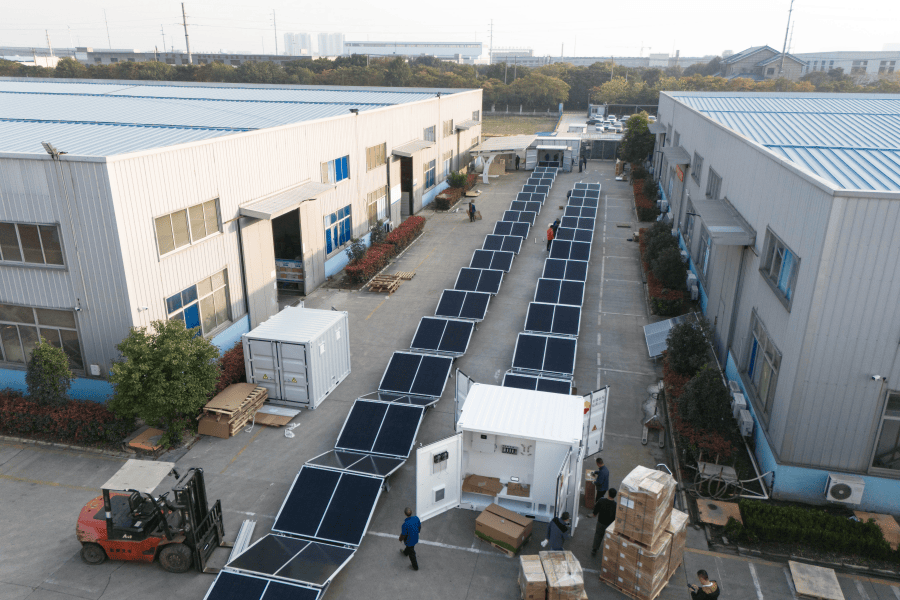
This is where the pre-integrated PV container concept shines, and it's gaining massive traction. Think of it as a power plant in a box. All critical components - LFP battery racks, bi-directional inverters, battery management system (BMS), fire suppression, and thermal management - are factory-assembled, wired, and tested in a single, shipping-container-sized unit. For a site in the Philippine islands, or a remote microgrid in Arizona, this is a game-changer. The deployment time can be slashed from months to weeks.
Honestly, the appeal for rural electrification is obvious. But the underlying technology and design philosophy, especially the choice of battery chemistry, is what determines real-world success or failure. That's where LFP (Lithium Iron Phosphate) comes in.
LFP Chemistry: Why It Wins for Remote, Hot, and Sensitive Sites
For years, the industry had a default setting. Now, the shift to LFP is undeniable, and for good, hard-nosed engineering reasons. Forget the lab specs for a second. On a project site where the ambient temperature hits 40C (104F) with 90% humidity, and the nearest fire station is hours away, your battery choice is your biggest risk and operational decision.
LFP's inherent stability is its superpower. The phosphate-based cathode material is far more resistant to thermal runaway than other lithium-ion chemistries. In simple terms, it's much harder to make it catch fire. This isn't just a datasheet claim. It translates directly to lower insurance premiums, simpler safety system designs, and, frankly, better sleep at night for everyone involved - from the community receiving the power to the asset owner thousands of miles away. This safety pedigree is why LFP systems can more readily meet stringent standards like UL 9540 and IEC 62619, which are non-negotiable for projects with European or US backing or standards alignment.
The Real Benefits (Beyond the Brochure)
So, let's break down the real benefits of an LFP pre-integrated container for a rural electrification context, with lessons that apply globally:
- Plug-and-Play Deployment: This is the biggest operational benefit. We once deployed a Highjoule containerized system for a mining support camp. The site had a crew of electricians, but no BESS specialists. Because the unit was pre-commissioned, their team basically placed it, connected the AC and DC feeds, and we did the final commissioning remotely. It cut 60% off the scheduled on-site labor time.
- Total Cost of Ownership (TCO) & LCOE: LFP batteries typically offer longer cycle life (often 6,000+ cycles). When you combine this with lower maintenance needs and higher tolerance for partial state-of-charge operation, the Levelized Cost of Energy (LCOE) over 15-20 years becomes very compelling versus diesel. You're trading high, volatile fuel costs for predictable, low-marginal-cost solar energy storage.
- Robustness for Tough Environments: A well-designed container is an IP54-rated fortress. It keeps dust, moisture, and salt spray out. The integrated thermal management isn't an afterthought; it's a precision system that keeps the LFP cells in their happy zone (typically 15-30C), maximizing lifespan even in the Philippine heat. This is where our design philosophy at Highjoule is critical: we oversize the HVAC and use passive cooling techniques where possible to reduce energy drain on the system itself.

The Drawbacks: Honest Talk from the Field
No solution is perfect. Ignoring the drawbacks is how projects fail. Here's the straight talk:
- Higher Upfront Capital Cost: Yes, the pre-integrated unit has a higher sticker price than sourcing components separately. The LFP cells themselves can also be more expensive per kWh of raw capacity than some alternatives. This is the biggest hurdle for grant-funded or capital-constrained projects. The business case must be built on TCO, not initial CapEx.
- Lower Energy Density: LFP is physically bulkier and heavier for the same energy capacity than, say, NMC chemistries. This matters for space-constrained sites. A 2 MWh system might need a few more square meters of footprint. It's a trade-off: safety and longevity over compactness.
- Logistics of a Mega-Box: You're shipping a 20- or 40-foot container. This requires careful route planning, suitable port infrastructure, and heavy machinery at the destination site. A remote mountain village might be accessible only by smaller roads or barges. This needs to be engineered and surveyed upfront - no surprises.
- Balancing Pre-Integrated with Flexibility: It's a standardized solution. If your site has a highly unusual load profile or needs a very specific voltage configuration, customization can negate the off-the-shelf cost and time benefits. The key is working with a provider that offers modular designs within the container framework.
A Quick Side-by-Side
| Consideration | Benefit with LFP Pre-Integrated Container | Drawback / Challenge |
|---|---|---|
| Deployment Speed | Weeks vs. months; reduced on-site labor. | Requires heavy lift equipment & accessible site. |
| Safety & Compliance | Inherent LFP stability; easier to certify to UL/IEC. | Higher design & testing rigor required upfront. |
| Lifetime Cost (LCOE) | Excellent due to long cycle life, low maintenance. | Higher initial CapEx can deter investors. |
| Operational Simplicity | Single-point warranty, remote monitoring possible. | Repairs may require specialized technician dispatch. |
Making It Work: Expert Insights for Your Project
Based on deploying these systems from Scandinavia to the South Pacific, here's my advice:
Focus on the C-Rate. Don't just look at the total kWh. For rural electrification, how fast you can discharge the battery (the C-rate) is crucial for handling motor starts (like for water pumps) or sudden cloud cover on the solar farm. An LFP system with a sustained 0.5C discharge rate is often more valuable than a larger one that can only do 0.25C. It means you can size the battery smaller for the same power job.
Thermal Management is Everything. Ask your provider: How does the cooling system work when it's 45C outside and the battery is at full charge/discharge? The answer should involve redundancy (e.g., dual compressor loops) and low auxiliary consumption. A system that uses 5% of its stored energy just to keep itself cool is a poor fit for an off-grid site.
Plan for the End (at the Beginning). Have a clear, contractually defined plan for end-of-life. Responsible recycling or second-life repurposing of LFP modules is part of the sustainability story that funders and communities care about. At Highjoule, we build these take-back partnerships into our service offering from day one.
The LFP pre-integrated container isn't a magic bullet, but it's perhaps the most pragmatic, bankable tool we have today to tackle rural electrification at scale. Its lessons from the challenging environment of the Philippines - emphasizing safety, durability, and plug-and-play deployment - are directly refining the technology for more resilient microgrids everywhere. The question isn't really if it's the right solution, but how to specify and deploy it correctly for your specific site and duty cycle. What's the one site condition you think would be the toughest for a containerized system to handle?
Tags: UL Standard BESS LCOE Energy Storage LFP Battery Rural Electrification Pre-integrated Container Philippines
Author
James Zhang
20+ years agricultural energy storage engineer / Highjoule CTO