
Liquid-Cooled Mobile Power Containers for Farm Irrigation: Benefits & Drawbacks
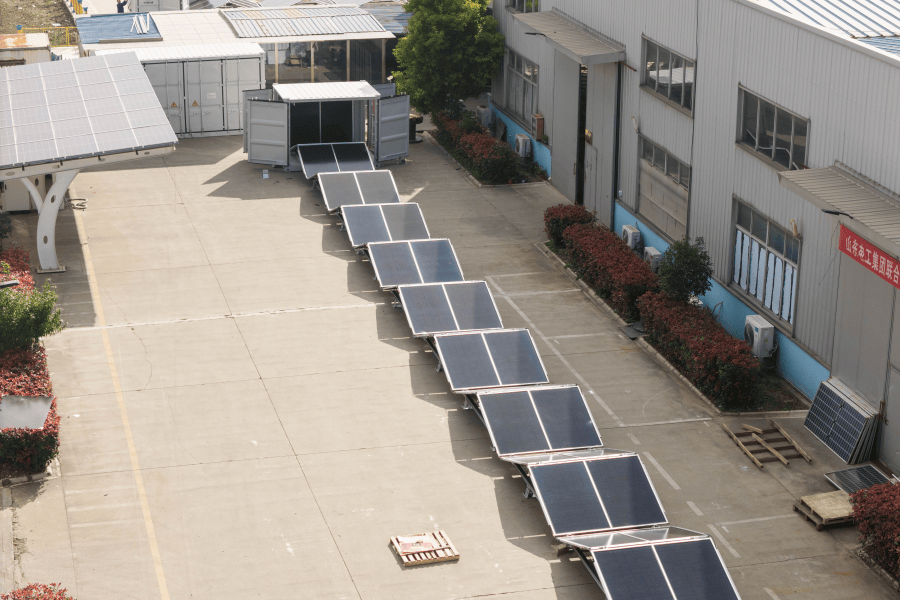
The Farmer's New Power Tool: Liquid-Cooled Mobile Containers for Irrigation
Honestly, after two decades on BESS project sites from California to North Rhine-Westphalia, the most exciting conversations lately aren't in boardrooms. They're at the edge of fields, over a cup of coffee with farm managers. The question is always the same: "How do I power my pivots reliably without my energy costs going through the roof?" The buzz around mobile, liquid-cooled power containers is real, but let's have a straight talk about what they really offer, and where they might give you a headache.
Table of Contents
- The Real Problem: Irrigation's Power Squeeze
- Why "Making Do" Is Costing You More
- Enter the Mobile, Liquid-Cooled Powerhouse
- The Clear Benefits: More Than Just Backup
- The Honest Drawbacks (What Vendors Might Not Say)
- A Real-World Snapshot: California Almonds
- My Take: The Thermal Management Game-Changer
- What's Right for Your Operation?
The Real Problem: Irrigation's Power Squeeze
Here's the scene I see too often. You've got a critical irrigation window, but peak grid demand charges are hitting, or you're on a remote plot where grid connection is laughably expensive. Diesel generators? They're noisy, smelly, and fuel costs are a rollercoaster. Fixed solar-plus-storage is great, but what about that new field you leased 3 miles down the road? The core pain point is inflexible, expensive, and unreliable power for dynamic agricultural needs.
Why "Making Do" Is Costing You More
Let's agitate that a bit. The International Renewable Energy Agency (IRENA) notes that energy can represent up to 40% of operating costs in some intensive agriculture settings. Every time you run that diesel gen-set, you're locking in high operational costs and emissions. Every time you delay irrigation due to cost or lack of power, you're literally gambling with yield. I've seen firsthand on site how a missed watering cycle during a heatwave can stress an entire crop, turning a margin into a loss. It's not just an equipment choice; it's a risk management crisis.
Enter the Mobile, Liquid-Cooled Powerhouse
This is where the mobile, liquid-cooled Battery Energy Storage System (BESS) container enters the chat. Think of it as a "power station on a trailer" with a sophisticated, built-in climate control system. Unlike air-cooled units, it uses a fluid to directly pull heat away from the battery cells. For irrigation, this mobility and advanced thermal management is a paradigm shift.

The Clear Benefits: More Than Just Backup
- Go Where the Water Is: Its mobility is the killer feature. Lease new land? Move the container. Center pivot needs a boost? Tow it over. This flexibility is unmatched by fixed systems.
- Consistent Power, Even When It's Blazing Hot: Liquid cooling is far more efficient at keeping battery packs at their ideal temperature. This means on a 105F (40C) day in Texas or Spain, your BESS can still deliver its full rated power and capacity without derating. For a 6-hour irrigation cycle, that consistency is everything.
- Longer Life, Lower Total Cost: Heat is the enemy of battery longevity. By maintaining a stable temperature, liquid cooling reduces degradation. This directly improves your Levelized Cost of Energy Storage (LCOES) C the total cost per kWh over the system's life. You're buying more usable cycles.
- Safety & Compliance Built-In: For the US and EU markets, this is non-negotiable. A well-designed liquid-cooled system, like those we engineer at Highjoule, is built from the ground up to meet UL 9540 and IEC 62933 standards. The cooling system itself adds a layer of thermal hazard control that gives peace of mind.
- Diesel Replacement & Demand Charge Management: Pair it with a PV array, and you can run irrigation pumps on solar, store excess, and avoid peak grid tariffs. It silently displaces diesel, cutting both cost and carbon.
The Honest Drawbacks (What Vendors Might Not Say)
Let's be balanced. This isn't magic.
- Higher Upfront Capital Cost: Yes, the liquid cooling subsystem (pumps, coolant, cold plates) adds complexity and initial cost compared to a simple air-cooled cabinet. You're investing in long-term performance.
- Maintenance Know-How: It's a more sophisticated piece of kit. While reliable, the cooling loop requires periodic checking and potential servicing. This is why at Highjoule, our service contracts include remote monitoring and local technician dispatch C you shouldn't need to be a coolant expert.
- Weight & Logistics: The system is heavier. You need a suitable truck and a relatively level, stable deployment site. It's mobile, but not "throw it in a pickup truck" mobile.
- Potential for Leaks: Although rare with quality engineering, a leak in the cooling loop is a more complex fix than a fan replacement. Proper design with redundancy and leak detection is critical.
A Real-World Snapshot: California Almonds
Let me give you a case from California's Central Valley. A 500-acre almond grower faced a $45,000 monthly demand charge during summer irrigation. Their remote well pumps were also diesel-dependent. They deployed a 1.5 MWh liquid-cooled mobile container, paired with a existing on-site solar carport.
The Outcome: The unit is towed between two main pump stations. The liquid cooling handles the valley's extreme heat without performance loss. By shifting pump loads to solar+storage and eliminating diesel, they cut their demand charges by over 60% and are on track for a 5-year payback. The mobility was key, as their water needs shift seasonally between plots.
My Take: The Thermal Management Game-Changer
Here's my expert insight from the field. Everyone talks about battery chemistry, but for 24/7 agricultural duty cycles, thermal management is the unsung hero. A high C-rate (charge/discharge speed) is useless if the system overheats and shuts down mid-irrigation. Liquid cooling enables a sustainably high C-rate. It lets you push the system harder when you need to, say, fill a reservoir during a short off-peak window, without cooking the batteries. This operational flexibility translates directly into water management flexibility and, ultimately, profit.

What's Right for Your Operation?
The math is different for everyone. For a large, fixed irrigation load, a traditional air-cooled BESS might suffice. But if your needs are dynamic, your sites are remote or temporary, and you operate in high heat, the benefits of a mobile, liquid-cooled system start to heavily outweigh the drawbacks. It's about viewing energy as a flexible input, just like water or fertilizer.
So, the next time you're looking at your energy bill or planning that new pivot, ask yourself: Is my power as agile as my farming operation needs to be? The answer might just be sitting on a trailer, waiting to be plugged in.
Want to run the numbers for your specific acreage and tariff? NREL's LCOE calculator is a great public tool to start with, but the real details come from a site-specific chat.
Tags: UL Standard BESS Liquid Cooling Agricultural Irrigation Renewable Energy Mobile Power Container US EU Market IEEE Standard
Author
James Zhang
20+ years agricultural energy storage engineer / Highjoule CTO