
ROI Analysis of All-in-one Solar Container for Utility Grids | Highjoule Tech
Contents
- The Real Problem Utilities Face Isn't Just Energy, It's Time
- Why This Hurts More Than Your Balance Sheet
- The All-in-One Answer: More Than Just a Box
- Crunching the Real Numbers: Where ROI Actually Comes From
- Beyond the Spreadsheet: The On-the-Ground Reality
The Real Problem Utilities Face Isn't Just Energy, It's Time
Let's be honest. When we sit down with utility planners, the conversation always starts with capacity, peak shaving, and renewable integration mandates. But after the second coffee, the real pain point surfaces: the sheer, frustrating complexity of getting a grid-scale storage project from the drawing board to producing revenue. I've seen this firsthand on site. You're not just procuring a battery; you're managing a dozen separate vendors - structural, electrical, thermal, controls, compliance - and praying their schedules align. A recent NREL report highlighted that this "balance-of-system" and soft costs can eat up to 40% of total project capital. That's before you've even generated a single kilowatt-hour.
Why This Hurts More Than Your Balance Sheet
This multi-vendor, piecemeal approach creates a domino effect of risk. First, safety. Integrating components from different manufacturers that weren't originally designed to work together is the number one headache for getting UL 9540 and IEC 62619 certifications. A mismatch in communication protocols or a thermal runaway in one cell can jeopardize the entire system. Second, time. Every month of delayed commissioning is a month of lost revenue and a month you're not helping the grid. In markets like California or Germany, where grid services are critical, delays mean missing out on lucrative frequency regulation contracts. The financial model you built starts to crumble before you even flip the switch.

The All-in-One Answer: More Than Just a Box
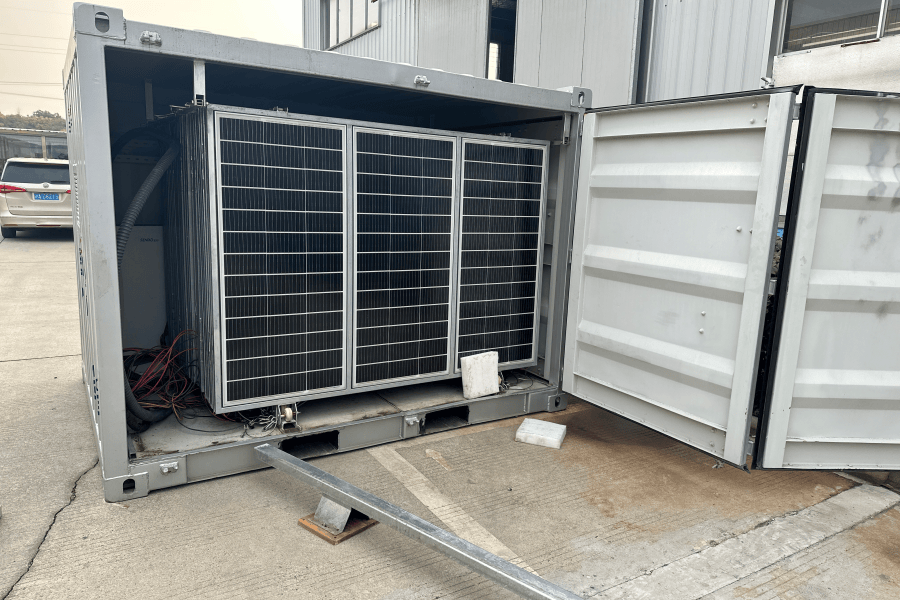
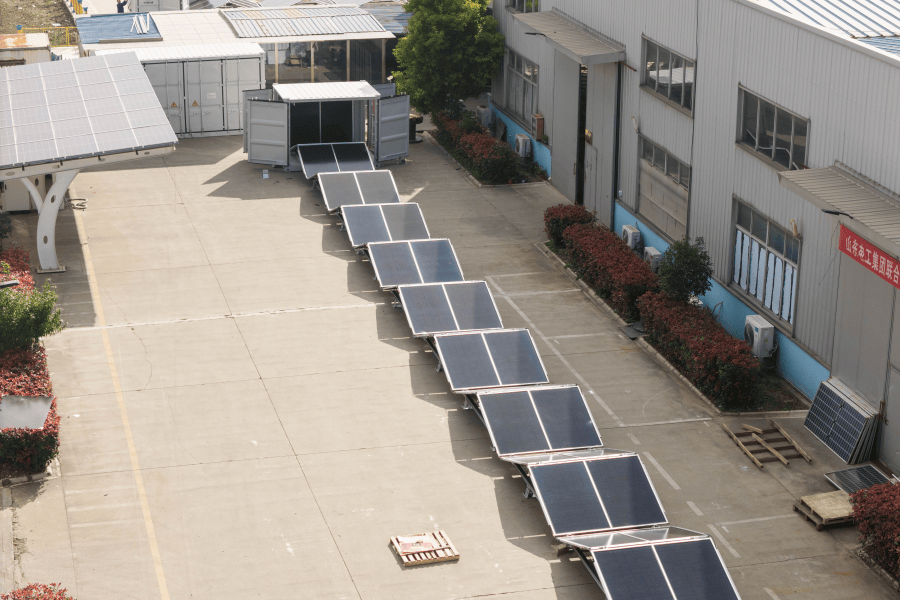
This is where the logic of a pre-fabricated, all-in-one integrated solar container becomes so compelling. It's not just a product shift; it's a fundamental change in project delivery. Think of it as moving from sourcing parts to build a car, to simply driving a certified, warrantied vehicle off the lot. The solution is a fully engineered, tested, and compliant system that arrives on a flatbed. At Highjoule, our GridMax series, for instance, comes with the battery, PCS, HVAC, fire suppression, and EMS all pre-integrated and pre-commissioned in a single, UL 9540-certified enclosure. The goal is to turn a 12-18 month construction marathon into a 3-4 month sprint.
What's Inside That Drives Real Value?
Let's demystify the tech that matters. When we talk about an integrated container, three things are non-negotiable for ROI:
- Thermal Management Done Right: Batteries are like athletes; performance and lifespan depend on staying in the optimal temperature zone. A factory-integrated liquid cooling system, tuned for the specific cell chemistry, is far superior to a field-assembled solution. It keeps the C-rate - basically, how fast you can charge and discharge safely - consistent, which directly impacts your ability to capture price arbitrage.
- The LCOE Game-Changer: Levelized Cost of Energy (LCOE) is the king metric. By slashing installation time, reducing on-site labor (and its associated risks), and extending system life through better management, the all-in-one model directly attacks the denominator in the LCOE equation. More energy, over a longer life, for a more predictable upfront cost.
- Compliance as a Feature, Not a Hurdle: Having the entire system certified as a single unit (UL, IEC, IEEE 1547) is a massive de-risking factor for utilities. It removes the finger-pointing between vendors and streamlines the utility's own interconnection studies.
Crunching the Real Numbers: Where ROI Actually Comes From
So, let's talk about the ROI analysis. The premium for an integrated unit is often visible on the initial Capex line item. But that's a shallow view. The real savings are operational and temporal. I remember a project in North Carolina, a municipal utility facing a tight deadline to defer a substation upgrade. By opting for a pre-fabricated container, they cut their interconnection timeline by over 60%. They were able to participate in PJM's frequency regulation market a full season earlier than projected. That early revenue stream completely altered the project's net present value.
The math often looks like this when you account for the hidden costs:
| Cost Factor | Traditional Piecemeal Approach | All-in-One Integrated Container |
|---|---|---|
| On-site Construction & Labor | High & Unpredictable | Minimal & Fixed |
| Interconnection Delays | High Risk (Multiple System Checks) | Low Risk (Single System Certification) |
| Long-term O&M Complexity | Multiple Vendor Contracts | Single Point of Responsibility |
| System Performance Guarantee | Fragmented | Unified (on entire energy output) |
According to IRENA, standardization and pre-assembly could reduce BESS project costs by up to 20% by 2030. We're seeing that happen now, not in a decade.
Beyond the Spreadsheet: The On-the-Ground Reality
The theory is solid, but does it work in the mud and snow? Absolutely. We deployed a system for an industrial microgrid in Bavaria. The challenge wasn't just storage, but creating a resilient island capable of black-start during grid outages. The all-in-one container wasn't just a battery; it was a plug-and-play grid node. Because the controls and power conversion were factory-synced, the system's response time during a simulated outage was under 20 milliseconds. That kind of performance, verified by the local T1V inspector on site, is almost impossible to achieve with a bespoke, field-integrated system.
Honestly, the biggest shift I've seen in the last five years is in mindset. Utility engineers, once the ultimate custom builders, now see the wisdom in a standardized, yet configurable, platform. It lets them focus on their core job: managing the grid, not managing construction sites.
So, the next time you're evaluating a storage solution, look beyond the $/kWh of the battery cell. Ask your provider: How fast can you make my project revenue-ready? How do you guarantee the performance of the system, not just the components? The right partner should make that ROI analysis feel less like a leap of faith, and more like a straightforward engineering decision. What's the one deployment delay you've experienced that most hurt your project's bottom line?
Tags: UL Standard BESS LCOE Solar Container IEEE 1547 Energy Storage ROI Utility Grid
Author
James Zhang
20+ years agricultural energy storage engineer / Highjoule CTO