
Scalable Modular Industrial ESS Containers for Eco-Resorts: A Practical Guide
Contents
- The Quiet Struggle of Going Green Off-Grid
- When Good Sustainability Plans Get Stuck in the Mud
- The Modular Shift: Why Containers Are Changing the Game
- Looking Beyond the Box: Key Factors for Eco-Resorts
- A Tale of Two Resorts: Seeing Modular ESS in Action
- Making the Right Choice for Your Slice of Paradise
The Quiet Struggle of Going Green Off-Grid
Let's be honest. When most people picture an eco-resort, they imagine serene landscapes and seamless sustainability. What they don't see is the incredibly complex energy puzzle operating behind the scenes. I've been on-site for over two decades, from the mountains of Colorado to the islands of Greece, and one truth is universal: achieving true energy independence while maintaining guest comfort and operational reliability is a monumental task. The dream of 100% renewable power often bumps into the hard reality of sunless days, windless nights, and diesel generators that are expensive, noisy, and frankly, a bit of a contradiction to the "eco" message.
When Good Sustainability Plans Get Stuck in the Mud
The core problem isn't a lack of will or solar panels. It's about managing intermittency and scale. A resort's energy demand isn't flat - it spikes during breakfast, dips midday, and peaks again in the evening. Pair that with variable solar/wind input, and you have a recipe for grid instability or, in off-grid cases, generator overuse. The International Renewable Energy Agency (IRENA) highlights that for islands and remote communities, integrating high shares of renewables is impossible without storage. But here's the aggravation I've seen firsthand: traditional bespoke Battery Energy Storage System (BESS) builds are slow, expensive, and rigid.
Imagine pouring a custom concrete foundation, only to realize two years later your resort expanded and you need double the capacity. The cost and downtime are brutal. Or worse, dealing with a thermal management issue in a custom-built shed where every component is uniquely placed, making troubleshooting a week-long detective game. This complexity directly hits your Levelized Cost of Energy (LCOE) - the true measure of your energy expense over time. Inefficient, hard-to-maintain systems drive that cost up, eating into your margins.
The Modular Shift: Why Containers Are Changing the Game
This is exactly where the Comparison of Scalable Modular Industrial ESS Containers becomes more than an academic exercise - it's a critical business decision. Think of these not as simple shipping containers, but as pre-engineered, plug-and-play power plants. The shift is from "construction" to "deployment." At Highjoule, we've moved entirely to this philosophy because it solves the core pains: speed, scalability, and safety.
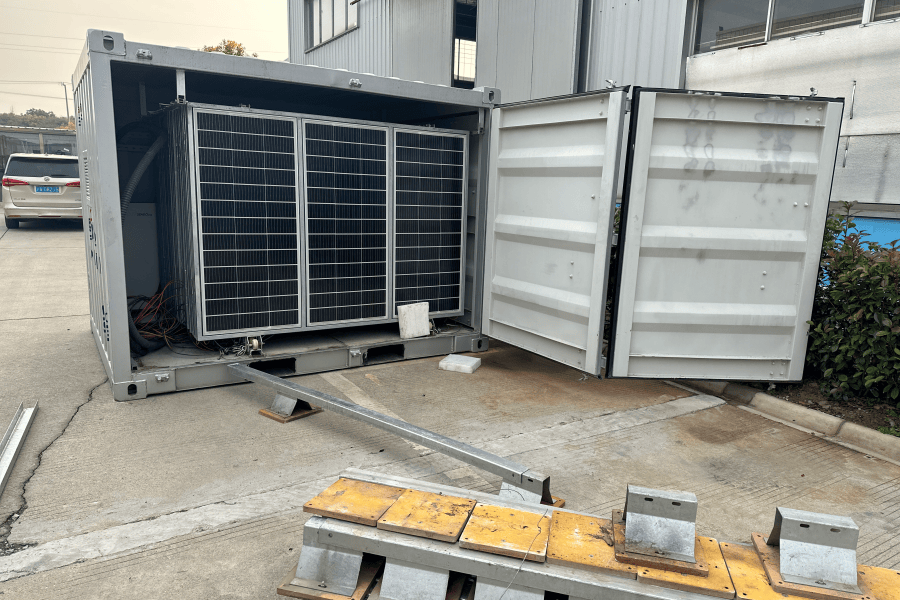
A modular container arrives on a truck, pre-tested with all batteries, thermal systems, fire suppression, and power conversion safely integrated. It's literally about connecting power and data cables. Need more capacity next year? You don't rip out the old system. You drop another container next to it and link them. This scalability is a game-changer for eco-resorts that grow in phases.

Safety Isn't an Add-On; It's Built-In
I can't stress this enough. In a remote location, safety is paramount. A proper industrial ESS container isn't just a metal box. It's designed as a system. We build ours to stringent UL 9540 and IEC 62933 standards, which govern the entire unit's safety, not just individual cells. This means integrated, continuous gas detection, aerosol fire suppression that floods the module in seconds, and passive thermal propagation barriers. Honestly, seeing some makeshift installations keeps me up at night. A modular container should be a fortress, giving you and your guests' peace of mind.
Looking Beyond the Box: Key Factors for Eco-Resorts
So, when comparing options, what should you, as a decision-maker, look for? Forget just price per kWh. Dig deeper.
- C-rate & Duration: This is basically the "athleticism" of the battery. A high C-rate means it can charge/discharge power quickly - crucial for smoothing out sudden cloud cover or a surge in demand. For resorts, you often need a balanced system that can provide both quick bursts (for stability) and long, slow discharges (to get through the night).
- Thermal Management: This is the unsung hero. Batteries perform best and last longest at an optimal temperature. I've seen systems in hot climates fail prematurely because they used simple air cooling. Look for a liquid-cooled or advanced direct-cooling system. It's more efficient, quieter (important for the ambiance!), and extends the battery's life, directly improving your LCOE.
- Grid-Forming Capability: For fully off-grid resorts, this is non-negotiable. Most inverters are "grid-following," meaning they need an existing grid signal. A grid-forming inverter creates the grid, providing stable voltage and frequency from scratch - just like a traditional generator, but silently and with zero emissions. It's what allows you to truly ditch the diesel.
A Tale of Two Resorts: Seeing Modular ESS in Action
Let me give you a real-world comparison from my own experience. We worked with two boutique resorts in similar climates but with different approaches.
Resort A (California Coast): Chose a single, large-scale modular container (2 MWh) paired with their existing solar. Their challenge was reducing demand charges from the grid and providing backup during brief public safety power shutoffs. The container was deployed in 8 weeks. Its key feature was a very high C-rate, allowing it to shave peak demand instantly. In the first year, they cut their energy bill by over 30% and have used it as a marketing point for "resilient luxury."
Resort B (Greek Island): Fully off-grid, reliant on diesel. They started with one smaller modular container (500 kWh) integrated with new solar PV. The grid-forming capability was critical here. They now run 18+ hours a day on renewables. The plan is to add two more identical containers over the next three years as they add more villas. The phased investment was cash-flow friendly, and the local crew was trained on basic operations - something Highjoule's local partners provide, which is vital for remote sites.

Making the Right Choice for Your Slice of Paradise
The choice isn't really "container or not." It's about selecting the right modular system for your specific load profile, growth plan, and environmental conditions. My advice? Start with a detailed energy audit. Then, look for a provider whose containers are not just compliant, but certified to your market's standards (UL for the Americas, IEC for EU/UK). Ask about the thermal system, the expected degradation, and the software's ability to optimize for your goals - be it LCOE minimization, renewable maximization, or resilience.
At the end of the day, the best system is one you don't have to think about. It just works, safely and efficiently, letting you focus on your guests. That's the real power of making a smart Comparison of Scalable Modular Industrial ESS Containers. So, what's the biggest energy unpredictability you're facing at your property right now?
Tags: UL Standard BESS LCOE Renewable Energy ESS Container Energy Storage Systems Eco-Resort Modular Design
Author
James Zhang
20+ years agricultural energy storage engineer / Highjoule CTO