
Liquid-Cooled BESS: Solving Thermal & Cost Challenges in US & EU Markets
Table of Contents
- The Silent Heat Problem in Your Energy Storage Plan
- Why Air-Cooling Falls Short in High-Performance Scenarios
- Liquid Cooling: The Game-Changer for Performance and Profit
- A Real-World Case Study: From California Heat to Reliable Power
- Making the Right Choice for Your Project
The Silent Heat Problem in Your Energy Storage Plan
Let's be honest. When you're planning a commercial or industrial-scale battery energy storage system (BESS) here in the States or across Europe, the conversation often starts with capacity, power output, and the all-important Levelized Cost of Storage (LCOS). But there's a critical, often underestimated factor that sits at the heart of all three: heat. I've seen this firsthand on site, from a sweltering industrial park in Texas to a grid-support project in Germany. The thermal management system isn't just a "component"; it's the guardian of your system's safety, the guarantor of its lifespan, and the silent dictator of your long-term operational costs.
The industry is pushing for higher C-rates C that's the speed at which you can charge and discharge the battery C to maximize revenue from opportunities like frequency regulation or peak shaving. But faster cycling generates more heat. According to a National Renewable Energy Laboratory (NREL) analysis, ineffective thermal management can accelerate battery degradation by as much as 200% under high-stress conditions. That's not just a performance dip; that's a direct hit to your return on investment, turning a 15-year asset into a 7-year problem.
Why Air-Cooling Falls Short in High-Performance Scenarios
Traditional air-cooled containers have been the workhorse, and for smaller, less intensive applications, they can be adequate. But when we talk about the dense, multi-MWh deployments that define today's market, air cooling starts to show its limitations. Imagine trying to cool a high-performance computer server with a desk fan C that's essentially the challenge. Air has a low heat capacity, so moving enough of it requires massive fans, large ductwork, and significant energy consumption just to run the cooling system itself (what we call the parasitic load).
On a project in the Midwest, we audited an older air-cooled system. During a summer peak event, the internal temperature differential between the coolest and hottest battery module was over 15C. This "thermal runaway" within the container itself forces the BESS to derate its power to protect the cells, right when the grid needs it most. You're paying for capacity you can't use. Plus, all those vents and filters for air intake? They're entry points for dust, moisture, and corrosive elements, especially in coastal or industrial areas, leading to higher maintenance costs and potential safety risks.

The Core Drawbacks in a Mature Market Context
So, when we evaluate the traditional approach, the drawbacks for sophisticated markets like the US and EU become clear:
- Limited Power Density: You need more physical space (containers) for the same energy capacity to allow for airflow, increasing land/lease costs.
- Higher LCOS: Energy wasted on cooling, reduced cycle life from thermal stress, and more frequent maintenance all drive up the lifetime cost.
- Safety & Compliance Headaches: Maintaining uniform temperature is harder. Hotspots increase the risk of thermal runaway, making it tougher to consistently meet stringent safety standards like UL 9540 and IEC 62933, which are non-negotiable for insurers and authorities having jurisdiction (AHJs) here.
Liquid Cooling: The Game-Changer for Performance and Profit
This is where the technology leap, often highlighted in demanding applications like rural electrification in tropical climates, becomes directly relevant for our markets. Liquid-cooled BESS containers use a dielectric fluid circulated directly to or around each battery cell or module. Water or glycol-based coolants have a heat capacity about 4 times higher than air. Think of it as swapping that desk fan for a dedicated, silent, highly efficient water block on a gaming PC's CPU.
The benefits translate powerfully to commercial projects:
- Superior Thermal Uniformity: We consistently see cell-to-cell temperature differentials kept below 3C. This uniformity is the single biggest factor in slowing degradation and extending cycle life. Honestly, it's what allows us at Highjoule to confidently back our systems with robust performance warranties.
- Higher Power Density & Smaller Footprint: With more efficient cooling, you can pack cells tighter. You might fit 30% more energy into the same container footprint, or use fewer containers for the same project. That's a direct capex and real estate win.
- Reduced Parasitic Load: The liquid system's pumps use significantly less energy than the massive fans of an air-cooled unit. Over 20 years, that saved energy adds straight back to your bottom line.
- Enhanced Safety & Reliability: A sealed, closed-loop system minimizes exposure to the external environment. No dust, no corrosion on critical components. This inherent design makes achieving and maintaining compliance with UL and IEC standards a more straightforward, reliable process from day one.
A Real-World Case Study: From California Heat to Reliable Power
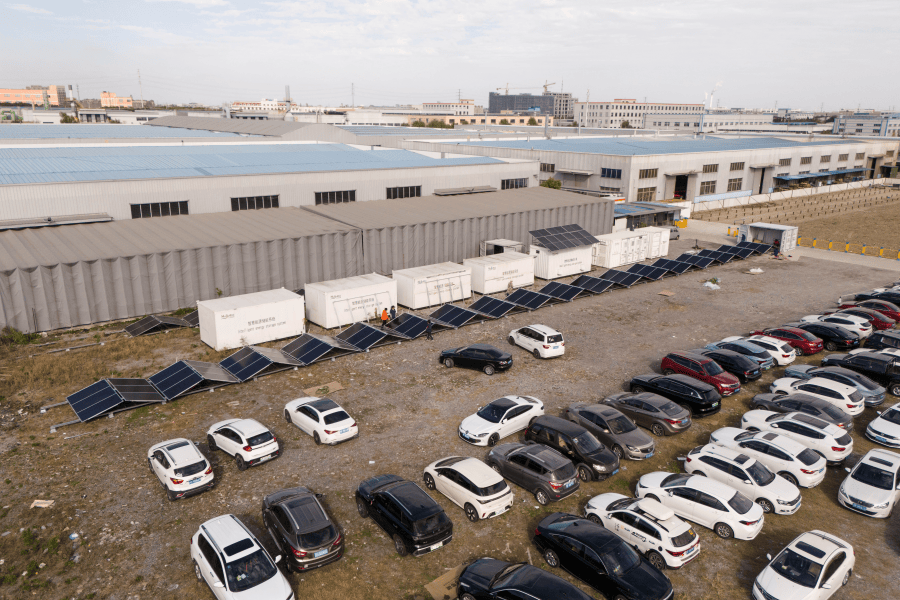
Let me give you a concrete example. We partnered with a food processing plant in California's Central Valley. Their challenge was classic: crippling demand charges, a commitment to sustainability, and a need for rock-solid backup power. The site faces temperatures over 40C (104F) regularly. An air-cooled system would have been fighting the environment constantly, with high parasitic loads and likely derating during the hottest, most valuable peak hours.
We deployed a liquid-cooled BESS container solution. The closed-loop system ignored the outside air temperature. During a recent heatwave, while the grid was strained, the BESS operated at its full 2 MW / 4 MWh capacity for peak shaving, with no derating. The plant manager's main feedback? "The system is silent and just works." The operational data showed a 40% lower auxiliary power consumption for thermal management compared to a comparable air-cooled model we simulated. That's lower operating cost and more of the stored energy sold back to the grid or used on-site.
Expert Insight: It's About Total Cost of Ownership
The initial capital expenditure for a liquid-cooled system can be higher, I won't sugarcoat that. But my two decades in this field have taught me to always calculate in years, not just upfront cost. When you model the Total Cost of Ownership C factoring in longer lifespan (more cycles), higher energy throughput (less downtime for cooling), lower operational energy use, and reduced maintenance C the economics flip. The Levelized Cost of Storage (LCOS) often becomes decisively favorable for the liquid-cooled option over a 10-15 year horizon, especially for daily cycling applications. It's a premium investment that pays a reliable dividend in performance and predictability.
Making the Right Choice for Your Project
So, is liquid cooling the absolute right answer for every single project? Of course not. For smaller, non-daily cycling applications, the math might still favor air-cooling. The key is to have an honest, data-driven conversation with a provider who has deployed both.
At Highjoule, our design process starts with your specific use case, local climate, regulatory environment, and financial model. We don't push one technology. We model both to show you the 20-year picture. Our engineering focus is on designing liquid-cooled systems that are not just high-performance, but also simpler to install and maintain on the ground C because a clever design that's a nightmare to service is a bad design in my book.
The lessons learned from deploying resilient power in the most challenging environments are refining the technology for all of us. The question for your next project isn't just "What's the price per kWh?" It's "What's the cost of a degree of heat over the life of the system?" What would a 5C reduction in operating temperature mean for your project's bankability?
Tags: UL Standard BESS LCOE Energy Storage Europe US Market Thermal Management
Author
James Zhang
20+ years agricultural energy storage engineer / Highjoule CTO