
Rapid-Deploy 5MWh BESS for Remote Islands: Benefits & Real-World Insights
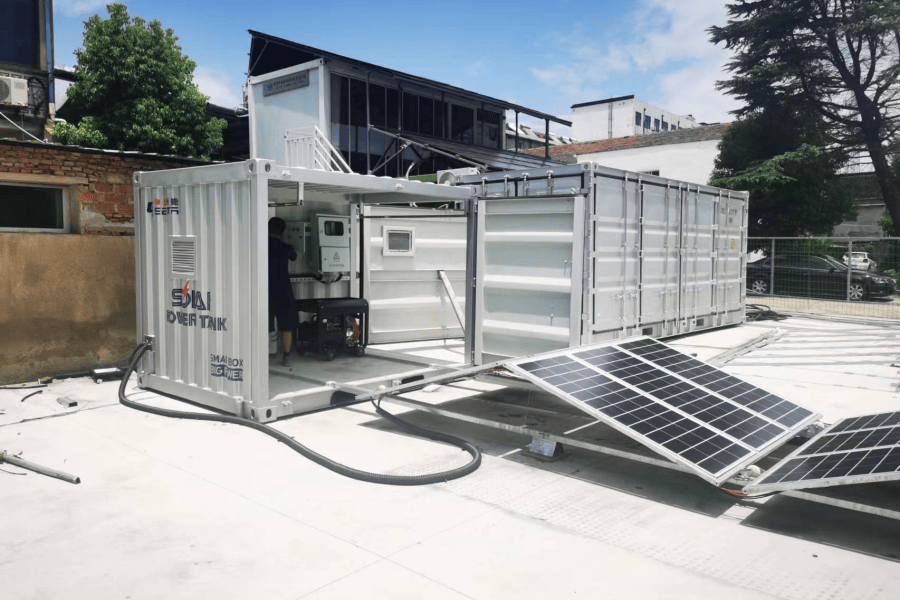
Table of Contents
- The Diesel Trap: Why Islands Pay More for Less
- 5MWh Rapid-Deploy BESS: Your Grid's New Anchor
- Real Talk: A German Island's 72-Hour Transformation
- Why Thermal Management Isn't Just Engineer Talk
- Is Your Island Ready to Ditch the Diesel Rollercoaster?
The Diesel Trap: Why Islands Pay More for Less
Honestly? Walking onto a remote island microgrid site often feels like stepping into a time machine. You smell the diesel first C that sharp, oily tang hanging over rows of aging generators chugging away. I've lost count of the islands I've visited where the local utility manager's face says it all: exhaustion from chasing fuel deliveries, anxiety over wild price swings, and that constant hum of machines needing another repair. Island grids aren't just "off-grid"; they're often hostage to fossil fuels. The International Energy Agency (IEA) highlights that remote communities can pay 2-10x more for power than mainland users, with 70-90% of that cost tied straight to diesel. One breakdown during a storm? You're not just losing lights; refrigeration, comms, water pumps C it all grinds down. That's not resilience; that's fragility on a deadline.
5MWh Rapid-Deploy BESS: Your Grid's New Anchor
So what changed the game? Honestly, the shift towards containerized, rapid-deployment 5MWh BESS units. Think of them as pre-built power anchors. Unlike traditional builds needing months of civil works, these arrive site-ready C think plug-and-play, but for grid-scale muscle. The real magic? They turn sunlight and wind into reliable dispatchable power. I've seen firsthand how a well-sited 5MWh unit can absorb midday solar surges and release it steadily through the night, slashing diesel runtime by 60-80%. That's not just fuel saved; that's fewer tanker trips, lower emissions, and yes C quieter nights without generator drone. But here's the kicker everyone asks me about: LCOE (Levelized Cost of Energy). Simply put, it's the true lifetime cost per kWh. A rapid-deploy BESS cuts installation costs hard (sometimes 40% less than traditional), and paired with solar, drives LCOE way below diesel. For islands, that's budget breathing room.
Real Talk: A German Island's 72-Hour Transformation
Let's cut theory with a real blade. Take that North Sea island project we tackled last fall C call it "Project Wavebreaker." They'd maxed out rooftop solar but faced curtailment daily because their old grid couldn't handle the noon surge. Worse, night-time meant diesel symphony. Their ask? A solution before the heavy tourist season hit. We rolled in two UL 9540-certified 5MWh containers (liquid-cooled, crucial for salty air). Honestly, the logistics were tougher than the tech C getting those units onto that ferry made me sweat! But once positioned? Hooked into the grid within 72 hours. The results weren't subtle:
- Diesel Offline: 19 hours/day average post-deployment (previously 6 hours max).
- Solar Utilization: Curtailment dropped from ~30% to under 5%.
- Safety First: Full IEC 62933 compliance meant local regulators slept easier. No hot spots, no drama.
The key? That rapid timeline. Traditional builds would've missed the tourist season payoff window entirely.
Why Thermal Management Isn't Just Engineer Talk
Okay, let's get nerdy for a minute C but keep it real. You hear "C-rate" thrown around. Think of it as how fast you charge or discharge the battery. High C-rate sounds great (fast power!), but on an island? It generates heat. And heat is the enemy of lifespan and safety. I've opened units where poor thermal design led to cell stress C that's premature aging or worse. Our liquid cooling tackles this head-on, keeping cell temps within a tight 2C window across the whole pack, even during high C-rate storm backups. That's not luxury; that's getting 15+ years out of your investment safely. Forget fancy spec sheets C ask your provider: "Show me your thermal management under full load at 40C ambient." How that unit handles the heat dictates its island-worthiness.
Is Your Island Ready to Ditch the Diesel Rollercoaster?
Look, rapid-deploy 5MWh BESS isn't magic fairy dust. You need solid wind/solar resources, a grid ready to integrate, and yes C upfront capex. But sitting here, coffee going cold, I'll tell you this: the islands making the leap are sleeping better. No more panic calls at 3 AM about a stranded fuel barge. No more swallowing 30% price hikes because global oil sneezed. What's holding your community back? Is it the uncertainty of deployment speed? The safety specs? Let's chat specifics C I've probably walked a site just like yours.
Tags: BESS LCOE Island Microgrids Rapid Deployment UL Standards Renewable Integration Energy Storage Europe US Market
Author
James Zhang
20+ years agricultural energy storage engineer / Highjoule CTO