
Scalable 5MWh Modular BESS for Farm Irrigation: Benefits & Drawbacks
Contents
- The Irrigation Power Problem: It's Not Just About Water
- Why a Scalable, Modular 5MWh Unit Makes Sense for Farms
- The Benefits Breakdown: More Than Just Backup Power
- The Real Drawbacks (Let's Be Honest)
- Making the Right Call: Is a Modular BESS Right for Your Operation?
The Irrigation Power Problem: It's Not Just About Water
If you're running a large-scale agricultural operation in the US Midwest or across parts of Europe, you know the drill. Peak irrigation season hits, and suddenly, your single biggest operational cost isn't seed or labor - it's electricity. You're at the mercy of time-of-use rates, demand charges that feel punitive, and grid reliability that can't always handle the simultaneous surge when every farm turns on their pumps. I've seen firsthand on site in California's Central Valley and in Spain's Andalusia region how a single peak demand spike can obliterate a farm's profitability for the month. It's a brutal equation: more volatile climate requires more precise irrigation, which demands more reliable and, frankly, affordable power.
The traditional "solution"? Diesel generators. They're loud, dirty, increasingly expensive to run, and frankly, a step backwards for any operation looking to modernize or meet sustainability goals. The data backs this up. The International Energy Agency (IEA) notes that integrating renewables with storage is key to decarbonizing the agricultural sector, but the leap from theory to practice is where most farmers get stuck.
Why a Scalable, Modular 5MWh Utility-Scale BESS Makes Sense
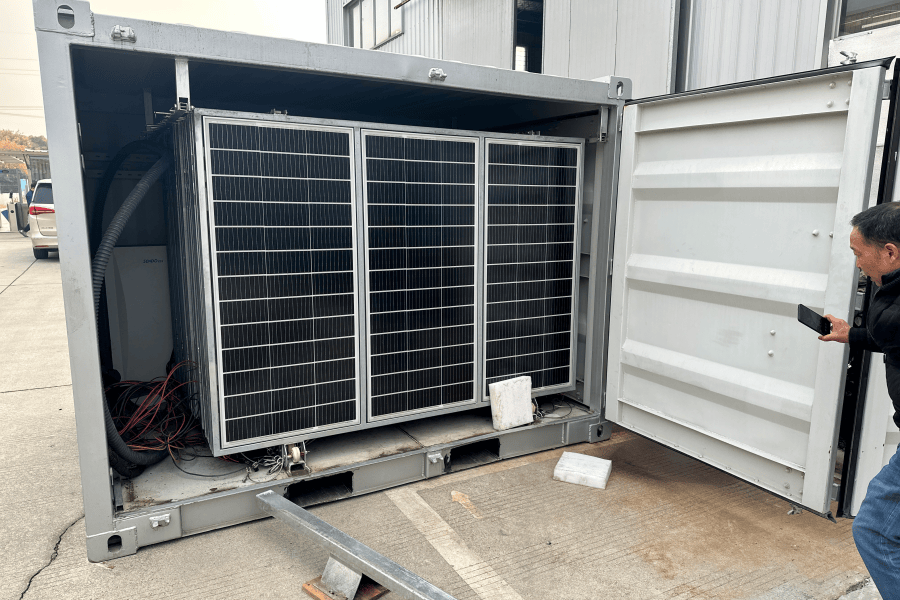
This is where the concept of a scalable, modular 5-megawatt-hour (MWh) Battery Energy Storage System (BESS) enters the conversation. Think of it not as a monolithic, one-size-fits-all block, but as a set of powerful, standardized building blocks. A 5MWh base unit is a serious piece of infrastructure - capable of running multiple large center-pivot irrigation systems for hours. But the magic word is scalable. Maybe you start with 2.5MWh. The modular design means you can add more battery racks later as your needs grow or as capital becomes available, all within the same footprint and using the same control system.
It's a fundamentally different approach. Instead of a massive, upfront custom engineering project (which is common for much larger, 100MWh+ grid projects), you're looking at a more manageable, factory-built solution that can be deployed in weeks, not years. This modularity is a game-changer for agriculture, where cash flow is seasonal and planning horizons need to be flexible.
The Benefits Breakdown: More Than Just Backup Power
Let's get concrete about the benefits, because it goes far beyond keeping the lights on.
- Demand Charge Management & Energy Arbitrage: This is the biggest wallet-saver. Your BESS can be programmed to discharge during those few peak hours each day when grid electricity is most expensive, shaving the top off your demand. It then quietly recharges overnight or during midday solar excess when rates are low. The financial payback here is often the most direct and calculable.
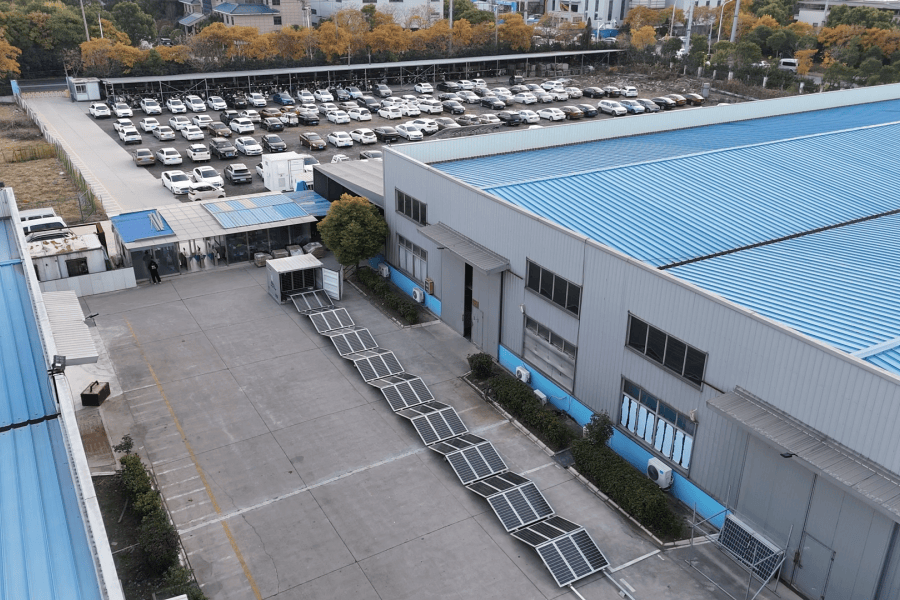
- Renewable Integration & Maximization: Got solar on the barn roof or a field edge? Without storage, a lot of that noon-day generation might go to waste if your pumps aren't all running. A BESS soaks up that excess solar for use in the evening, increasing your self-consumption rate from maybe 30% to 70% or more. This turns your solar investment from a partial solution into a near-total one.
- Uninterruptible Critical Operation: Weather events causing grid outages during a critical irrigation window can mean crop loss. A BESS provides seamless backup to keep essential systems online, bridging the gap until the grid returns or a generator kicks in.
- Grid Services & Additional Revenue (Future-Proofing): In many regions, utilities or grid operators will pay for fast-responding battery assets to help stabilize the grid (frequency regulation). While this requires specific interconnect agreements, a modern BESS like the ones we engineer at Highjoule Technologies are software-enabled for these services, potentially creating a new revenue stream.
- Operational Predictability: You lock in a significant portion of your energy cost. No more nasty surprises on the utility bill. In an industry battered by volatility, that predictability is priceless for long-term planning.
The Real Drawbacks (Let's Be Honest)
No technology is a silver bullet. After deploying these systems, here are the honest challenges you need to plan for:
- Upfront Capital Cost (CapEx): This is the primary barrier. While Levelized Cost of Storage (LCOS) - the total lifetime cost per MWh - has fallen dramatically, the initial ticket is still significant. Financing is crucial, and the business case must be rock-solid, built on your actual utility rate structure and load profile.
- Technology & Regulatory Complexity: You're not just buying a battery; you're integrating a complex power asset. It requires expertise in interconnection studies, permitting (which varies wildly by county and state), and ongoing optimization. Partnering with a vendor that handles this EPC (Engineering, Procurement, Construction) process and offers long-term performance monitoring is non-negotiable. At Highjoule, our entire system design is pre-engineered to meet UL 9540 and IEC 62619 standards, which streamulates local AHJ (Authority Having Jurisdiction) approval, but it's still a process.
- Long-Term Performance & Degradation: Batteries degrade over time. A quality system will have a robust thermal management system (liquid cooling is becoming the industry standard for utility-scale) to maximize lifespan. You need clear warranties (e.g., 70% capacity retention after 10 years) and a plan for end-of-life, whether that's recycling or second-life use.
- Site-Specific Nuances: Is your site in a flood zone? Extreme heat or cold? Each environment affects the enclosure design, thermal management load, and siting requirements. A modular, containerized system helps, but it's not "plug-and-play" like a consumer device.

Making the Right Call: Is a Modular BESS Right for Your Operation?
So, how do you decide? From my two decades in the field, it comes down to a few key questions. First, get a year's worth of your utility bills. What's your peak demand charge (in $/kW), and how many hours does it last? Second, map your irrigation load profile. Is it a continuous baseload or short, intense peaks? This defines the required C-rate (discharge speed) of your battery. Third, consider your renewable assets. Are you already generating your own power?
The scalable 5MWh modular BESS isn't for every 100-acre farm. But for large-scale, energy-intensive agribusinesses facing high demand charges, unreliable grids, or wanting to truly capitalize on solar investment, it's transitioning from a "nice-to-have" to a core piece of operational infrastructure. The benefits are tangible and financial; the drawbacks are manageable with the right partner and planning.
The real question isn't just about technology, but about the future resilience of your farm. Are you building a system that simply reacts to the grid, or one that gives you control? What would stabilizing your number one variable cost do for your five-year plan?
Tags: Renewable Energy Integration BESS LCOE UL Standards Agricultural Irrigation Utility-Scale Energy Storage Modular Battery Systems
Author
James Zhang
20+ years agricultural energy storage engineer / Highjoule CTO