
Real-world Case Study: 20ft Hybrid Solar-Diesel System for Construction Site Power
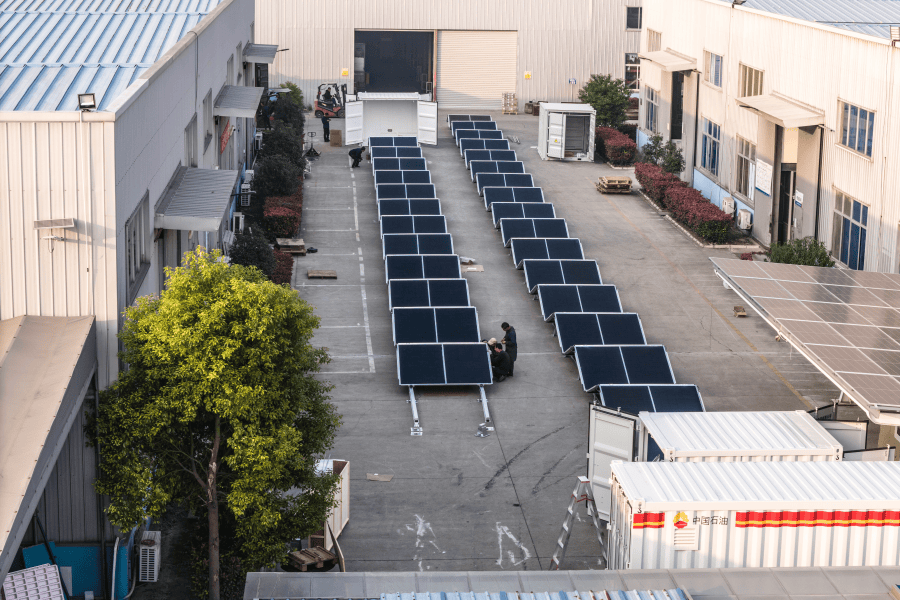
Table of Contents
- The Silent (and Expensive) Problem on Every Remote Job Site
- Why "Just a Bigger Generator" Is a Costly Mistake
- The Hybrid Solution: More Than Just a Container
- Case Study: Powering a Texas Mega-Warehouse Build
- Expert Deep-Dive: What Makes This System Actually Work
- Is a Hybrid System the Right Move for Your Project?
The Silent (and Expensive) Problem on Every Remote Job Site
Let's be honest. If you're managing a construction project off the main grid, your primary power headache isn't just about getting electricity - it's about controlling a runaway cost variable that can quietly eat into your margins. I've been on dozens of these sites, from wind farms in the Midwest to mining camps up north. The scene is familiar: the constant, low rumble of diesel generators, the fuel truck visits that seem to come more and more frequently, and the nagging worry about emissions compliance and noise ordinances that are getting stricter by the day.
The traditional diesel-only approach creates a perfect storm of inefficiency. Generators are often oversized for the average load but struggle with peak demands, leading to poor fuel efficiency and excessive wear. According to the National Renewable Energy Laboratory (NREL), diesel generators in partial load conditions can see fuel efficiency penalties of 15-40%. That's literally money going up in smoke. You're not just paying for the fuel; you're paying for logistics, storage, theft risk, and the carbon footprint that more clients and regulators are demanding you account for.
Why "Just a Bigger Generator" Is a Costly Mistake
So the load increases, and the instinct is to bring in a second gen-set or a larger one. I've seen this firsthand on site. This "solution" amplifies the problem. Now you have a huge capital asset operating at maybe 30% capacity, its engine glazing over from under-use, while its fuel consumption remains a fixed, high-cost line item. The operational expenditure (OpEx) becomes a black box. Worse, you have a single point of failure. If that primary generator goes down for maintenance or repair, the entire site grinds to a halt, costing tens of thousands per hour in delayed labor and timelines.
The real agitation point here is unpredictability. In today's market, you need predictable costs to bid competitively and protect your profit. Volatile diesel prices and unpredictable generator maintenance shatter that predictability. The solution isn't about finding a better generator; it's about rethinking the entire power system architecture.
The Hybrid Solution: More Than Just a Container
This is where the Real-world Case Study of 20ft High Cube Hybrid Solar-Diesel System for Construction Site Power becomes so compelling. It's not a theoretical concept. It's a practical, drop-in solution that transforms your power profile. Think of it as a unified power plant in a shipping container: solar panels, a battery bank smart enough to manage energy flow, and your existing diesel generators, all orchestrated by a sophisticated energy management system (EMS).
The goal is simple but transformative: let the diesel generator do what it does best - run at its optimal, high-efficiency load point to charge the batteries or handle peak shaving - and let the solar and batteries handle the base load and daily fluctuations. The generator can be switched off for hours at a time. At Highjoule, when we engineer these 20ft High Cube systems, we're not just slapping components together. We're designing for the harsh reality of a construction site: dust, vibration, temperature extremes, and safety standards like UL 9540 and IEC 62933 that are non-negotiable for our North American and European clients.

Case Study: Powering a Texas Mega-Warehouse Build
Let me walk you through a recent project we completed just outside Austin. The challenge was a 12-month, 50-acre logistics warehouse construction. The client had initially budgeted for two 500kW diesel generators running 24/7. Their pain points were the projected $40,000/month fuel cost and the sustainability requirements of the end-user, a major tech company.
Our team deployed a single 20ft High Cube Hybrid System. The configuration was key:
- BESS: 500kWh lithium-ion battery (UL 9540 certified), with a 1C discharge rate (meaning it could deliver 500kW of power almost instantly if needed).
- Solar Canopy: A 150kWp solar array mounted on a temporary canopy over the site offices and material storage.
- Integration: Seamless integration with one of their existing 500kW generators.
The EMS was programmed for a simple rule: use solar and batteries first. Only when the battery state-of-charge dropped below 30% would the generator kick on, run at its 80% efficient sweet spot to rapidly recharge the batteries, and then shut down again.
The results after 6 months? A 60% reduction in diesel fuel consumption. The generator runtime dropped from 24/7 to about 6 hours a day. The fuel cost saving was roughly $14,000 per month, putting the system on track for a compelling return on investment well before the project end. Just as importantly, the site was noticeably quieter and cleaner, which the construction crew appreciated.
Expert Deep-Dive: What Makes This System Actually Work
You might hear terms like C-rate or LCOE thrown around. Let me break down why they matter in plain English.
C-rate (Charge/Discharge Rate): This is the battery's "athleticism." A 1C rate means a 500kWh battery can deliver 500kW of power. For a construction site, you have high intermittent loads - crane movements, concrete pours, welding. You need a battery that can sprint (high discharge rate) to meet those peaks without tripping, which avoids needing to size the generator for the absolute peak. Our systems are engineered with this in mind, using cell chemistry and architecture that balances energy density with power capability.
Thermal Management: This is the unsung hero. Lithium-ion batteries hate extreme heat and cold. A cheap system with poor thermal management will degrade rapidly, losing capacity and becoming a safety risk. Our 20ft containers use a closed-loop, liquid-cooling system that keeps the battery stack within a perfect 20-25C window year-round, whether it's 100F in Nevada or -10F in Norway. This is critical for system longevity and safety, and it's a core part of our UL and IEC compliance.
Levelized Cost of Energy (LCOE): This is your true cost of power over the system's life. While the diesel generator has a low upfront cost, its LCOE is high and volatile due to fuel and maintenance. The hybrid system has a higher initial capex but a dramatically lower and stable LCOE. By adding solar and storage, you're essentially locking in a portion of your energy at a near-zero marginal cost for the next 10-15 years. For a long-duration project, the financial math becomes overwhelmingly positive.

Is a Hybrid System the Right Move for Your Project?
Honestly, it's not a one-size-fits-all. If your project is two months long and right next to a grid connection, it probably isn't. But if you're looking at a remote site, a project lasting 6+ months, or facing strict emissions/noise regulations, the hybrid model is no longer just a "green alternative" - it's the financially and operationally savvy choice.
The key is working with a partner who understands both the technology and the gritty reality of your site. At Highjoule, our deployment includes a full site assessment, modeling of your load profiles, and a clear analysis of your fuel and cost savings. We handle the local permitting headaches related to BESS deployment and provide remote monitoring for the life of the project. It's about providing predictable power, not just another piece of equipment.
So, what's the biggest power cost surprise you've encountered on your last remote project, and how did you manage it?
Tags: Construction Site Power UL Standard BESS LCOE Energy Storage Off-grid Power Hybrid Power System Solar-Diesel
Author
James Zhang
20+ years agricultural energy storage engineer / Highjoule CTO