
Scalable Modular Hybrid Solar-Diesel Systems for Military Bases: Benefits, Drawbacks & Real-World Insights
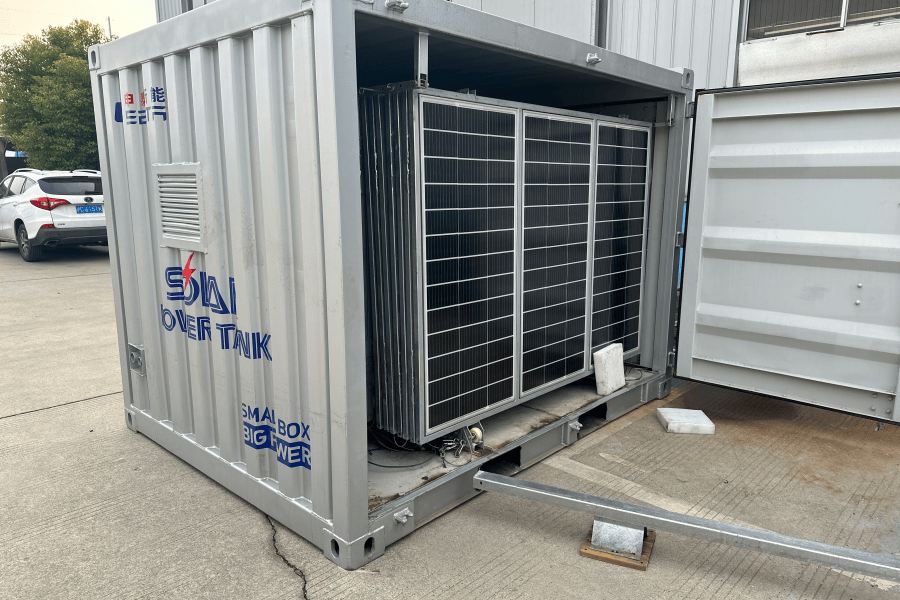
Table of Contents
- The Silent Problem: More Than Just Keeping the Lights On
- The Modular Answer: Why "Scalable" Isn't Just a Buzzword
- Weighing The Real Benefits (Beyond the Brochure)
- The On-Site Drawbacks (What They Don't Always Tell You)
- A Case in Point: Learning from a Real Deployment
- Making The Right Call: An Engineer's Checklist
The Silent Problem: More Than Just Keeping the Lights On
Let's be honest. When we talk about powering military bases, the conversation usually starts and ends with diesel generators. They're the reliable, loud, and thirsty backbone of off-grid and critical power. I've been on sites where the hum of diesels is the constant soundtrack. But the real problem isn't reliability - it's the staggering, hidden cost of that reliability. We're talking about fuel logistics convoys that become strategic vulnerabilities, maintenance schedules that dictate operational tempo, and a carbon footprint that's increasingly hard to justify. The U.S. Department of Defense itself has noted that fuel supply lines are a major point of risk in contested environments. That's the core pain point: your mission's energy resilience is tied to a long, expensive, and fragile tether.
The Modular Answer: Why "Scalable" Isn't Just a Buzzword
This is where the idea of a scalable modular hybrid solar-diesel system stops being a nice-to-have and starts looking like a strategic necessity. The key word here is modular. It's not about installing a massive, fixed solar farm and a giant battery bank all at once. Honestly, I've seen those monolithic projects stall in the planning phase for years due to budget and complexity. A modular approach is different. Think of it like building blocks. You start with a core power hub - often a containerized Battery Energy Storage System (BESS) that meets strict UL 9540 and IEC 62485 safety standards - and then you add solar arrays and generator integration modules as your needs evolve and funding allows. This scalability is a game-changer for long-term infrastructure planning.

Weighing The Real Benefits (Beyond the Brochure)
So, what do you actually gain? Let's move past the marketing.
- Fuel Security & Cost Avoidance: This is the big one. The National Renewable Energy Laboratory (NREL) has shown that hybrid systems at remote sites can reduce fuel consumption by 40-90%. That's not just savings; it's fewer convoys, less exposure, and a lighter logistical tail. The solar and battery do the "peaking" and daily load-cycling, letting the diesel genset run only at its optimal, efficient load point or as a backup.
- Silent & Stealthy Operation: A BESS delivering power is silent and has no thermal signature. For forward operating bases or surveillance posts, this isn't just convenient - it's a tactical advantage.
- Graceful Degradation & Uptime: A monolithic system fails monolithically. A modular system? If one battery module or solar string has an issue, the others keep working. Mission continuity improves dramatically. At Highjoule, our systems are designed with this in mind - independent thermal management and power conversion per module to isolate faults.
- Future-Proofing: Technology evolves. A modular system lets you upgrade components (like swapping in newer, higher-density batteries) without scrapping the entire infrastructure. Your Levelized Cost of Energy (LCOE) - the true total cost of power over the system's life - plummets because you're extending the asset's useful life.
The On-Site Drawbacks (What They Don't Always Tell You)
Now, as someone who's had to commission these systems in the field, I need to give you the full picture. The drawbacks aren't deal-breakers, but ignoring them will break your project.
- Higher Initial Capital Outlay: Yes, the upfront cost for a smart BESS and PV integration is higher than just buying another diesel generator. The financial case is based on total lifecycle cost, not purchase price. You need that 10-15 year view.
- Integration Complexity: Getting solar inverters, battery management systems (BMS), and legacy diesel gensets to communicate seamlessly is an engineering challenge. It requires controllers that speak multiple protocols (like IEEE 2030.5) and deep system integration know-how. I've seen projects where this was an afterthought, leading to months of delays.
- Space & Siting: You need space for the solar panels. A containerized BESS is compact, but the PV array isn't. In a constrained base, this requires creative planning (canopies, rooftop, degraded land).
- Specialized Maintenance: Your mechanics are diesel experts. Now you need personnel trained on high-voltage DC battery safety, PV maintenance, and complex energy management software. Partnering with a provider that offers embedded training and remote monitoring, like our Highjoule Sentinel platform, isn't a luxury - it's essential for long-term success.
The Tech Deep-Dive: C-Rate and Thermal Management
Let me get a bit technical for a moment, but I'll keep it simple. When sizing the battery, two specs are critical: C-Rate and Thermal Management. The C-Rate is basically how fast you can charge or discharge the battery. A high C-Rate battery can deliver a lot of power quickly (to start a large load), but it might sacrifice some total energy capacity. For a base, you need a balanced design - enough power (kW) for your big loads and enough energy (kWh) to ride through the night. Then there's heat. Batteries degrade fast if they get too hot or too cold. A military-grade system needs an independent, robust thermal management system (liquid cooling is often best) that works in desert heat and arctic cold. This isn't a place to cut corners; it's the heart of system longevity.

A Case in Point: Learning from a Real Deployment
Let's look at a project in the Southwestern U.S. A National Guard training facility relied on dual diesel generators. Their challenges were classic: high fuel costs, noise during exercises, and maintenance headaches. They deployed a phased, modular hybrid system. Phase 1 was a 500kW/1MWh UL 9540-certified BESS container from Highjoule, integrated with their existing gensets. Just this step created "fuel shock absorbers" - the batteries handled all rapid load swings, letting the gensets run smoothly at constant load, cutting fuel use by 35% from day one. Phase 2 added a 750kW solar carport over the parking lot. The key to success? The scalable design. They didn't wait for the full budget. They started with the BESS for immediate savings, which then funded the solar expansion. The system now manages itself 95% of the time via its microgrid controller, with diesel as the silent backup.
Making The Right Call: An Engineer's Checklist
So, is a scalable modular hybrid system right for your base? Ask these questions:
- Is fuel logistics a strategic vulnerability we want to reduce?
- Can we commit to a lifecycle cost analysis, not just an initial budget?
- Do we have a site plan for both secure BESS placement and future solar expansion?
- Have we vetted the provider's experience with military-grade integration, not just commercial solar?
- Does the proposed system comply with the latest UL and IEEE standards for islandable microgrids?
The move to hybrid power isn't just about being green. It's about being resilient, agile, and strategically independent. The technology is here, and it's proven. The question is, when does your energy strategy evolve?
Tags: UL Standard BESS LCOE Microgrid Hybrid Power Systems Military Energy Security
Author
James Zhang
20+ years agricultural energy storage engineer / Highjoule CTO