
Smart BMS for Hybrid Solar-Diesel Systems: Pros, Cons & Real-World Insights for Eco-Resorts
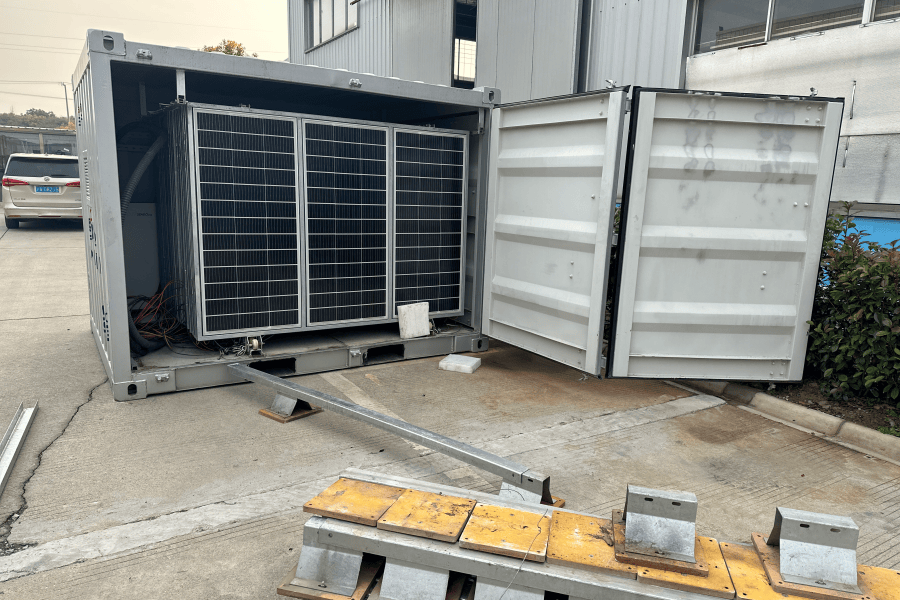
Table of Contents
- The Quiet Struggle: Why Your "Green" Resort Might Still Be Running on Guesswork
- The Game Changer: What a Smart BMS Actually Does in a Hybrid System
- The Tangible Benefits: More Than Just Fuel Savings
- The Honest Drawbacks & How to Navigate Them
- A Real-World Look: Lessons from a Caribbean Project
- Making the Right Choice: Questions to Ask Before You Invest
The Quiet Struggle: Why Your "Green" Resort Might Still Be Running on Guesswork
Let's be honest. I've been on-site at enough remote eco-resorts and lodges to see a common pattern. You've made the smart move: solar panels are up, a diesel genset is there for backup, and maybe there's a battery bank. The intention is perfect C reduce carbon footprint, hedge against fuel price swings, and market that sustainable vibe. But when I peek into the control shed, I often find a system running on hope and manual switches more than intelligent control. The solar overproduces and gets curtailed because the batteries are "full" (but are they, really?), the diesel genset kicks in at the worst times, and nobody has a clear picture of the battery health. According to a NREL analysis on remote microgrids, this operational inefficiency can erode 15-30% of the potential financial and energy savings. That's the silent cost of a "dumb" hybrid system.
The Game Changer: What a Smart BMS Actually Does in a Hybrid System
So, what's missing? In most cases, it's the brain: a Smart Battery Management System (BMS). Forget the simple voltage monitors of the past. A modern Smart BMS is the central nervous system for your entire energy setup. It doesn't just protect the battery; it actively communicates with the solar inverter, the diesel generator controller, and the resort's load management system. I like to explain it as the conductor of an orchestra, ensuring the solar (strings), the batteries (brass), and the diesel (percussion) play in perfect harmony, responding in real-time to the demand (the audience's mood).
This is where standards like UL 1973 for BESS and IEC 62619 for industrial battery safety become non-negotiable, especially for insurance and financing in the US and EU markets. A certified Smart BMS is your first and best line of defense.
Core Functions in Plain English:
- State of Health (SOH) Monitoring: It tells you, in percentage terms, how much life your battery bank has left C crucial for budgeting its replacement.
- Advanced Thermal Management: It doesn't just turn on a fan. It uses data to predict and prevent thermal runaway, the biggest safety risk. I've seen systems where the BMS pre-cools a battery container before a peak charge cycle, dramatically extending life.
- C-rate and Load Orchestration: "C-rate" is just a fancy term for how fast you charge or discharge the battery. A Smart BMS dynamically limits this rate to prevent stress, while telling the genset to start or the solar to throttle based on real-time cost and battery status.
The Tangible Benefits: More Than Just Fuel Savings
Okay, let's talk about the good stuff. When you integrate a high-grade Smart BMS, the benefits are profound.
- Radical Fuel & Maintenance Savings: This is the big one. The BMS minimizes genset runtime, using it only at optimal load and as a last resort. I've witnessed sites cut diesel consumption by over 60%. Fewer runtime hours also means fewer oil changes and major overhauls.
- Battery Lifespan Doubled (or More): Honestly, this is where you get your ROI. By meticulously managing charge states, temperature, and C-rates, a Smart BMS can easily double the operational life of a lithium-ion bank. We're talking about pushing a system from a 7-year to a 15-year lifespan, which utterly transforms the project's Levelized Cost of Energy (LCOE).
- True Grid Stability and "Set-and-Forget" Operation: For your guests, power is just?- on. The BMS handles the transitions seamlessly. No more lights flickering when the fridge compressor kicks on.
- Actionable Data, Not Just Logs: You get a dashboard showing not just "battery at 75%," but "Battery Bank A, Cell 23 is trending 5% warmer than others C schedule inspection." This is predictive maintenance, and it prevents catastrophic failures.

The Honest Drawbacks & How to Navigate Them
Nothing is perfect, and as an engineer who has to support these systems, I need to be upfront about the challenges.
| Drawback | Why It Happens | How to Mitigate (What We Do at Highjoule) |
|---|---|---|
| Higher Upfront Cost & Complexity | You're adding a sophisticated computer system with advanced sensors and software. The hardware and engineering design cost more. | Frame it as a capital preservation tool. We provide detailed LCOE models showing the 10-year savings. Our modular designs allow for phased investment. |
| Specialized Expertise Required | Deploying and calibrating it isn't for a general electrician. It requires integrators who understand both power electronics and software. | We partner with certified local integrators in key markets (EU & North America) and provide rigorous training. Our remote support portal allows our experts to assist local teams. |
| Vendor Lock-in Risk | Some proprietary BMS systems don't play nice with other components, limiting future upgrade options. | We insist on open-protocol communication (like CAN bus, Modbus) as a core spec. Our systems are designed to be agnostic, future-proofing your investment against single-vendor risks. |
| Software is a Living Thing | It needs occasional updates and cybersecurity vigilance. It's not a "install and forget" metal box. | We build this into our service contracts. Scheduled remote health checks, firmware updates for performance and security, and clear update roadmaps are part of the package. |
A Real-World Look: Lessons from a Caribbean Project
Let me share a quick story. We deployed a system for a 40-villa resort on a non-interconnected island. Their old system: solar + a massive, always-on genset. The challenge was to maximize solar self-consumption and use the genset only as backup, all while guaranteeing 24/7 power for desalination and air conditioning.
The core was a UL 9540-certified BESS with a high-precision Smart BMS. The BMS was programmed with a "genset aversion" logic. It would allow the battery to discharge deeper during predictable low-load periods (late night) to avoid a genset start for just a few kW. It also managed the thermal environment proactively, cooling the container during the day using excess solar before the evening peak demand. The result? First year: 68% reduction in diesel use. The resort manager told me the smoothest part was the silence C no more genset roaring through the afternoon siesta. The BMS provided the confidence to let the hardware do its job.

Making the Right Choice: Questions to Ask Before You Invest
So, is a Smart BMS-monitored hybrid system right for your resort? Honestly, if you have a diesel bill over $30,000 a year and a commitment to long-term sustainability, it almost certainly is. The drawbacks are manageable with the right partner.
Before you sign anything, ask your provider these questions:
- "Can your BMS provide cell-level voltage and temperature data, and can I access it via a standard protocol?"
- "What is your specific strategy for thermal management beyond a simple fan thermostat?"
- "Can you show me a simulated LCOE comparison for my specific load profile, with and without advanced BMS management?"
- "What is your local support and remote monitoring capability? Do you have a UL or IEC-certified testing report for the complete system?"
The goal isn't just to sell you a battery. It's to provide you with decades of predictable, clean, and lower-cost energy. That's the real benefit that outweighs the upfront complexity. What's the one operational headache in your current power system you wish would just?- disappear?
Tags: UL Standard BESS Renewable Integration Off-grid Power Smart BMS Eco-Resort Energy Hybrid Solar-Diesel System
Author
James Zhang
20+ years agricultural energy storage engineer / Highjoule CTO