
Benefits and Drawbacks of Smart BMS Monitored Mobile Power Container for Military Bases
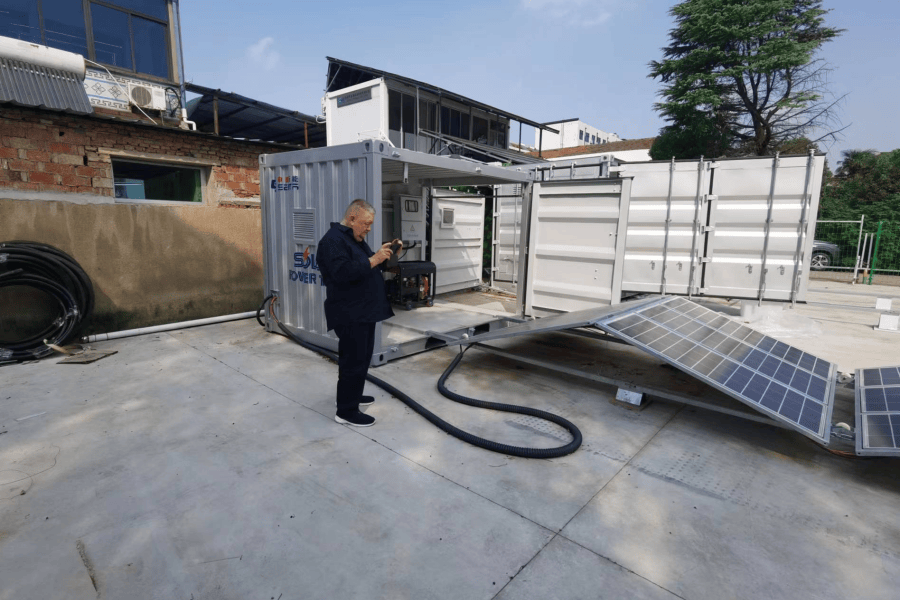
Table of Contents
- The Power Puzzle for Modern Military Bases
- The Mobile Container: A Flexible Answer with Hidden Complexities
- Where the Smart BMS Becomes the Unsung Hero
- Weighing the Real Benefits: Beyond the Brochure
- The Honest Drawbacks: What We've Learned On-Site
- Making It Work: The Integration Imperative
The Power Puzzle for Modern Military Bases
Honestly, if you're managing energy for a military installation, you're playing a different game. It's not just about kilowatt-hours or peak shaving. It's about mission assurance. The core problem I've seen firsthand, from discussions with base commanders in Europe to engineers in the US, is a triple threat: the need for unwavering resilience, rapidly deployable power, and doing it all within a budget that doesn't trigger a congressional audit. The traditional grid is a single point of failure. Diesel generators are reliable but noisy, polluting, and require constant fuel logistics - a major vulnerability. Fixed infrastructure takes years to approve and build. This creates a massive gap between the operational need for energy security and the practical solutions available.
Let's agitate that a bit. According to a National Renewable Energy Laboratory (NREL) analysis, cyber-physical threats and extreme weather are the top concerns for critical infrastructure energy planners. A base's operational readiness can literally hinge on a few milliseconds of power quality. When the lights flicker, it's not just an inconvenience; sensitive communications, surveillance, and data systems go down. The cost isn't just measured in dollars, but in preparedness. That's the high-stakes environment we're talking about.
The Mobile Container: A Flexible Answer with Hidden Complexities
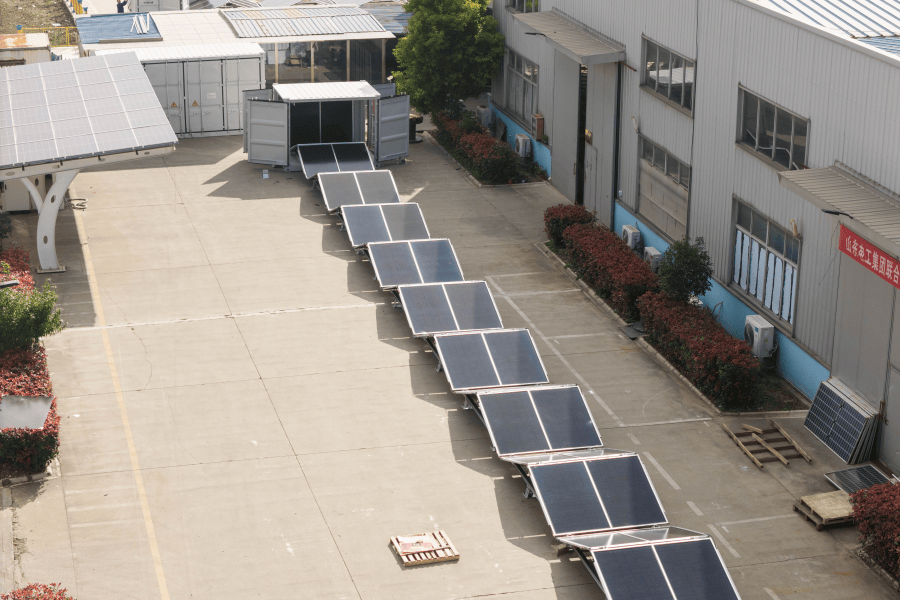
Enter the mobile power container. On paper, it's a brilliant solution. It's a pre-fabricated, plug-and-play battery energy storage system (BESS) on a skid or in a shipping container. Need to bolster the microgrid for a new radar installation? Deploy one. Temporary forward operation base? Truck it in. It promises rapid deployment, scalability, and cleaner, quieter power than diesel. It's why this approach has gained serious traction.
But here's the raw, on-the-ground truth I've learned over two decades: a mobile container is only as good as the intelligence inside it. You can't just slap some lithium-ion cells into a steel box, put wheels on it, and call it a day. The mobility aspect introduces a world of complexity that fixed-site BESS doesn't face to the same degree. Constant transportation vibration, diverse and sometimes harsh environmental conditions (from the deserts of Nevada to the cold of Alaska), and the need to interface with different existing electrical systems at each deployment site. That's where the conversation about benefits and drawbacks truly begins, and it all centers on one component: the Smart Battery Management System (BMS).

Where the Smart BMS Becomes the Unsung Hero
Think of the Smart BMS as the central nervous system and guardian angel of your mobile power asset. A basic BMS might prevent over-voltage. A Smart BMS, like the ones we design at Highjoule, is what transforms a container from a simple battery box into a resilient, self-aware power node. It's the key that unlocks the real benefits and mitigates the toughest drawbacks.
Let me break down a core technical concept in plain terms: Thermal Management. Lithium-ion cells are sensitive to temperature. Too hot, and you risk thermal runaway - a fire. Too cold, and you lose capacity and can damage the cells. In a fixed site, climate control is easier. In a mobile container bouncing down a rough road and then sitting in an open field, maintaining that perfect thermal balance is a huge challenge. A Smart BMS doesn't just react; it predicts. It uses a network of sensors to model "thermal hotspots" within the container and proactively adjusts cooling systems, cell balancing, and charge/discharge rates (what we call C-rate) to keep everything in the sweet spot. This isn't just about safety; it directly impacts the container's lifespan and its ability to deliver full power on demand, which is the whole point.
Weighing the Real Benefits: Beyond the Brochure
So, with a robust, smart BMS at the helm, what are the tangible benefits?
- Enhanced Safety & Predictive Maintenance: This is non-negotiable. A smart BMS provides 24/7 monitoring of every cell group's voltage, temperature, and impedance. It can flag a potential weak cell weeks before it fails, allowing for scheduled maintenance instead of an emergency shutdown during a critical exercise. This predictive capability is a force multiplier for your maintenance crews.
- True Mobility & Rapid Deployment: The system knows its own state of health. Before connecting to a base's grid, it can run a self-diagnostic and communicate any readiness issues. This prevents costly connection errors. At Highjoule, our containers come with UL 9540 and IEC 62619 certifications as standard - this pre-certification is crucial for base engineers who need to know the system meets stringent safety standards, anywhere.
- Optimized Total Cost of Ownership (TCO): By meticulously managing charge cycles, depth of discharge, and thermal conditions, the smart BMS significantly reduces degradation. This extends the system's life from maybe 10 years to 15+ years. In energy finance, we call this lowering the Levelized Cost of Storage (LCOS). You're getting more usable energy over the asset's life, which is a major win for budget-conscious planners.
- Grid Services & Energy Arbitrage: When not in a tactical mode, these containers can be revenue-generating assets. A smart BMS enables seamless participation in utility demand response programs or local energy markets, storing cheap power at night and discharging during expensive peak periods. The savings can help justify the capital expenditure.
The Honest Drawbacks: What We've Learned On-Site
Now, let's have that coffee-chat honesty. The drawbacks are real, and ignoring them leads to failed projects.
- Higher Upfront Capital Cost: The advanced sensor arrays, communication hardware, and sophisticated software of a true smart BMS add cost compared to a basic system. You're paying for intelligence and long-term reliability upfront.
- Cybersecurity Surface: Any connected, smart system is a potential cyber target. A mobile container with a cellular or satellite link for remote monitoring introduces a new vector that must be hardened. This requires constant software updates and a security-first design philosophy from the ground up - something we've baked into every Highjoule system to meet evolving military standards.
- Integration Complexity: The "mobile" part can be a double-edged sword. Each new deployment site may have different switchgear, grid interfaces, or control protocols (like SCADA). The smart BMS needs to be flexible enough to communicate with these varied systems. If not designed for interoperability from the start, you get a "stranded asset" that can't talk to the local microgrid controller.
- Specialized Maintenance Knowledge: While the BMS predicts failures, fixing them still requires technicians who understand both high-voltage battery systems and complex digital controls. This skill set is rarer than traditional generator mechanics, so training and partner support are critical.
Making It Work: The Integration Imperative
The biggest lesson from our projects, like the one we supported for a US National Guard facility in California, wasn't about the hardware. It was about integration. The container itself was a masterpiece of engineering. But its success came from sitting down with the base's energy managers before delivery to map their exact SCADA communication protocols, define their resilience use-cases (was it for backup, renewable smoothing, or cost reduction?), and tailor the BMS alerts to their operational procedures.
So, when you evaluate a Smart BMS Monitored Mobile Power Container, don't just look at the spec sheet for cycle life and power rating. Ask the harder questions: How is the BMS secured against cyber threats? Can it integrate with my existing energy management system? What's the real-world process for getting actionable insights from all that monitoring data? Does the provider offer localized service and training to ensure your team owns the technology?
The benefit isn't the container. The benefit is predictable, resilient, and economically sensible power wherever and whenever the mission requires it. The drawback is underestimating the need for a true technology partner who understands that the box is just the beginning of the conversation. What's the one operational constraint on your base that keeps you up at night, and how could a mobile, intelligent power asset change that equation?
Tags: UL Standard Microgrid Smart BMS Energy Resilience Mobile Power Container Military Base Energy BESS Security
Author
James Zhang
20+ years agricultural energy storage engineer / Highjoule CTO