
Black Start Capable Hybrid Solar-Diesel Systems: A Game Changer for Remote Site Power
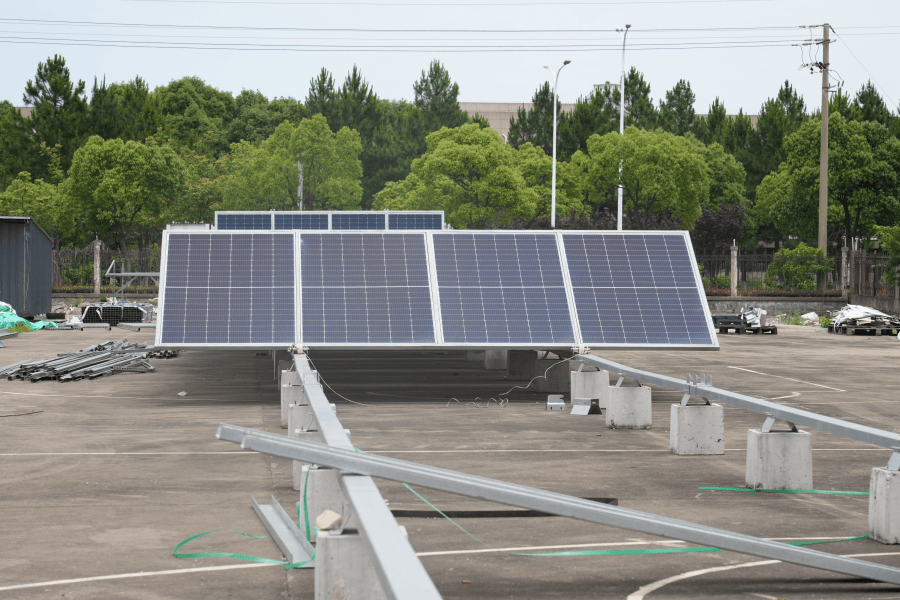
Table of Contents
- The Silent Problem on Every Remote Job Site
- The Real Cost of Downtime and Diesel Dependence
- The Hybrid Solution: More Than Just Panels and Batteries
- A Real-World Case Study: Powering a Mountain Highway Project
- The Tech Deep Dive: Why "Black Start" Isn't Just a Buzzword
- Making It Work for Your Project: Key Considerations

The Silent Problem on Every Remote Job Site
Let's be honest. If you're managing a construction project off the main grid C be it a new highway section, a mining operation, or a utility-scale solar farm itself C your biggest daily anxiety isn't usually the weather or the schedule. It's the power. That constant, low-grade worry about the diesel generators. Will they start in the cold? How long until the next fuel truck gets stuck on the access road? What happens if the main gen-set trips and the "backup" takes 30 seconds to kick in, wiping out the control systems and halting every piece of critical equipment? I've seen this firsthand on site: that moment of silence when the generators fail, followed by a chorus of alarms and frustrated crews. It's not just an inconvenience; it's a massive, unbudgeted cost and a project risk multiplier.
The Real Cost of Downtime and Diesel Dependence
We often talk about diesel cost, and it's staggering. The U.S. Department of Energy's National Renewable Energy Laboratory (NREL) has highlighted that fuel delivery and price volatility can constitute over 70% of the total operating cost for remote power systems. But the agitation point, the real pain, goes deeper than the fuel bill.
Think about the cascading effects: A power outage stops concrete pours mid-batch. It disrupts dewatering pumps, risking trench collapse. It halts communications and site security. Every minute of downtime isn't just lost labor; it's potential material spoilage, safety compromises, and schedule slippage measured in days, not hours. Furthermore, running diesel gensets at low load C which happens often when demand fluctuates C is brutally inefficient, leading to "wet stacking," increased maintenance, and premature failure. You're burning money twice: once on wasted fuel, and again on accelerated engine wear. The traditional "genset + backup genset" model is a liability, not just an energy solution.
The Hybrid Solution: More Than Just Panels and Batteries
This is where the narrative shifts. The solution isn't just slapping some solar panels next to the diesel gensets. That's a basic hybrid system. The real game-changer, as demonstrated in a growing number of Real-world Case Study of Black Start Capable Hybrid Solar-Diesel System for Construction Site Power deployments, is the integration of a sophisticated, black-start capable Battery Energy Storage System (BESS) as the heart of the power plant.
This system architecture flips the script. Instead of the generator being the master, the BESS becomes the grid-forming leader. The diesel gensets become controlled, optimized assets - like a loyal supporting cast. The solar array feeds the BESS and loads directly. The result? The gensets can be switched off for long periods, or made to run only at their most efficient, high-load set points. But the magic trick, the critical feature for any site manager who's lived through a blackout, is the black start capability.
A Real-World Case Study: Powering a Mountain Highway Project
Let me walk you through a project we were involved with in the Pacific Northwest. The challenge was powering a 24/7 tunnel-boring operation and base camp for a new highway segment. No grid for miles. The initial setup was four 1 MW diesel generators (N+1 redundancy). Fuel logistics were a nightmare, noise was an environmental concern, and the fear of a simultaneous trip was ever-present.
The solution we deployed was a 2 MWh, UL 9540-certified BESS container, paired with a 1.2 MWp solar canopy over the material yard, integrated with two of the existing generators (now re-purposed). Here's what changed:
- Fuel Use Slashed: The gensets now only ran 6-8 hours per day, at peak load, versus 24/7. Fuel truck visits dropped from twice a week to once every two weeks.
- Silent, Instantaneous Backup: During a scheduled generator switch-over, a control glitch caused both units to fault. The BESS, operating in grid-forming mode, didn't even blink. It maintained perfect power quality to the tunnel boring machine and life-safety systems. The gensets were then calmly restarted and re-synchronized to the "microgrid" created by the BESS C a true black start sequence initiated by the battery.
- Emissions & Noise Compliance Met Easily: The reduced runtime helped the project easily stay within strict local emissions permits and noise ordinances.
Honestly, the project superintendent's main feedback was about the "peace of mind." The power was just?- there. Reliable. It became a utility, not a crisis.

The Tech Deep Dive: Why "Black Start" Isn't Just a Buzzword
As a technical expert, I need to demystify this. A "black-start capable" BESS for these applications isn't just a big battery. It's an intelligent power electronics platform. Key things we specify at Highjoule for such systems:
- Grid-Forming Inverters: Unlike typical grid-following inverters that need an existing voltage signal to sync to, these can create a stable voltage and frequency waveform from zero, like a traditional generator - but in milliseconds. This is the core of black start.
- C-rate and Duration: For construction sites, we don't just look at capacity (kWh). We size the C-rate C the battery's power discharge speed. Starting large inductive loads (think big motors) requires a high, short burst of power (high C-rate). We design for that surge, not just average daily energy.
- Thermal Management: This is where field experience is non-negotiable. A BESS container in the Nevada desert or the Canadian Rockies faces extreme temperatures. A liquid-cooled thermal management system is crucial. It maintains optimal cell temperature, ensuring performance when you need it most (like during a black start in freezing conditions) and maximizing the system's lifespan. Poor thermal management is the number one cause of premature battery degradation I've seen in the field.
- Standards are Your Safety Net: Every component must be built and tested to relevant standards C UL 9540 for the overall system, UL 1973 for the batteries, IEEE 1547 for grid interconnection. For us, this isn't a checkbox; it's the foundation of a safe, insurable, and bankable asset.
Making It Work for Your Project: Key Considerations
So, how do you translate this into a successful project? Based on our deployment experience across North America and Europe, here's my insight:
First, model everything. Use tools to simulate your load profile, solar resource, and fuel costs. The goal is to minimize the Levelized Cost of Energy (LCOE) for the site, not just to add fancy tech. A well-sized hybrid system often hits a lower LCOE than pure diesel within 2-3 years.
Second, plan for the end of the project. One huge advantage of a containerized BESS? It's mobile. When the highway or mine is complete, the entire system can be relocated to the next site, or redeployed for temporary disaster relief or event power. This mobility transforms a capital expense into a reusable asset, drastically improving its financial model.
Finally, partner with someone who thinks beyond the sale. You need a provider who understands the local permitting landscape (crucial in the US and EU), can offer remote monitoring, and has the service network for rapid response. The system's intelligence C its energy management system (EMS) C is its brain. It needs to be expertly configured and adaptable to your site's unique rhythms.
The era of simply tolerating unreliable, expensive, dirty site power is over. The technology, proven in rigorous Real-world Case Study of Black Start Capable Hybrid Solar-Diesel System for Construction Site Power applications, is here, it's robust, and it pays for itself. The real question is, how much will you save on your next remote project by making the switch?
Tags: Construction Site Power UL Standard BESS LCOE Black Start Renewable Energy Hybrid Power System
Author
James Zhang
20+ years agricultural energy storage engineer / Highjoule CTO