
How Much Does a C5-M Anti-Corrosion Industrial ESS Container Cost for Coastal Sites?
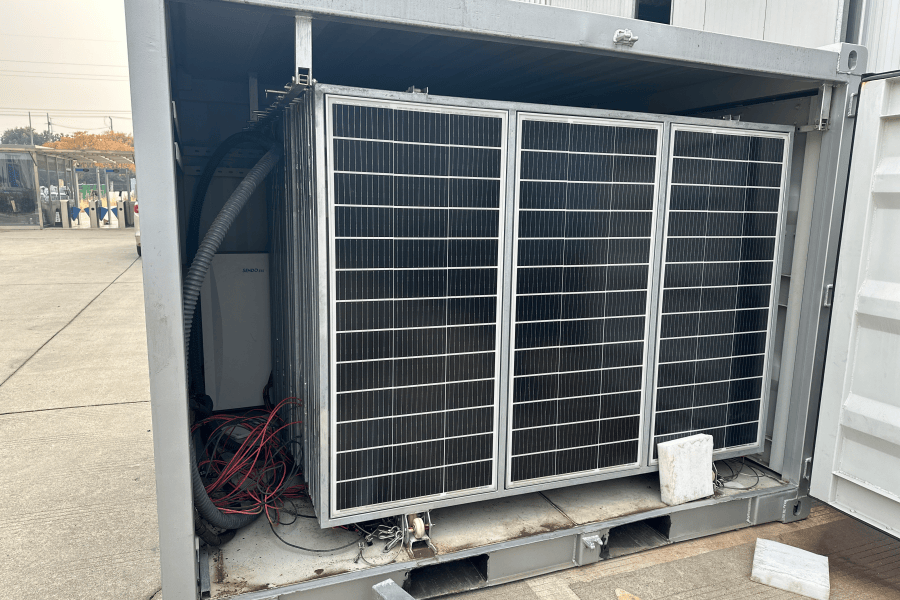
Let's Talk About the Real Cost of Battery Storage on the Coast
Honestly, if I had a dollar for every time a client asked me that exact question - "How much does it cost for a C5-M anti-corrosion industrial ESS container?" - I'd probably be retired on a beach somewhere. But the beach is exactly the problem, isn't it? That salty air that's so great for a vacation is a nightmare for industrial equipment. So, grab your coffee, and let's have a real talk. The price tag you see on a spec sheet is just the beginning. The real cost is in what you don't pay for later.
Quick Navigation
- The Real Problem Isn't Just Salt, It's the Bill That Comes After
- Breaking Down the "Cost": More Than Just a Container Price
- A Case in Point: When "Savings" Turn Into a Money Pit
- The Highjoule Approach: Engineering for Total Cost of Ownership
- Making the Decision: Key Questions for Your Coastal Project
The Real Problem Isn't Just Salt, It's the Bill That Comes After
Here's the thing everyone in the industry knows but doesn't always say upfront: deploying a standard industrial battery container in a coastal or offshore environment is a bit like building a sandcastle right at the water's edge. It might look solid on day one, but the environment is relentless. I've seen this firsthand on sites from the Gulf Coast to the North Sea. The salt-laden mist - what we call a salt-spray environment - doesn't just cause surface rust. It creeps into connectors, attacks busbars, and degrades protective coatings on critical components like battery racks and inverter heat sinks.
The immediate effect? Increased maintenance, unplanned downtime, and safety risks. The long-term effect? A dramatically shortened system lifespan. According to a National Renewable Energy Laboratory (NREL) analysis on BESS in harsh environments, corrosion-related failures can reduce a system's operational life by up to 40% compared to a benign inland site. That's not just a repair cost; that's a complete blow to your project's financial model and levelized cost of energy (LCOE). You're not getting the ROI you banked on.
Breaking Down the "Cost": More Than Just a Container Price
So, when we talk about cost for a C5-M rated container, we have to look at the whole picture. The C5-M classification (per ISO 12944) is the highest defense for very highly corrosive atmospheres - think industrial coastal areas with salt spray. Hitting that standard isn't just about thicker paint.
- The Upfront Premium (The "Sticker Price"): Yes, a properly engineered C5-M container system will cost more upfront than a standard C3 or C4 unit. We're talking about specialized materials (marine-grade aluminum alloys, stainless-steel fasteners), advanced coating systems with multiple layers, and completely sealed, pressurized, and filtered environmental control systems to keep the corrosive atmosphere out. This can add a premium.
- The Hidden "Cost" of Cutting Corners: This is where the aggravation kicks in. If you try to save on the initial capex with a lesser system, you inherit all the risk. I've walked into sites where after just 18 months, they're already doing weekly inspections on electrical enclosures, dealing with thermal management issues because fan filters are clogged with salt, and worrying about warranty claims because the manufacturer says "this wasn't for a severe marine environment." The operational expenditure (OpEx) skyrockets.
- The Long-Term Value (The Real "Cost" Answer): The true cost of a C5-M solution is its Total Cost of Ownership. It's the peace of mind that your thermal management system will breathe clean air for a decade. It's the guarantee that your DC busbars won't fail prematurely. It's the extended lifespan that keeps your LCOE low and your ROI predictable. At Highjoule, when we engineer for C5-M, we're not just building a box; we're building a 20-year asset for a harsh world.

A Case in Point: When "Savings" Turn Into a Money Pit
Let me give you a real example from a few years back. A mid-sized industrial plant in Florida wanted to add a 2 MWh BESS for peak shaving and backup power. They were right on the coast. They got two bids: one for a properly rated C5-M container system, and one for a standard industrial unit that the vendor claimed "would be fine" with some extra paint. The price difference was about 15% upfront.
They went with the cheaper option. By year two, corrosion on the internal structural supports was visible. The air-handling units were failing frequently due to salt clogging. The worst part? The battery manufacturer flagged anomalies in some cell voltages, potentially linked to connector corrosion, and threatened to void that section of the warranty. The plant manager later told me the "savings" had been wiped out in extra maintenance and downtime within 18 months, and they were facing a major retrofit or replacement. That initial 15% "saving" turned into a 50% cost overrun versus just doing it right the first time.
The Highjoule Approach: Engineering for Total Cost of Ownership
Our philosophy, born from two decades of these field lessons, is simple: engineer out the failure points from the start. For our coastal-deployable containers, the C5-M protection is baked into the DNA of the design.
- Beyond the Coatings: It starts with material selection - specific alloys and composites resistant to chloride attack. Every weld, seam, and cable gland is sealed to IP65 or better.
- Climate Control is King: The thermal management system is the lungs of the container. We use redundant, pressurized systems with high-grade particulate and chemical filters to ensure only clean, dry, and cool air interacts with the batteries and power electronics. This isn't just about temperature; it's about air quality. A stable C-rate performance depends on it.
- Compliance You Can Trust: Everything is designed and tested to meet the rigorous standards the US and EU markets demand - UL 9540 for the system, IEC 61427-2 for environmental testing, and IEEE 1547 for grid interconnection. This isn't just paperwork for us; it's the blueprint for safety and longevity.
- Localized Support: The cost equation also includes service. Having local technicians who understand the specific challenges of coastal sites means faster response, the right spare parts, and maintenance plans that proactively address environmental wear.
Making the Decision: Key Questions for Your Coastal Project
So, back to your original question. Instead of just asking for a price, I'd encourage you to frame the conversation around value and risk. Ask your potential suppliers these questions:
| Question to Ask | What a Good Answer Looks Like |
|---|---|
| "Can you show me the specific ISO 12944 certification and test reports for C5-M or CX (Marine) classification?" | Provision of third-party lab reports showing 3,000+ hour salt-spray test results on the actual cabinet and material samples. |
| "What is the design life of the container structure and coatings in my specific location?" | A detailed answer referencing corrosion zone maps and a guaranteed maintenance schedule for the enclosure. |
| "How does the thermal management system prevent salt ingress and manage humidity?" | Explanation of pressurization, filtration grades (e.g., F9 for salts), and redundancy, not just cooling capacity. |
| "What is the warranty coverage for corrosion-related failures on both the container and internal components?" | Clear, written warranty terms that explicitly cover the harsh environment, with no ambiguous exclusions. |
Honestly, the market is moving fast. With the International Energy Agency (IEA) highlighting the critical role of storage in grid resilience, we can't afford to have assets failing prematurely because we underestimated the air they breathe. The right C5-M system isn't an expense; it's an insurance policy for your entire energy investment.
What's the one corrosion-related failure you're most concerned about on your site? Let's talk about how to design it out from day one.
Tags: UL Standard BESS C5-M Anti-Corrosion IEC Standard Energy Storage System Salt-Spray Environment Coastal Energy Projects ESS Container Cost
Author
James Zhang
20+ years agricultural energy storage engineer / Highjoule CTO