
Benefits and Drawbacks of Tier 1 Battery Cell Hybrid Solar-Diesel Systems for EV Charging
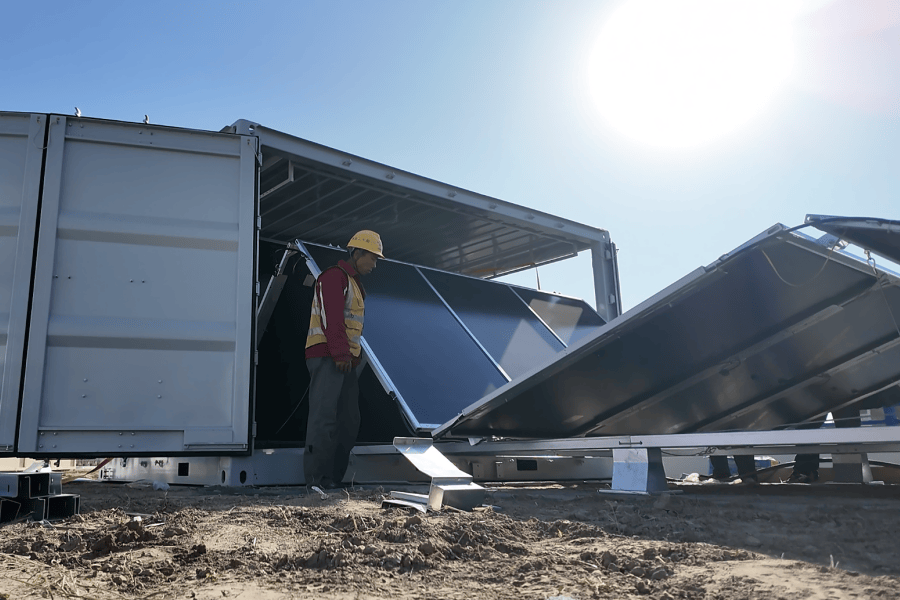
Beyond the Hype: The Real Talk on Tier 1 Battery Hybrid Systems for Your EV Charging Station
Hey there. Let's grab a virtual coffee. I want to talk about something I've been seeing a lot of lately: the rush to build EV charging stations, especially in places where the grid is, well, let's say "enthusiastic" rather than rock-solid. I've been on-site from California to Northern Germany, and the conversation always turns to one solution: a hybrid solar-diesel system backed by a battery. And not just any battery, but one built with so-called "Tier 1" cells. It sounds like the perfect, future-proof answer, right? Honestly, it can be. But after 20 years of deploying these systems, I've learned the devil - and the angel - are both in the details. Let's break down the real benefits and drawbacks, not from a spec sheet, but from the field.
Quick Navigation
- The Silent Grid Strain & The Diesel Dilemma
- When "Good Enough" Isn't Good Enough for Business
- Enter the Tier 1 Hybrid: More Than Just a Backup
- The Compelling Upsides of a Tier 1 Cell System
- The Real Costs & Considerations You Can't Ignore
- A View from the Field: California's Logistics Hub
- My Take: It's About Total Cost of Ownership, Not Just Price
The Silent Grid Strain & The Diesel Dilemma
Here's the phenomenon: The demand for fast EV charging is exploding, but the grid infrastructure in many commercial and industrial areas, or along key transport corridors, wasn't designed for this kind of instantaneous, massive power draw. According to the National Renewable Energy Lab (NREL), a single public fast-charging station can increase a local transformer's load by up to 400%. That's a huge spike. So, what's the traditional fallback? Diesel generators. They're reliable power, sure. But running them 24/7 for charging is financially and environmentally painful. The noise, the emissions, the fuel logistics - it feels like a step backwards while you're trying to build a forward-facing business.
When "Good Enough" Isn't Good Enough for Business
Let's agitate that pain a bit. You might think, "We'll just use a smaller battery with cheaper cells to smooth things out." I've seen this firsthand on site. A fleet depot in the Midwest tried that. The problem? Inconsistent cell quality. When you're constantly cycling a battery - soaking up solar peaks, discharging for fast charging, backing up the diesel - the weaker cells in a low-tier pack degrade faster. This creates imbalance. The whole system's performance drops, your expected lifetime plummets, and suddenly, your "cost-saving" battery needs replacement years early. The risk isn't just financial; thermal runaway risks increase with imbalanced, low-quality cells. For a commercial operator, downtime or a safety incident is a brand-killer.
Enter the Tier 1 Hybrid: More Than Just a Backup
So, what's the solution that balances performance, longevity, and peace of mind? A properly engineered hybrid system using Tier 1 battery cells. This isn't just a battery slapped onto a solar array and a generator. It's an integrated energy management system where the Tier 1 battery is the intelligent heart. It allows the solar to be the primary workhorse, uses the battery to shave peak grid demand and provide instant power for chargers, and keeps the diesel generator as a silent, last-resort backup that rarely needs to run. The "Tier 1" designation for the cells refers to manufacturers (think Panasonic, LG, Samsung, CATL) with proven, large-scale automotive-grade quality and consistency. This is the key differentiator.

The Compelling Upsides of a Tier 1 Cell System
Let's talk benefits, the real ones that show up on your balance sheet and operations report.
- Predictable Performance & Longevity: Tier 1 cells come with rigorously tested specifications. Their consistency means the battery pack degrades evenly. You can reliably model its performance over 10-15 years. This predictability is gold for calculating your Levelized Cost of Energy (LCOE) - the true total cost of the power your station uses. A stable, long-life battery directly lowers your LCOE.
- Enhanced Safety & Regulatory Smoothening: This is huge for deployment in the US and EU. Tier 1 cells undergo extreme testing that often exceeds basic standards. When your Battery Energy Storage System (BESS) uses these cells and is assembled with proper thermal management (like Highjoule's liquid-cooled cabinets that keep every cell within a 2C range), it makes the UL 9540/ IEC 62933 certification process smoother. Inspectors and insurers sleep better. Honestly, I've seen projects get approved faster because of the recognized cell brand.
- Higher C-Rate Capability (Translated: Faster Power): "C-rate" is basically how fast you can charge or discharge the battery safely. Tier 1 automotive-grade cells are designed for high C-rates. For an EV charger, this means the battery can deliver a huge burst of power to a car quickly, then gently recharge from solar or grid. This maximizes charger utilization without needing to oversize the entire system.
- Optimized Fuel & Grid Savings: With a robust battery, your system controller can be aggressive in minimizing diesel runtime. The generator only kicks in when the battery is depleted and solar is unavailable. I've seen sites cut diesel fuel consumption by over 90%. You're also avoiding peak grid demand charges, which can be a massive portion of a commercial electricity bill.
The Real Costs & Considerations You Can't Ignore
Now, the drawbacks. We have to be honest. A premium system has premium costs.
- Higher Upfront Capital Cost (CAPEX): This is the most obvious one. Tier 1 cells and the sophisticated BESS that houses them cost more per kWh upfront than systems using lesser-known cells. You're paying for that quality, safety, and longevity assurance. The business case must look at the total lifecycle, not just year-one costs.
- Complexity of Integration: A solar-diesel-battery hybrid isn't a simple product; it's a project. It requires expert design to ensure the power electronics, energy management system (EMS), and battery communicate flawlessly. The wrong EMS can make a Tier 1 battery perform like a Tier 2. You need a provider with deep integration experience, not just a component seller.
- Dependence on Quality Balance of System (BOS): The best cells can be let down by poor battery management systems (BMS), shoddy cooling, or weak inverters. The entire "balance of system" must be Tier 1 in quality to realize the full benefit. This is where companies like ours at Highjoule Technologies obsess over details - using UL-listed components throughout and designing for 24/7 cyclic duty from the ground up.
A View from the Field: California's Logistics Hub
Let me give you a real case. We deployed a system for a large logistics hub in California's Central Valley. Their challenge: power 12 fleet electric trucks overnight, but their grid connection was limited, and local air quality regulations heavily penalized diesel use.
The Solution: A 500 kW solar canopy, a 1 MWh BESS built with Tier 1 NMC cells, and a 750 kW diesel gen-set as backup. The Highjoule EMS was programmed to prioritize solar charging of the battery, use the battery for all overnight truck charging, and only call on the generator if a multi-day storm depleted the reserve.
The Outcome: In the first year, the generator ran for less than 50 hours total. They avoided tens of thousands in demand charges. The local utility loved the grid stability. But the key moment for me was when we did the first annual performance check. The battery's state of health was 99.3% of its modeled value. That predictability is what makes the CFO smile. The system wasn't the cheapest bid, but it delivered on its financial and operational promises.
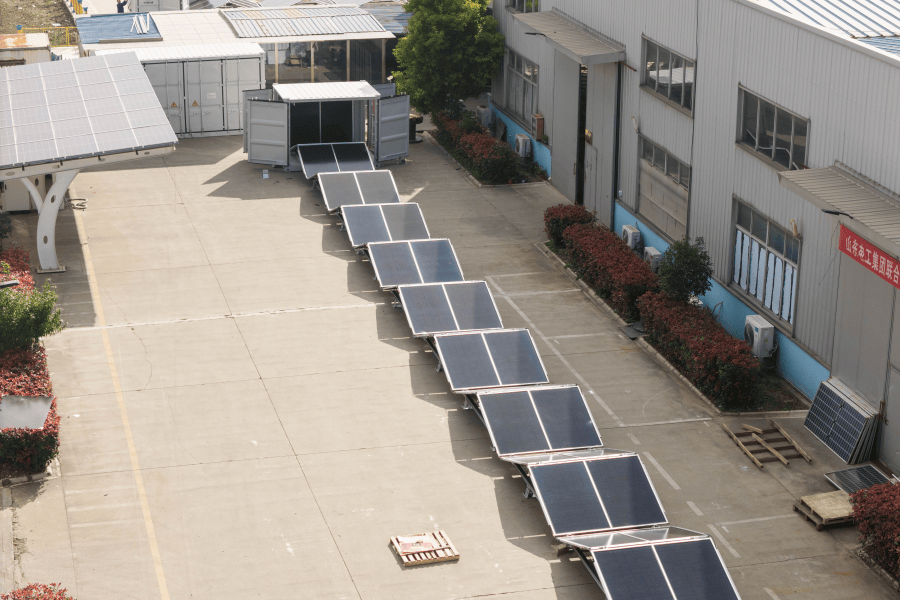
My Take: It's About Total Cost of Ownership, Not Just Price
So, here's my expert insight after two decades: The debate shouldn't be "Tier 1 vs. cheaper cells." It should be "understood total cost of ownership vs. unpredictable financial risk."
For a mission-critical application like a public or fleet EV charging station, where uptime is revenue and safety is non-negotiable, the benefits of a Tier 1 cell-based hybrid system overwhelmingly justify the initial investment. The drawbacks are primarily upfront hurdles that can be managed by choosing the right partner - one that handles the complex integration, provides a performance guarantee, and offers local service to keep it all running optimally.
Think of it this way: You're building a critical piece of energy infrastructure that will last 15+ years. The battery is the core. Does it make sense to save 15% on the core component if it introduces a 40% higher risk of early failure or underperformance? For most serious commercial and industrial operators I work with, the answer is a clear no.
What's the one operational risk in your current charging plan that keeps you up at night? Is it grid reliability, fuel costs, or the long-term performance of your assets? Let's talk about how the right hybrid system design can address that directly.
Tags: UL Standard BESS LCOE EV Charging Infrastructure Renewable Energy Hybrid Systems
Author
James Zhang
20+ years agricultural energy storage engineer / Highjoule CTO