
20ft High Cube PV Storage Systems for High-Altitude Sites: A Practical Guide
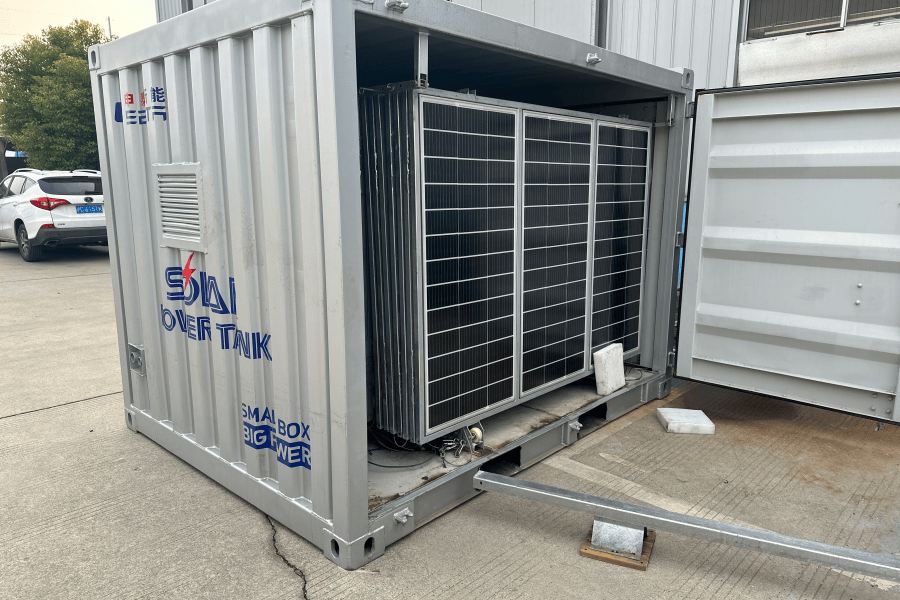
Table of Contents
- The High-Altitude Challenge Isn't Just About Thin Air
- Data Doesn't Lie: The Efficiency Penalty is Real
- Why the 20ft High-Cube Container Becomes the Go-To Solution
- A Case from the Rockies: Seeing is Believing
- Key Factors Compared: What to Look For in Your System
- Beyond the Spec Sheet: The On-Ground Reality
The High-Altitude Challenge Isn't Just About Thin Air
Honestly, when we first started getting requests for battery storage systems in the Alps or the Rocky Mountains, the initial thought was about logistics C getting the hardware up there. But after 20+ years on site, I can tell you the real story begins after installation. The core problem for commercial and industrial clients in high-altitude regions isn't just finding any storage solution; it's finding one that doesn't degrade prematurely, become a safety headache, or silently eat into your ROI due to poor performance.
Think about it. Lower air density impacts cooling efficiency dramatically. A thermal management system that works perfectly at sea level in California can struggle at 3,000 meters, leading to increased cell degradation and, frankly, a higher risk of thermal runaway. Then there's the increased UV radiation, wider daily temperature swings (I've seen -25C to 15C in a single day in the Swiss Alps), and the sheer remoteness of some sites. Maintenance isn't a quick drive away. This environment doesn't just test equipment; it ruthlessly exposes any design or component weakness.
Data Doesn't Lie: The Efficiency Penalty is Real
This isn't just anecdotal. Studies from the National Renewable Energy Laboratory (NREL) have shown that battery performance and lifespan can be significantly impacted by operational temperature. For every 10C above a cell's ideal temperature range, its degradation rate can roughly double. At high altitudes, maintaining that ideal temperature is an energy-intensive battle. Furthermore, the International Energy Agency (IEA) highlights the growing demand for resilient, off-grid, and microgrid solutions in remote and topographically challenging areas C a market where high-altitude expertise is no longer a niche but a necessity.
The financial pain point here is the Levelized Cost of Storage (LCOS). If your system's capacity fades 30% faster because of thermal stress, or you're constantly spending on emergency maintenance visits, your projected payback period flies out the window. You're not just buying a battery; you're buying years of reliable, predictable performance.
Why the 20ft High-Cube Container Becomes the Go-To Solution
This is where the comparison of different 20ft high-cube photovoltaic storage systems becomes critical. The standardized container format solves the base logistics issue. But not all containers are created equal, especially up here. The "high-cube" (9.6ft tall) design is non-negotiable. Why? It gives us the internal volume to design a superior, passive thermal buffer zone and install more robust, redundant air-handling units without cramming the battery racks. It allows for proper service aisles so technicians can safely do inspections on site C a simple but often overlooked feature that makes a world of difference for long-term health checks.
For us at Highjoule, moving to a high-altitude project means we start with our standard 20ft platform but make key pivots. We're not just slapping on a bigger AC unit. It's about a holistic redesign: from cell selection with wider temperature tolerances, to proprietary cabinet sealing that maintains internal air quality and humidity despite external pressure changes, to HVAC systems rated for the specific derated conditions of low air density. Every component, down to the DC switchgear, is chosen and tested for this environment.
A Case from the Rockies: Seeing is Believing
Let me give you a real example. We deployed a system for a remote ski resort and microgrid in Colorado, sitting at about 2,800 meters. Their challenge was storing solar for overnight operations and critical backup during winter storms. A previous, non-optimized system suffered from constant low-temperature alarms and uneven cell performance.
Our solution was a 20ft high-cube BESS with a focus on three things: 1) A dual-zone thermal management system that could independently heat or cool different sections of the battery, crucial for dealing with sun-facing vs. shaded sides of the container. 2) An UL 9540A tested enclosure design, which gave the local fire marshal and insurance company the confidence they needed C a huge hurdle in remote deployments. 3) A slightly lower overall C-rate. We designed for a sustained C-rate of 0.5C instead of pushing for 1C. This reduced internal heat generation, a key factor for longevity at altitude. The result? Two full winter seasons in, and the system's state-of-health is tracking 5% above projections. The reduced stress on the cells from better thermal control will translate directly into a lower LCOS over 15 years.

Key Factors Compared: What to Look For in Your System
So, when you're comparing 20ft high-cube systems for your high-altitude project, move beyond basic kWh and MW ratings. Dig into these specifics:
| Factor | Standard System Concern | High-Altitude Optimized Solution |
|---|---|---|
| Thermal Management | Single HVAC, basic airflow. | Redundant, high-static-pressure HVAC, independent zones, liquid cooling options for high C-rate. |
| Safety Certifications | UL 9540 (unit level). | UL 9540A (fire test) for the entire enclosure, plus IP rating for dust/ice. |
| C-rate Strategy | Maximized for power. | Often de-rated for longevity (e.g., 0.5C vs 1C), with a focus on thermal headroom. |
| Enclosure & Sealing | Standard environmental protection. | Pressure-equalization vents, enhanced sealing for particulates, corrosion-resistant coatings for high UV/snow. |
| Remote Monitoring | Standard performance data. | Granular, cell-level thermal data, HVAC performance metrics, and predictive analytics for maintenance. |
Beyond the Spec Sheet: The On-Ground Reality
Here's my firsthand insight: the biggest cost saver in a high-altitude BESS isn't always the cheapest capex. It's the operational resilience. A system that can self-regulate its temperature efficiently uses less of its own stored energy for climate control, leaving more to sell or use. A design that allows for easy, safe maintenance means shorter, less expensive service visits. And a system built to recognized standards like UL and IEC 62933 simplifies permitting enormously, especially in cautious European and North American markets.
At Highjoule, we bake this philosophy into our high-altitude builds. We think in terms of total lifecycle cost, not just sticker price. It means our engineering team obsesses over thermal modeling specific to your site's data before we even propose a design. It's why our service packages include remote diagnostics tailored to catch altitude-specific issues, like filter clogging from fine alpine dust or condenser performance drift.
So, the next time you evaluate a containerized storage system for a challenging site, ask the vendor: "Show me how this specifically works at 2,500 meters, not just in your datasheet." The depth of their answer will tell you everything you need to know. What's the one altitude-related challenge you're most concerned about for your next project?
Tags: UL Standard BESS LCOE IEEE Standards Containerized Energy Storage High-altitude Deployment Photovoltaic Storage System
Author
James Zhang
20+ years agricultural energy storage engineer / Highjoule CTO