
The Essential Guide to 215kWh Cabinet PV Storage for Reliable Telecom Base Stations
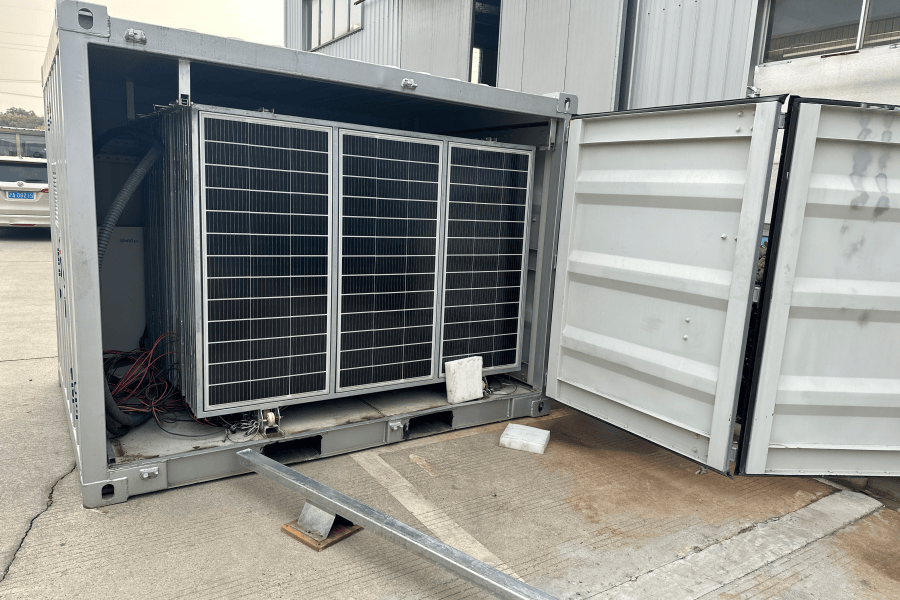
Table of Contents
- The Silent Problem: When the Grid Flickers, Your Network Can't
- The Real Cost of Keeping the Lights On
- Why the 215kWh Cabinet is Becoming the Industry's Go-To Answer
- Beyond the Spec Sheet: What Really Matters On-Site
- Making the Right Choice for Your Network
The Silent Problem: When the Grid Flickers, Your Network Can't
Let's be honest. If you're managing telecom infrastructure in Europe or North America right now, you're probably thinking more about 5G rollouts and fiber backhaul than you are about your backup power. But here's the thing I've seen firsthand on site, from rural Texas to the German countryside: the grid isn't getting more reliable. In fact, the International Energy Agency (IEA) notes that climate impacts and aging infrastructure are making power quality a growing concern. For a telecom base station, a split-second outage isn't just about losing a few calls - it's about violating SLAs, damaging sensitive equipment, and eroding customer trust in your brand's reliability.
The old playbook - diesel generators and maybe a small battery room - just doesn't cut it anymore. Generators are noisy, polluting, need constant fuel logistics, and frankly, they're a nightmare for ESG reporting. And piecing together a custom battery system for each site? That's a project manager's headache, with endless engineering hours, unpredictable costs, and a maintenance schedule that keeps you up at night.
The Real Cost of Keeping the Lights On
This is where the pain really gets amplified. It's not just the capital expense. It's the total cost of ownership over a decade or more. We have to talk about LCOE - the Levelized Cost of Energy for your backup power. With a traditional setup, your LCOE is sky-high because of:
- Fuel & Maintenance: That diesel gen-set needs love, and its fuel costs are volatile.
- Inefficient Use of Solar: Many sites have solar panels now, but without smart, right-sized storage, you're wasting precious kWh. You're not offsetting grid demand as effectively as you could.
- Downtime for Service: Sending different technicians for the generator, the inverter, and the battery bank means more site visits, more labor, more network vulnerability.
And then there's safety. Honestly, nothing gets my heart racing like walking into a poorly integrated battery room. Thermal runaway is a real risk if cells aren't managed correctly. You need a system built to the strictest local standards - UL 9540 and IEC 62933 in the US and EU aren't just nice-to-haves; they're your insurance policy.
Why the 215kWh Cabinet is Becoming the Industry's Go-To Answer
So, what's the solution? After deploying systems across hundreds of sites, I've seen the industry converge on a sweet spot: the pre-engineered, containerized 215kWh cabinet storage system. It's not a random number. This capacity consistently meets the critical load and duration requirements for a typical modern telecom site, especially when paired with solar. The Comparison of 215kWh Cabinet Photovoltaic Storage System for Telecom Base Stations isn't just an academic exercise; it's a practical procurement checklist.
Think of it like this: you're not buying a box of batteries. You're buying a power resilience appliance. A well-designed 215kWh cabinet from a company like Highjoule Technologies comes as a single, UL-certified unit. It has the battery management, thermal management, and grid-forming inverters all built-in. Your deployment time shrinks from months to weeks. Your safety certification process is streamlined. And your site crew has one unified system to monitor and maintain.

Take a project we completed in Northern Germany. The challenge was to ensure backup for a critical rural base station and to cap its rising grid demand charges. We paired their existing solar array with a single 215kWh cabinet. The system now seamlessly switches during outages, and more importantly, it intelligently dispatches stored solar energy during peak tariff hours, slashing their operational expenditure. One cabinet, one point of contact, multiple problems solved.
Beyond the Spec Sheet: What Really Matters On-Site
When you're comparing these systems, don't just look at the kWh number. Dig into the engineering that determines real-world performance and lifespan.
- C-rate is Key: This tells you how fast the battery can charge or discharge relative to its size. A moderate C-rate (like 0.5C) often means less stress on the cells, leading to a longer life than a system pushed to its max. It's about sustainable power, not just peak power.
- Thermal Management is Everything: This is where quality shines. A liquid-cooled or advanced air-cooled system that maintains a tight temperature range will have double or triple the cycle life of a poorly cooled one. I've opened cabinets after five years, and the difference in cell degradation is stark. Good thermal design is non-negotiable for a 15-year asset.
- The Software Brain: The hardware stores energy, but the software creates value. Can it integrate with your existing SCADA? Does its algorithm intelligently decide when to store solar, when to discharge for peak shaving, and when to conserve for backup? This intelligence is what optimizes your LCOE.
At Highjoule, our focus has always been on this total system philosophy. We design our 215kWh solutions not just to meet UL and IEC standards, but to exceed their stress tests. We build in redundancy for the BMS and cooling. Why? Because we're the ones who also get the 3 AM call if something goes wrong. Our service model is built on that same principle of reliability.
Making the Right Choice for Your Network
So, where do you start? Get your team together and map your sites. What's the critical load? What's the solar generation profile? What are the grid reliability issues and tariff structures? That data will show you how a standardized, high-quality cabinet system can de-risk your operations.
The goal isn't to have the most complex system. The goal is to have the most reliable, cost-effective, and safest one. The move towards standardized, containerized storage like the 215kWh cabinet isn't a trend - it's the industry maturing. It's us, as engineers and operators, learning from decades of deployments and finally offering a product that just works, right out of the box.
What's the biggest power resilience headache you're trying to solve for your next site upgrade?
Tags: UL Standard BESS LCOE Europe US Market Thermal Management Telecom Power
Author
James Zhang
20+ years agricultural energy storage engineer / Highjoule CTO