
Air-Cooled 5MWh BESS for Military Bases: Balancing Cost, Safety & Performance
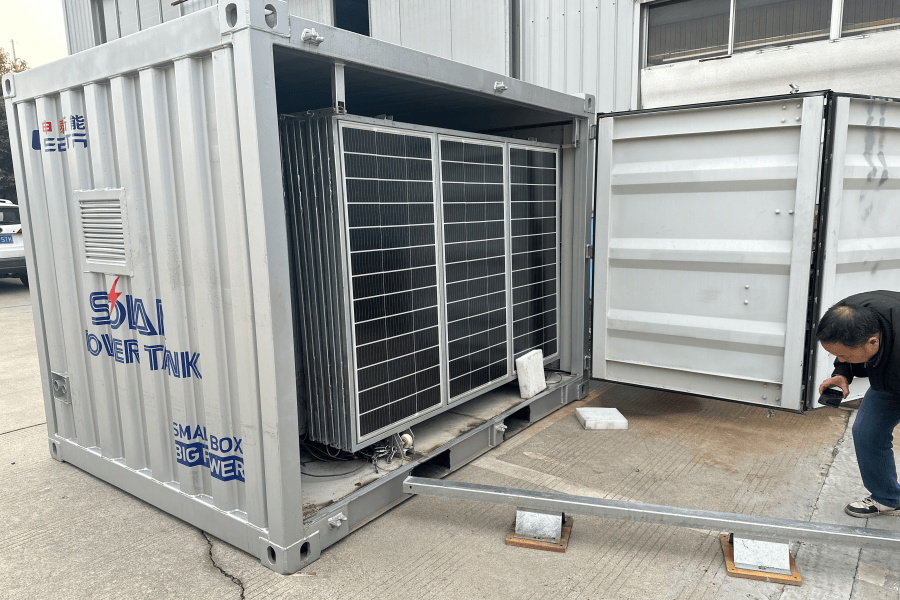
Beyond the Spec Sheet: A Real-World Look at 5MWh Air-Cooled BESS for Mission-Critical Sites
Honestly, when you're evaluating utility-scale battery storage for a military base or any other critical infrastructure site, the glossy brochures and spec sheets only tell half the story. I've spent over two decades on project sites, from dusty California valleys to secure installations in Europe, and the decision between different cooling technologies - especially for a workhorse size like 5MWh - is where theory meets the harsh reality of 24/7 operations. Let's talk about what really matters.
Table of Contents
- The Silent Trade-Off: Capex vs. Long-Term Opex
- The Thermal Management Battle on the Ground
- Safety & Compliance: The Non-Negotiable
- A Case in Point: Delivering Resilience in Practice
- Making the Right Call for Your Base
The Silent Trade-Off: Capex vs. Long-Term Opex
Here's the first-hand truth everyone in procurement grapples with: the upfront capital expenditure (CapEx) of an air-cooled 5MWh BESS is undeniably attractive compared to its liquid-cooled counterpart. It's simpler, uses fewer components, and that reflects in the initial price tag. I've seen this pull decision-makers in time and again. But the real comparison of air-cooled 5MWh utility-scale BESS for military bases starts after the ribbon-cutting.
The agitation point? Total Cost of Ownership (TCO) and Levelized Cost of Storage (LCOS). Air-cooling systems typically need more fan power to move large volumes of air. This increases parasitic load - the energy the system uses to run itself. Over a 15-20 year lifespan, that added operational expenditure (OpEx) can be significant. According to a National Renewable Energy Laboratory (NREL) analysis, thermal management can account for a substantial portion of a BESS's auxiliary load. In a 5MWh system running multiple daily cycles, efficiency losses at the component level (due to less precise temperature control) can also subtly degrade capacity and longevity, nudging the LCOS higher over time. The question becomes: are you optimizing for this year's budget or the project's lifetime value?
The Thermal Management Battle on the Ground
Let's get technical in plain English. Battery cells perform best and live longest within a tight temperature window. Thermal management is the system that keeps them there. Air-cooling, essentially a sophisticated "fan-and-duct" system, can struggle with uniformity in a densely packed 5MWh container. I've opened enclosures where cells in the center of a rack are 8-10C warmer than those at the edges. This inconsistency, or thermal gradient, stresses the battery pack.
This directly impacts two things: C-rate (the speed of charge/discharge) and cycle life. During a high-power demand event - say, bridging a generator start-up - an air-cooled system might need to derate (reduce power) sooner to prevent hotspotting, whereas a liquid-cooled system might sustain the peak. For a base prioritizing assured power availability, that's a critical differentiator. It's not that air-cooling doesn't work; it's about understanding its performance envelope under your specific duty cycle and, crucially, your local ambient conditions. A base in Arizona faces a very different cooling challenge than one in Germany.

Safety & Compliance: The Non-Negotiable
For military applications, this isn't just another box to check. Compliance with UL 9540 (the standard for ESS safety) and IEC 62619 (safety for industrial batteries) is the absolute baseline. The comparison here often centers on design philosophy. Air-cooled systems rely on effective airflow and compartmentalization to manage a thermal event.
From an engineering perspective, the key is how the system is designed to meet and exceed these standards. At Highjoule, for instance, our 5MWh utility-scale platform integrates passive fire-resistant materials, advanced early detection gas sensors (not just temperature), and a segregated "fire-block" module design that goes beyond the standard. This containment strategy is vital for air-cooled units, ensuring that even in a highly unlikely single-module failure, the event is isolated, protecting the overall asset and personnel. It's about designing with the worst-case scenario in mind, something we're deeply familiar with from deploying in sensitive industrial and microgrid contexts.
A Case in Point: Delivering Resilience in Practice
Let me share a scenario that's illustrative. We partnered with a secure communications facility in Northern Europe - similar in its resilience needs to a military base. Their challenge: provide 4+ hours of backup for critical loads, survive harsh winters with low ambient temps, and achieve this with a strict CapEx constraint and a mandated footprint.
An air-cooled, 5MWh BESS was the right fit. Why? The low ambient temperatures actually aided the cooling efficiency for much of the year, reducing parasitic load. The duty cycle was predictable, with fewer extreme high-C-rate demands. Our engineering focus was on maximizing internal airflow uniformity and integrating an optional evaporative cooling assist for the few summer peak days. By tailoring the thermal management controls and leveraging the natural climate, we met their cost, space, and performance targets. The lesson? There is no universal "best." It's a perfect alignment of technology with the site's specific operational, environmental, and economic reality.
Making the Right Call for Your Base
So, how do you navigate this comparison? Move beyond the kW/MWh price tag. Start with a brutally honest assessment:
- Duty Cycle & Environment: What is the true daily/annual discharge profile? What are the site's temperature extremes?
- Footprint & Siting: Is space at a premium? Air-cooled systems can sometimes have a larger footprint for the same capacity due to airflow pathways.
- Lifetime Value Model: Run the TCO/LCOS numbers with realistic efficiency and degradation assumptions for both cooling types.
- Service & Support: Who will maintain it? Air-cooled systems have simpler maintenance, but filter changes and fan inspections are critical and must be diligently scheduled.
Our role at Highjoule isn't to sell you one solution. It's to bring 20 years of field experience to your table, helping you model these trade-offs with real data. We've optimized our air-cooled 5MWh platform's LCOE through intelligent design, but we'll be the first to tell you when your project's parameters might demand a different approach.
The right choice empowers your mission with reliable, safe, and cost-effective resilience. What's the one operational constraint keeping you up at night regarding your base's energy security?
Tags: UL Standard BESS LCOE Thermal Management Grid Resilience Military Base Air-cooled
Author
James Zhang
20+ years agricultural energy storage engineer / Highjoule CTO