
How to Optimize IP54 Outdoor 1MWh Solar Storage for Eco-Resorts
Contents
- The Silent Problem: Your "Set-and-Forget" System Isn't Working
- The True Cost of a "Basic Box" in Paradise
- The Right Foundation: It's More Than Just an IP54 Rating
- Beyond the Battery: The System That Thinks for You
- A Real-World Example: From Grid Anxiety to Energy Independence
- Your Next Step: What to Ask Your Vendor
The Silent Problem: Your "Set-and-Forget" System Isn't Working
Let's be honest. If you're managing an eco-resort, you didn't get into this business to become a battery expert. You wanted a clean, reliable power solution that just... works. You invested in solar, and adding a 1MWh outdoor battery storage unit seemed like the logical next step to capture that sunshine and use it around the clock. But here's the painful truth I've seen firsthand on sites from the Caribbean to California: too many of these systems are underperforming assets, not the profit centers they were promised to be.
The dream is 24/7 renewable power, slashed utility bills, and a bulletproof backup for guest comfort. The reality? Systems that degrade faster than expected in salty air, controllers that don't talk to your existing solar inverters, and thermal throttling on the hottest days - just when you need power the most. You bought a "solution," but you inherited a new set of operational headaches.
The True Cost of a "Basic Box" in Paradise
This isn't just an inconvenience; it hits your bottom line. The industry metric that matters here is the Levelized Cost of Storage (LCOS) - essentially, the real, total cost of every kilowatt-hour your system delivers over its lifetime. A cheap, non-optimized container might have a low upfront cost, but its LCOS can be a killer. Why?
- Premature Degradation: Batteries are like people - they hate extreme temperatures. Inefficient thermal management can cut cycle life by 20% or more. That's a major chunk of your ROI gone.
- Operational Inefficiency: If the system's C-rate (basically, how fast you can charge/discharge it safely) isn't matched to your resort's load profile, you're leaving money on the table. You can't shove power in fast enough during peak sun, or pull it out fast enough during dinner service.
- Hidden O&M: A system that isn't designed for true outdoor resilience (beyond just a basic IP54 rating against dust and water jets) will demand more maintenance. Sending a technician to a remote site is expensive.
According to the National Renewable Energy Laboratory (NREL), system design and integration software can impact the final performance of a BESS by up to 30%. That's the difference between a project that pays for itself in 7 years versus one that struggles for 10.
The Right Foundation: It's More Than Just an IP54 Rating
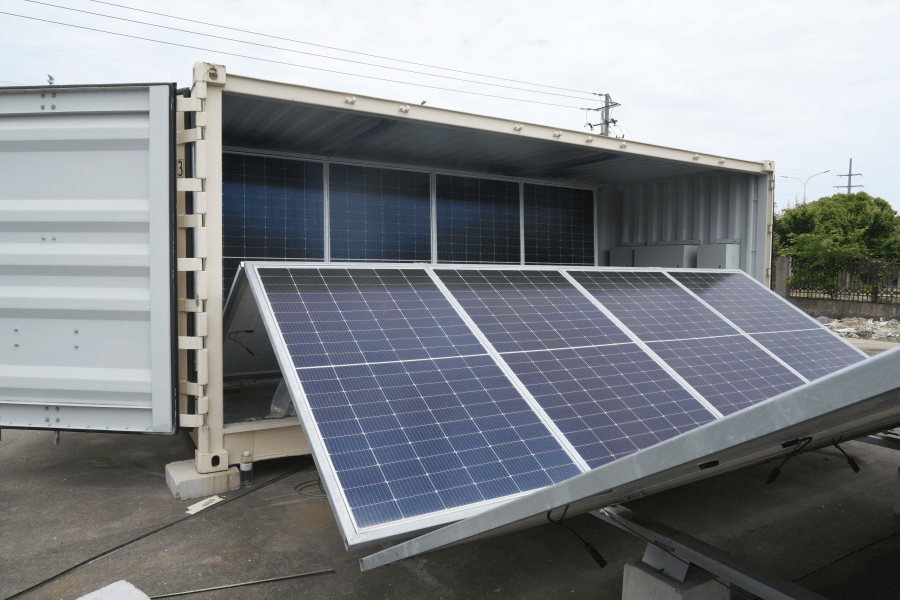
So, how do you optimize? It starts with rethinking what the "box" really is. An IP54 rating is a good start - it means protected against dust and water splashes from any direction. But for a coastal or tropical eco-resort, that's the bare minimum. You need a system engineered for that specific environment.
At Highjoule, when we build an outdoor 1MWh unit for a project like yours, IP54 is a given. We're looking at:
- C5-M Corrosion Protection: For salty, coastal air. This isn't just about the enclosure; it's about the busbars, connectors, and internal components.
- Active Thermal Management with Humidity Control: Not just air conditioning, but a closed-loop system that keeps the battery in its 20-25C (68-77F) sweet spot year-round, while managing internal humidity to prevent condensation. This is the single biggest factor for long battery life.
- UL 9540 and IEC 62933 Compliance: These aren't just acronyms. They are your assurance of safety. UL 9540 is the rigorous U.S. standard for overall system safety. It's what local authorities having jurisdiction (AHJs) look for. Having this from the start smoothens permitting immensely.

Beyond the Battery: The System That Thinks for You
The hardware is the body; the software and integration are the brain. Optimization happens here. A truly optimized system does three things automatically:
- Predicts and Adapts: It knows your weather forecast, your guest booking schedule (peak occupancy = peak load), and local utility rate structures. It pre-charges the battery before a cloudy day or before peak dinner hours.
- Manages Energy Holistically: It doesn't just store solar. It integrates with your diesel genset (if you have one) as a last resort, using the battery to minimize its runtime. It can do peak shaving when grid power is available but expensive.
- Communicates Clearly: It provides you, the manager, with a simple dashboard. Not a confusing engineering schematic. You need to see: "Solar stored today: 850 kWh. Estimated savings this month: $X. Battery health: 100%."
This intelligent control is where you claw back that 30% performance gap NREL talks about. It's what turns a capital expense into a strategic asset.
A Real-World Example: From Grid Anxiety to Energy Independence
Let me give you a concrete example. We worked with a 120-cabin eco-lodge in a remote part of Colorado. They had solar, but winter clouds and peak summer tourism created huge gaps. Their old battery system was a constant worry.
The Challenge: High-altitude temperature swings (-10F to 90F), a need for at least 18 hours of backup for guest safety, and a goal to reduce diesel consumption by over 90%.
The Optimization: We deployed a 1MWh outdoor BESS with a climate-adaptive thermal system (heating and cooling) and, crucially, an AI-driven energy management system (EMS). The EMS learned their load patterns in the first two weeks. It started pre-conditioning the battery based on temperature forecasts and scheduling deep discharges only when absolutely necessary, preserving cycle life.
The Result: In the first year, they achieved 97% reduction in diesel use. The system seamlessly covers evening peaks and has weathered multiple multi-day grid outages with zero guest impact. The resort's manager told me the greatest benefit was "peace of mind" - the system runs itself.
Your Next Step: What to Ask Your Vendor
You don't need to be the technical expert. But you need to ask the right questions to find one. When evaluating a solution for "How to Optimize IP54 Outdoor 1MWh Solar Storage for Eco-resorts," move beyond the spec sheet:
- "Can you show me a projected LCOS analysis for my specific location and load profile?"
- "How does your thermal management system specifically handle both extreme heat and high humidity?"
- "Is the entire system certified to UL 9540 / IEC 62933? Can you provide the certification documents?"
- "How will your energy management system integrate with my existing solar inverters and backup generators? Can I see a demo of the owner's dashboard?"
- "What does your remote monitoring and proactive maintenance service include?"
The goal isn't to buy a battery container. It's to buy energy resilience, lower operating costs, and a stronger brand story for your eco-resort. Honestly, getting the optimization right from day one is the only way that math works. What's the one energy cost you wish you could eliminate tomorrow?
Tags: UL Standard BESS LCOE Renewable Energy Solar Integration Energy Management
Author
James Zhang
20+ years agricultural energy storage engineer / Highjoule CTO