
Air-Cooled ESS Containers for Farm Irrigation: A Practical Guide for US & EU
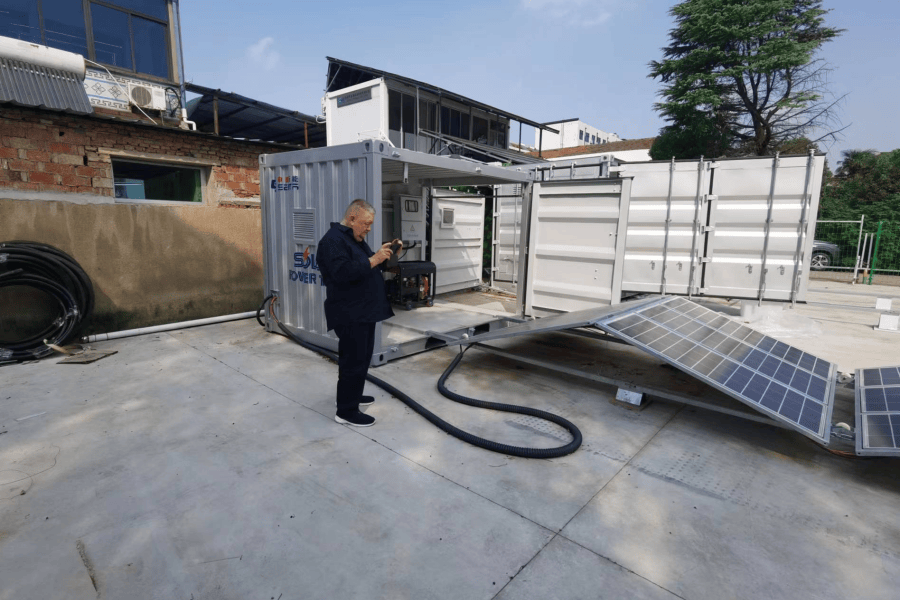
Table of Contents
- The Quiet Problem on the Farm: Power When You Need It
- The Cost Squeeze: More Than Just the Price Tag
- Why Air-Cooling is Winning the Farm (And It's Not Just Simplicity)
- Case in Point: A California Almond Orchard's Transformation
- Looking Beyond the Box: What Really Matters in Deployment
The Quiet Problem on the Farm: Power When You Need It
Let's be honest. If you're managing irrigation for hundreds of acres, your primary concern isn't battery chemistry. It's water. It's yield. It's getting power to those pumps precisely when your crops need it, not when the utility's time-of-use rates skyrocket or the grid is unstable. I've walked dozens of sites from California's Central Valley to farms in Spain, and the challenge is universal: energy reliability and cost are now direct inputs into your bottom line.
The push for solar-powered irrigation is brilliant, but it introduces a new variable: the sun doesn't always shine during peak irrigation hours. That's where Battery Energy Storage Systems (BESS) come in. But here's the rub I've seen firsthand: not all industrial ESS containers are suited for the dusty, remote, and operationally tough environment of a farm. The choice between air-cooled and liquid-cooled systems isn't just an engineering spec sheet exercise; it's a practical decision that impacts your maintenance crew, your safety protocols, and your total cost of ownership for the next 15+ years.
The Cost Squeeze: More Than Just the Price Tag
When we talk about Comparison of Air-cooled Industrial ESS Container for Agricultural Irrigation, we have to start with cost. But I mean the real cost. The initial CAPEX is one thing, but the operational and maintenance (O&M) costs in a rural setting are a different beast. Liquid-cooled systems have their place in high-density, high-C-rate applications, but they add complexity. More components (pumps, chillers, coolant) mean more potential points of failure. In a remote location, a specialist service call for a coolant leak or pump failure isn't just expensive; it can mean days of downtime during a critical irrigation window.
According to a NREL analysis on distributed storage, O&M costs can contribute significantly to the Levelized Cost of Storage (LCOS). For agricultural applications, where discharge cycles are often predictable (daily peak shaving), the ultra-high C-rates that justify liquid cooling's complexity are rarely needed. An air-cooled system, with its simpler architecture, often delivers a better LCOS over the project's lifetime. You're trading a bit of peak power density for simplicity and robustness C a trade that makes immense sense on a farm.
Safety and Standards: Non-Negotiables
This isn't just about dollars. Safety is paramount. Any industrial container sitting on a farm must be built to the highest standards. In the US, that means UL 9540 for the system and UL 1973 for the batteries. In the EU, it's IEC 62933. Honestly, the thermal management system C how you keep those battery racks at their optimal temperature C is a core part of that safety case. Air-cooled systems, with proper design and compartmentalization, provide excellent and predictable thermal management. They leverage a simple, well-understood physics principle. At Highjoule, for instance, our design for agricultural sites uses a segregated, fire-rated compartment for the power conversion system (PCS) and a dedicated, forced-air ventilation loop for the battery racks, all certified to UL and IEC standards. This "keep-it-simple" approach reduces risk factors.

Why Air-Cooling is Winning the Farm (And It's Not Just Simplicity)
So, let's get into the nuts and bolts. Why does an air-cooled industrial ESS container often come out ahead for irrigation?
- Lower Lifetime Cost (LCOE/LCOS): As mentioned, simpler O&M. Filters need changing, fans might need service, but your local electrician can handle most of it. No specialized coolant disposal or complex plumbing.
- Durability in Harsh Environments: Dust is a killer for precision equipment. Good air-cooled systems use advanced, serviceable filtration systems. It's easier to design a robust air filter for dust than to protect an entire liquid cooling loop from environmental grit.
- Scalability & Modularity: Need to add more storage next season as you expand your irrigated acreage? With an air-cooled modular design, you can often just add another container or battery rack. The infrastructure is less interdependent than a centralized liquid cooling loop.
- Thermal Management Clarity: This is key. Thermal runaway is the nightmare scenario. A well-designed air-cooled system provides clear air flow paths and heat dissipation. You can monitor intake and exhaust temperatures easily, giving you a direct, simple indicator of system health. The thermal behavior is more linear and easier to model and control.
Case in Point: A California Almond Orchard's Transformation
Let me give you a real example. We worked with a 1,200-acre almond farm in Fresno County, California. Their challenge: skyrocketing demand charges and unreliable grid power during summer afternoons - exactly when they needed to run their high-power pumps for irrigation.
They evaluated both types of systems. The liquid-cooled option promised slightly higher peak output. But the decision came down to practicality. They chose a 2 MWh air-cooled ESS container from Highjoule, paired with their existing solar. Why? Their on-site maintenance team could understand and support the system. The UL 9540 certification gave them and their insurer confidence. The predictable thermal performance was a plus in the 100F+ valley heat.
The result? They now shift solar energy to the evening irrigation window, slashing demand charges by over 30%. And in two years of operation, their only "unscheduled" maintenance has been changing air filters a bit more frequently during the dusty harvest season C a 30-minute job for a farmhand. The system's simplicity became its greatest strength.
Looking Beyond the Box: What Really Matters in Deployment
My final piece of advice, from 20 years in the field: when you compare systems, look beyond the brochure's C-rate and efficiency percentage. For agricultural irrigation, ask these questions:
- How is the thermal management system designed for my specific climate? (Ask for the thermal analysis report).
- What does the routine maintenance schedule actually involve, and who can perform it?
- Can the system's controls be easily integrated with my irrigation scheduler and solar inverters?
- Is the vendor's support network familiar with rural, agricultural deployments? (At Highjoule, we've built partnerships with regional agricultural equipment suppliers for this exact reason).
The right air-cooled industrial ESS container isn't just a battery in a box. It's a resilient, predictable, and manageable power asset designed for the realities of farm life. It turns energy from a volatile cost into a controlled, productive input - just like water. So, what's the one operational headache in your energy mix that keeps you up at night?
Tags: UL Standard BESS LCOE Agricultural Irrigation US Market EU Market Air-cooled ESS
Author
James Zhang
20+ years agricultural energy storage engineer / Highjoule CTO