
All-in-One Off-Grid Solar Generators for Military Bases: A Practical Comparison
All-in-One, Off-Grid Power for Critical Missions: Cutting Through the Hype
Honestly, over two decades of deploying energy storage from the deserts of Nevada to remote sites in Europe, I've learned one thing: the conversation around power for military and critical infrastructure is changing. It's no longer just about diesel generators and fuel convoys. Commanders and facility managers are looking hard at off-grid solar with battery storage. But when you're responsible for a base's operational energy security, the choice between a traditional component-by-component system and these new "all-in-one integrated off-grid solar generators" is more than a technical spec sheet exercise. It's about resilience, total life-cycle cost, and frankly, sleep at night. Let's have a real, coffee-chat comparison, based on what actually works on the ground.
Table of Contents
- The Real-World Problem: More Than Just Going Green
- Why Getting This Wrong is Not an Option
- The All-in-One Integrated Generator: A Closer Look
- Key Comparison Points for Military Decision-Makers
- A Glimpse from the Field: Silent Sentinel Project
- The Expert's Notebook: Thermal Runaway & LCOE in the Real World
The Real-World Problem: More Than Just Going Green
Forget the glossy brochures for a second. The core problem we're solving isn't just carbon reduction - it's energy certainty. Military bases, especially forward operating locations or communications sites, need power that's immune to grid disruptions, reduces logistical footprints (those fuel trucks are targets, as we all know), and operates with minimal acoustic and thermal signature. The traditional approach - sourcing PV panels, separate inverters, a BESS container, and control systems from different vendors - creates a spiderweb of integration challenges, finger-pointing during failures, and a nightmare for long-term maintenance. I've seen firsthand on site where a comms hut went dark for 36 hours because the inverter vendor and battery management system (BMS) vendor couldn't agree on a fault code. That's unacceptable.
Why Getting This Wrong is Not an Option
Let's agitate that a bit. A poorly integrated system isn't just an inconvenience; it's a vulnerability. According to a National Renewable Energy Laboratory (NREL) analysis on microgrid resilience, system complexity is the single biggest predictor of failure during extended islanded operation. Every custom cable, every communication protocol translation, every piece of non-standard hardware is a potential point of failure.
The financial side is just as brutal. The soft costs - engineering, procurement, integration, and commissioning - for a traditional bespoke system can eat up 30-40% of your total budget before it even produces a single watt. And when something needs fixing under a deadline? Good luck getting three different service teams coordinated. This directly hits your Levelized Cost of Energy (LCOE), making what seemed like a cost-effective project wildly expensive over its 15-year life.
The All-in-One Integrated Generator: A Closer Look
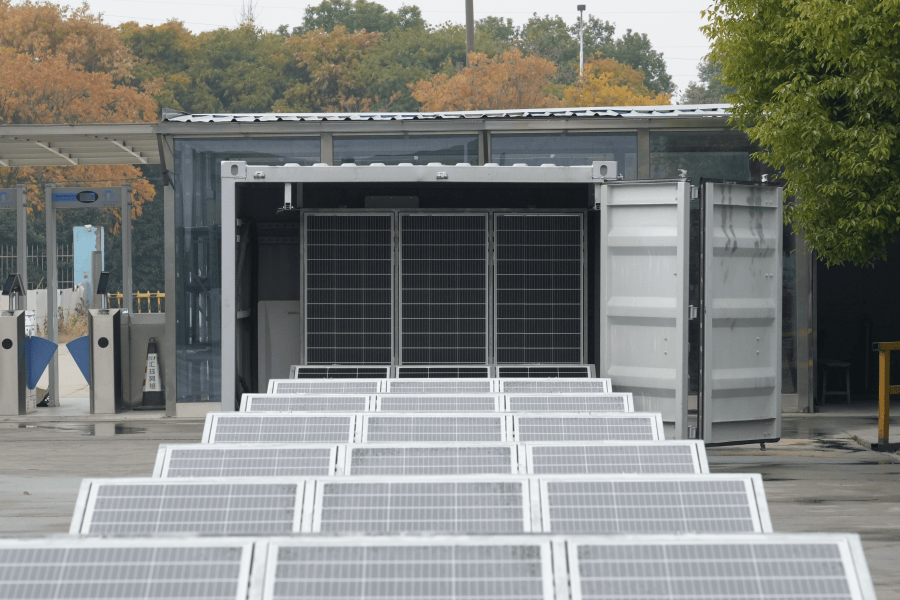
So, what's the alternative? The modern all-in-one integrated off-grid solar generator. Think of it not as a product, but as a pre-engineered, pre-tested power plant in a box. The key differentiator is deep, factory-level integration: the PV input, MPPT charge controllers, battery bank (usually lithium-ion), inverter/charger, and advanced energy management system (EMS) are designed from the ground up to talk to each other seamlessly.
For a company like Highjoule, building these systems means we obsess over that integration before it ships. We're not just bolting third-party parts together; we're designing the BMS to have millisecond-level communication with the inverter under fault conditions, ensuring the thermal management system cools the battery and electronics as a single unit. This holistic design philosophy is what delivers the reliability you need. And crucially, the entire unit is certified as a single system to relevant UL (like UL 9540 for Energy Storage Systems) and IEC standards, which is a huge leap from trying to certify a field-assembled collection of parts.
Key Comparison Points for Military Decision-Makers
When comparing options, look beyond peak power and battery capacity. Here's what matters on the ground:
| Comparison Point | Traditional Component System | All-in-One Integrated Generator |
|---|---|---|
| Deployment Time | Months (site work, integration, testing) | Weeks (often plug-and-play after site prep) |
| System Compliance | Multiple component certs; system-level cert is complex & costly | Single, unified certification (UL/IEC) for the entire unit |
| Operational Simplicity | Multiple interfaces, requires specialist knowledge | Unified EMS with single-pane-of-glass monitoring |
| Resilience to Environment | Varies by component enclosure ratings | Uniform high-level ingress protection (IP rating) for entire unit |
| Lifecycle Support | Multi-vendor support chain | Single point of contact, accountable service |
| Scalability | Can be flexible but requires re-engineering | Often modular; add units in parallel with minimal reconfiguration |

A Glimpse from the Field: Silent Sentinel Project
Let me give you a non-classified flavor from a project we did for a European NATO member (location details omitted, of course). They had a long-range surveillance site on a cliff edge - incredibly remote, exposed to salt spray and high winds, with a 10km fuel resupply route that was often impassable in winter. Their old diesel system was failing, and the acoustic signature was a concern.
The challenge wasn't just power; it was zero-maintenance resilience. We deployed two of our containerized all-in-one units in a redundant configuration. Because everything was pre-integrated, we airlifted them in, placed them on pre-prepared pads, connected the pre-mounted solar arrays, and had the site fully operational on solar/storage in under 72 hours. The integrated EMS was programmed to prioritize stealth: it keeps the diesel gensets completely off unless battery state of charge drops below a critical threshold for multiple days of bad weather. The result? An 89% reduction in fuel use, near-silent operation, and a system that one operator can manage remotely. The single-system UL certification also smoothed the approval process with their defense standards agency immensely.
The Expert's Notebook: Thermal Runaway & LCOE in the Real World
Two technical terms you'll hear a lot: C-rate and Thermal Management. Let's demystify them. C-rate is basically how fast you charge or discharge the battery. A 1C rate means using the full battery capacity in one hour. For military apps, you might need a high C-rate for sudden, high-power loads (like starting equipment). But high C-rates generate more heat. That's where thermal management becomes critical.
In an all-in-one unit, we can design the cooling system - whether liquid or advanced air - with perfect knowledge of the heat loads from the inverter and the battery at different C-rates. In a cobbled-together system, the battery cooler and the inverter fans might be fighting each other, creating hot spots. I've measured 15C differences in cell temperatures in poorly integrated systems, which is a fast track to premature aging and, in worst cases, thermal runaway. A well-integrated system manages this holistically, which is a massive win for safety and longevity.
And longevity is what brings down your LCOE. A cheaper system that degrades in 5 years has a terrible LCOE. A robust, integrated system with a 15-year design life, lower maintenance costs, and higher efficiency delivers a far better total cost, even if the initial price tag seems higher. You're buying certainty.
So, the next time you're evaluating options, don't just compare kilowatts and kilowatt-hours. Ask the vendor: How are your components integrated? Can you show me the single certification for the entire unit? What's the real-world round-trip efficiency at my specific duty cycle? The right all-in-one solution isn't just a product - it's a strategic partner for your base's energy independence.
What's the one operational constraint in your next deployment that keeps you up at night? Is it the fuel logistics, the acoustic signature, or the fear of a complex system failing? Let's talk real solutions.
Tags: UL Standard BESS Energy Security All-in-one Solar Generator Off-grid Military Power
Author
James Zhang
20+ years agricultural energy storage engineer / Highjoule CTO