
Mobile BESS Containers: The Flexible Grid Solution for Utilities Facing Peak Demand
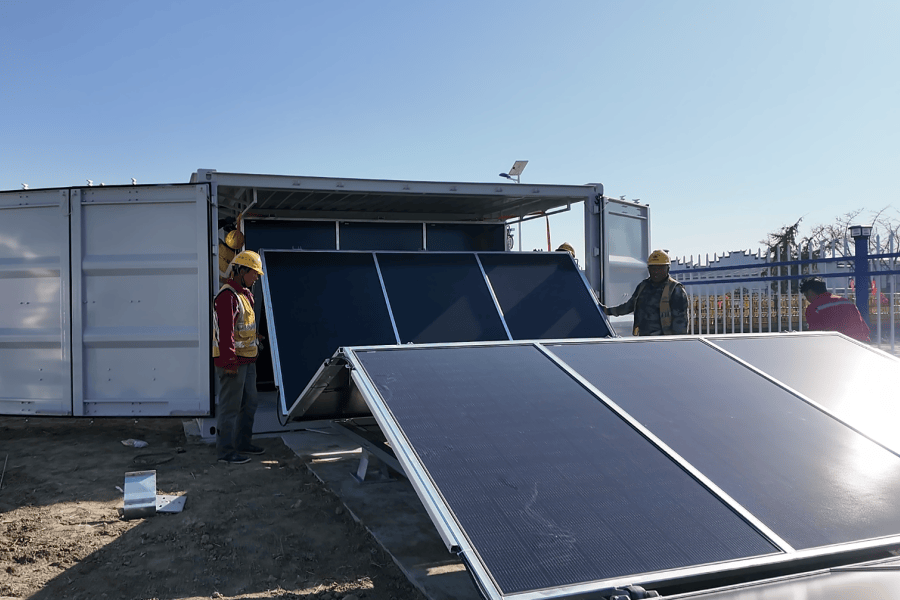
Table of Contents
- The Grid Problem We're All Seeing: Congestion and Peaks
- Why "Fixed" Isn't Always Enough: The Agitation
- Enter the Mobile Container: A Utility's Swiss Army Knife
- Beyond the Spec Sheet: What Really Matters On Site
- A Case in Point: California's Summer Crunch
- Making the Numbers Work: The LCOE Conversation
The Grid Problem We're All Seeing: Congestion and Peaks
Let's be honest, if you're managing a utility grid in North America or Europe right now, your coffee is probably cold because you're too busy staring at load forecasts. The challenge is universal: how do you handle those ever-steeper evening demand peaks, or sudden drops in renewable generation, without committing to a decade-long, billion-dollar infrastructure project? I've been on sites from Texas to North Rhine-Westphalia, and the story is similar. The grid is stressed in specific, often shifting, pockets. According to the National Renewable Energy Laboratory (NREL), integrating high levels of renewables requires unprecedented flexibility - something our traditional grid assets struggle to provide.
Why "Fixed" Isn't Always Enough: The Agitation
Permanent, large-scale battery farms are fantastic, and we build them. But here's the rub from a practical, boots-on-the-ground perspective: what happens when the congestion moves? A new data center cluster pops up, a factory expands, or a heatwave hits a different suburb. Your multi-year, fixed-location asset is now... in the wrong place. The financial and operational drag is real. You're left with grid upgrade costs that run into the millions per mile and lead times that don't match the urgency. It's like having a fire station, but the fires keep starting three blocks over.

Enter the Mobile Container: A Utility's Swiss Army Knife
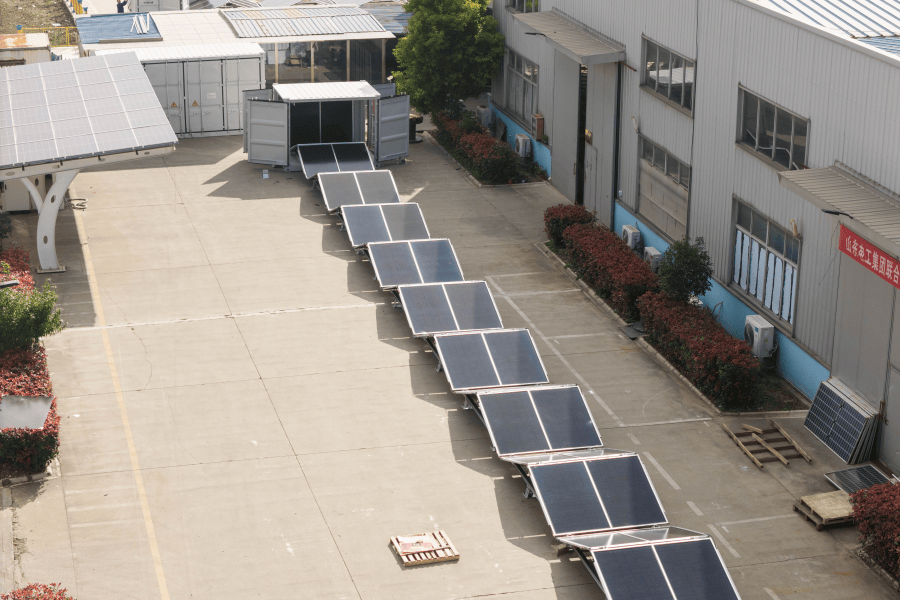
This is where the concept of a Tier 1 Battery Cell Mobile Power Container shifts from a neat idea to an operational necessity. Think of it not just as a battery, but as a grid asset on wheels. The core technical spec here is built for this nomadic, high-impact life. We're talking about a pre-integrated, self-contained unit with Tier 1 Li-ion cells (the gold standard for cycle life and safety), its own climate control, fire suppression, and grid-tie electronics, all mounted on a trailer. It's designed to be deployed, connected, and providing grid services - like peak shaving, frequency regulation, or backup power - within weeks, not years.
What "Tier 1" and "Mobile" Really Mean for You
- Risk Mitigation: Tier 1 cells from established manufacturers come with exhaustive test data. This isn't just about name recognition; it's about predictable performance and safety under the duress of constant cycling and mobility. It's what allows us to confidently build systems that meet UL 9540 and IEC 62619 out of the gate.
- Plug-and-Play Compliance: A key part of the technical specification is the built-in power conversion system (PCS) that's pre-certified to relevant standards like IEEE 1547 for grid interconnection. This slashes the engineering and approval time on-site. Honestly, I've seen projects where this pre-certification cut 4-6 months off the commissioning timeline.
Beyond the Spec Sheet: What Really Matters On Site
Any engineer can read a data sheet. The real insight comes from having commissioned these units in a muddy field at 2 AM. Here are two specs I now look at first:
1. C-Rate (The "Athleticism" Spec): A mobile container for grid services needs to be an athlete, not just a marathon runner. The C-rate tells you how quickly it can absorb or discharge energy. For tackling a sharp evening peak, you need a high discharge C-rate (say, 1C or more). This means a 2 MWh container can deliver over 2 MW of power when the grid cries for help. A lower C-rate battery might store the same energy but can't release it fast enough to solve the acute problem.
2. Thermal Management (The "Anytime, Anywhere" Spec): Mobility means this container could be in Arizona in July or Norway in January. The thermal management system isn't a luxury; it's the guardian of cell life and safety. A robust, liquid-based system that can cool and heat is non-negotiable. I've seen firsthand on site how a poorly managed thermal system leads to rapid capacity fade, turning your capital asset into a stranded one.
A Case in Point: California's Summer Crunch
Let's make this concrete. A few summers back, a utility in California was facing potential rolling blackouts due to a perfect storm of heat, low hydro, and transmission constraints into a specific load pocket. A fixed BESS was planned but years away. Our team at Highjoule deployed three mobile 2.5 MWh containers to strategic substations within 90 days of contract signing.
The challenge wasn't just storage; it was fast, compliant, and reliable storage. Because the units were pre-engineered with UL 9540 certification and the correct IEEE 1547 settings, the interconnection study was streamlined. For six critical weeks, these "grid nomads" provided daily peak shaving, discharging during the 4-9 PM window. The result? The local congestion was relieved, and the utility avoided costly reliability-must-run contracts with gas peakers. After the season, the units were relocated to another high-risk area. That's asset utilization you can't get with a fixed system.
Making the Numbers Work: The LCOE Conversation
This brings us to the ultimate boardroom metric: Levelized Cost of Energy (LCOE) for storage. A fixed battery's LCOE is calculated over its life in one location. For a mobile container, the calculation is more dynamic - and often more favorable. You're amortizing the capital cost over multiple use cases and locations. It serves as a peaker plant replacement in summer, a transmission deferral tool for a new industrial park next year, and maybe a black-start resource after that.
By extending the asset's revenue-generating life and avoiding costly grid upgrades, the effective LCOE drops significantly. At Highjoule, our design philosophy for these mobile systems focuses on maximizing this flexibility - using those Tier 1 cells for their longevity, designing for easy transport and reconnection, and providing the operational support to manage the unit's lifecycle across its many "homes" on the grid.
So, the next time you look at a grid congestion map, ask yourself: do we need a fortress, or a fleet of cavalry? The technical specification for a mobile solution is your blueprint for the latter. What's the first grid pinch point you'd send it to?
Tags: UL Standard BESS LCOE Europe US Market Renewable Energy IEEE 1547 Mobile Energy Storage Utility Grid
Author
James Zhang
20+ years agricultural energy storage engineer / Highjoule CTO