
Wholesale Price of Rapid Deployment Lithium Battery Storage Container for Data Center Backup Power
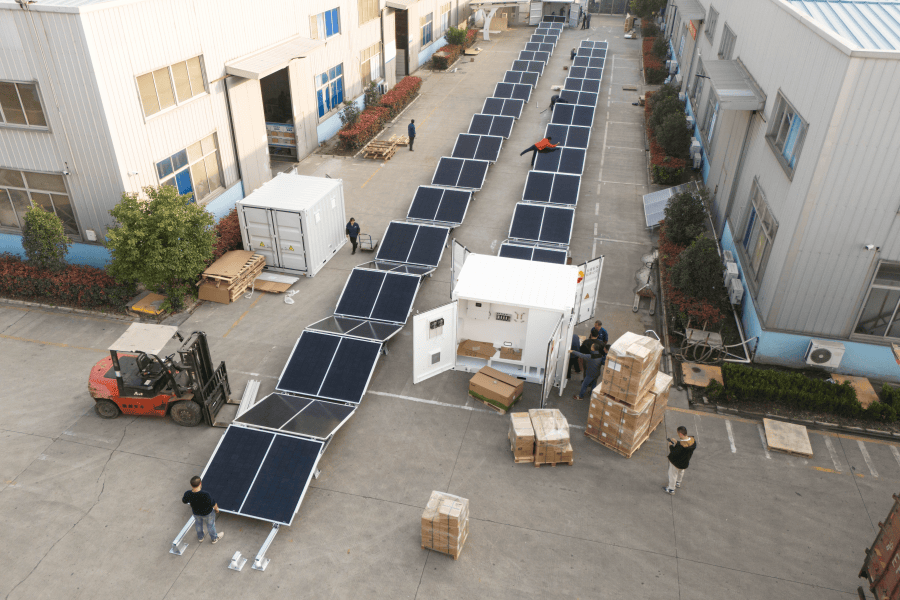
Table of Contents
- The Real Problem: It's Not Just the Sticker Price
- A Real-World Cost Breakdown: What You're Really Paying For
- The Game Changer: How Rapid Deployment Containers Flip the Script
- Looking Beyond the Price Tag: Safety, Standards, and Long-Term Value
- A Practical Path Forward
The Real Problem: It's Not Just the Sticker Price
Let's be honest. When you're sourcing backup power for a data center, that initial "Wholesale Price of Rapid Deployment Lithium Battery Storage Container" quote can feel like the whole story. You get a number per megawatt-hour, maybe do a quick comparison, and think you've got it figured out. I've been in those procurement meetings. But here's what I've seen firsthand on site, from California to North Rhine-Westphalia: that upfront container price is just the tip of the iceberg. The real cost - the one that keeps facility managers up at night - is buried in deployment time, integration headaches, and long-term operational uncertainty.
The problem isn't just capital expenditure. It's the risk of downtime during a complex, multi-year build. It's the engineering hours spent customizing a solution from scratch for every single site. According to the National Renewable Energy Lab (NREL), "soft costs" - everything from permitting to interconnection engineering - can still account for a significant portion of total BESS project costs, especially for one-off designs. For a data center, where reliability is the currency, a prolonged, unpredictable installation phase is a direct threat to business continuity.
A Real-World Cost Breakdown: What You're Really Paying For
So, let's agitate that pain point a bit. When you drill down, the total cost of ownership (TCO) for traditional, bespoke BESS projects includes layers the wholesale price doesn't show:
- Site-Specific Engineering: Every foundation, every grid connection point is unique. This means countless engineering hours, new electrical drawings, and custom thermal management plans.
- The Permitting Maze: Navigating UL 9540, IEC 62933, and local fire codes with a novel design is a marathon, not a sprint. I've seen projects delayed 12-18 months just in the approval phase.
- Integration Surcharge: Making a custom battery system "talk" seamlessly with your existing UPS, cooling, and building management systems is a major software and hardware challenge.
- Hidden OpEx: An inefficient thermal design can lead to higher cooling costs. A poorly balanced system might degrade faster, shortening its useful life.
This is where the industry's focus on Levelized Cost of Storage (LCOS) comes in. LCOS factors in all these costs over the system's lifetime. A lower wholesale price per container can be completely undone by a higher LCOS if deployment is slow and efficiency is poor.

The Game Changer: How Rapid Deployment Containers Flip the Script
This is where the concept of Wholesale Price of Rapid Deployment Lithium Battery Storage Container for Data Center Backup Power transforms from a simple procurement metric into a strategic value lever. The key isn't just "rapid"; it's "pre-engineered, pre-certified, and pre-integrated."
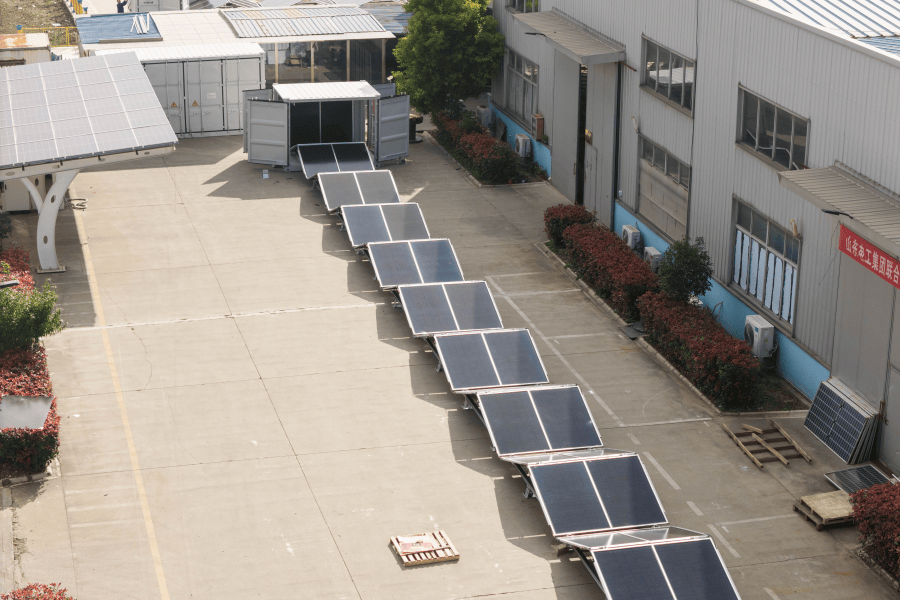
At Highjoule, when we talk about our rapid-deployment containers, we're talking about units that arrive on your site not as a pile of components, but as a fully functional, plug-and-play power asset. The "wholesale price" here bundles immense hidden value:
- Pre-Certified Design: The container is already compliant with UL 9540 and IEC standards. It's a known entity to authorities having jurisdiction (AHJs), dramatically shrinking permitting timelines. We've seen this cut months off projects in Texas and Germany.
- Optimized Thermal Management: Honestly, this is where many DIY projects fail. Our containers have a pre-validated cooling system. We design for the specific C-rate (charge/discharge speed) needed for backup, ensuring the batteries don't overheat during a critical discharge or a fast grid-recharge cycle. This directly protects your investment and lowers long-term degradation.
- Standardized Integration: They come with standard communication protocols (think Modbus, DNP3) that are pre-mapped to work with major SCADA and BMS systems. It's more like connecting a network appliance than building a power plant from the ground up.
Take a case from a colocation provider in the Midwest US. They needed to add 4 MW/8 MWh of backup to a critical facility. A custom design quote came in with a marginally lower per-kWh hardware cost. They chose our rapid-deployment solution. The result? The containers were energized in under 90 days from contract signing, versus a projected 14+ months for the custom route. The "wholesale price" was easily justified by the avoided risk and the revenue they could secure by guaranteeing uptime to clients sooner.
Looking Beyond the Price Tag: Safety, Standards, and Long-Term Value
For commercial decision-makers, the conversation has to move beyond dollars-per-kWh. It's about risk mitigation. A pre-fabricated container from an experienced provider like Highjoule embeds safety into its DNA. The battery modules, busbars, and fire suppression are all arranged and tested as a complete system in a controlled factory environment - not pieced together in a windy, dusty field. This consistency is something you simply cannot guarantee with a site-built system, and it's a non-negotiable for insurers and risk managers.
Furthermore, the long-term value is in the operational data. Because we deploy similar systems widely, we have a massive dataset on performance. We know how the thermal system performs in Arizona heat or Canadian winter. We can predict degradation and optimize charging cycles to extend life. This collective intelligence is part of the "wholesale" package, helping you achieve the lowest possible LCOS over 10 or 15 years.
A Practical Path Forward
So, what should you do next? When you're evaluating that next Wholesale Price of Rapid Deployment Lithium Battery Storage Container for Data Center Backup Power quote, don't just look at the number. Tear apart the proposal and ask the hard questions:
- "Is this unit UL 9540 certified as an entire Energy Storage System, or just its components?"
- "Can you show me a project where this exact design was permitted and operational in under 120 days?"
- "What is the projected LCOS for this system in my specific duty cycle, and how does the thermal design support that?"
- "What is your local service and maintenance footprint for the life of this asset?"
The right rapid-deployment solution isn't a commodity. It's a risk-transfer mechanism and a time-to-value accelerator. The goal isn't just to buy a container of batteries. It's to buy predictable, compliant, and reliable backup power - fast. What's the cost of not having that certainty for your next data center project?
Tags: UL Standard BESS LCOE Rapid Deployment Europe US Market Data Center Backup Wholesale Price
Author
James Zhang
20+ years agricultural energy storage engineer / Highjoule CTO