
Black Start Capable Hybrid Solar-Diesel Systems: The Resilient Grid Solution for Utilities
Contents
- The Silent Vulnerability in Our Grids
- Beyond the Numbers: The Real Cost of Grid Outages
- The Hybrid Answer: More Than Just a Backup
- A Tale of Two Systems: The Practical Comparison
- Making It Work: What We've Learned on Site
- So, What's Your Next Step?
The Silent Vulnerability in Our Grids
Let's be honest for a minute. If you're managing a public utility grid in North America or Europe, you're living with a constant, low-grade anxiety. It's not about the day-to-day operations C we've got those down. It's about the "what if." What if a cascading failure takes down the entire substation? What if, after a major storm or a fault, you're staring at a blacked-out system with no way to get the lights back on without external power? That's the black start problem, and for decades, the answer has been a row of diesel generators sitting idle, waiting for their moment.
I've been on-site after regional outages, and the pressure is immense. The community is waiting, businesses are losing money by the minute, and everyone is looking at you. The traditional diesel-black start system roars to life, but honestly, it feels like a solution from a different era. It's loud, it's emitting fumes right when you least want it to, it depends on a fuel supply chain that can be fragile during widespread disasters, and the operational costs are just... significant.
Beyond the Numbers: The Real Cost of Grid Outages
The financial pain is well-documented. According to the International Energy Agency (IEA), power outages cost advanced economies tens of billions of dollars annually. But the agitation goes deeper than that. It's about regulatory pressure pushing for cleaner operations. It's about community expectations for sustainability, even in an emergency. It's about the sheer operational complexity of maintaining and testing those diesel gensets to ensure they'll actually work after years of sitting idle.
I remember a utility client in the Midwest telling me their biggest fear wasn't the cost of fuel, but the liability of a generator failing its monthly test or not starting in the critical moment. Their entire black start plan had a single point of failure. That's a massive risk.
The Limitations of "Either/Or" Thinking
Many utilities have looked at solar-plus-storage as a green alternative. But when you dig into the black start capability requirements C the need for a strong, immediate voltage and frequency signal to re-energize the grid C a standard battery system alone can hit its limits. Conversely, a diesel-only system guarantees the power but fails on every other modern metric: emissions, noise, running cost, and maintenance overhead. This is where the real comparison of black start capable hybrid solar-diesel systems begins. It's not about replacing one with the other; it's about intelligent integration.
The Hybrid Answer: More Than Just a Backup
So, what are we really talking about? A black start capable hybrid solar-diesel system seamlessly integrates three core assets: a solar PV array, a advanced battery energy storage system (BESS), and a diesel generator set. The magic isn't just in the hardware, but in the control system C the brain that decides which asset does what and when.
Here's the core value proposition: The BESS, specifically designed for high C-rate (that's the speed at which it can discharge massive power), acts as the primary black start engine. It can provide the instant, precise, and clean "grid-forming" power to re-energize a dead bus. The solar array then kicks in to provide renewable energy, reducing diesel runtime. The diesel genset becomes a reliable, final-backup workhorse, used only when strictly necessary and operated at its most efficient load point.

A Tale of Two Systems: The Practical Comparison
Let's move from theory to a practical comparison. Look at the table below, drawn from real project specifications and performance data we've seen.
| Feature / Metric | Traditional Diesel-Only Black Start | Black Start Capable Hybrid Solar-Diesel-BESS |
|---|---|---|
| Start-up Time & Reliability | 30 sec to 2 min; prone to wet-stacking if not maintained | Sub-100 milliseconds from the BESS; near 100% reliability |
| Emissions During Operation | High NOx, SOx, and particulate matter from moment one | Zero-emission start & primary operation; diesel only as needed |
| Noise Pollution | Extremely high (95-110 dBA) | Minimal during critical black start phase |
| Fuel Dependency & Cost | 100% dependent; high & volatile fuel costs | Reduced by 60-80% annually; insulates from price spikes |
| Levelized Cost of Energy (LCOE) for Black Start Service | High (fuel + maintenance + carbon cost risk) | Significantly lower over 10-year lifecycle |
| Grid Support Services | Black start only (when not testing) | Black start + frequency regulation + solar smoothing + capacity firming |
The difference is stark. The hybrid system transforms a costly, single-purpose insurance policy into a multi-revenue, always-on grid asset. That LCOE advantage isn't just theory. It comes from the BESS doing most of the "cycling," which is cheaper and faster than cycling a diesel engine, and the solar offsetting fuel consumption. I've seen firsthand on site how this changes the financial model for utilities.
A Real-World Glimpse: The German "Inselnetz" Project
Take a project we advised on in northern Germany. A regional grid operator needed to ensure the black start capability for a critical feeder serving several municipalities and a water treatment plant. Their old diesel setup was facing stricter emissions regulations and community pushback.
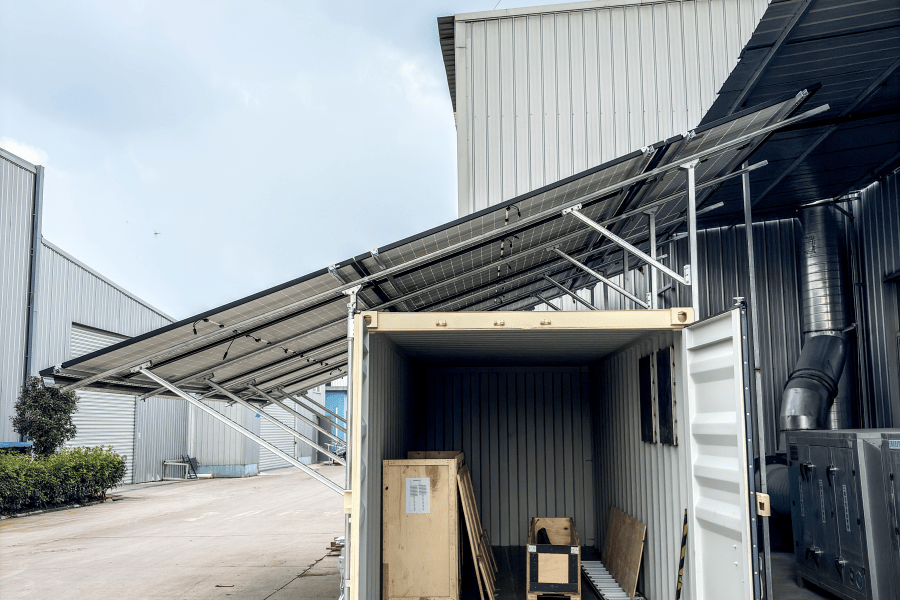
The solution was a containerized, UL and IEC-compliant BESS from Highjoule, paired with an existing solar farm and a downsized, newer diesel generator. The Highjoule system's advanced thermal management C a crucial but often overlooked aspect for both safety and battery longevity C was key in the compact design. Now, the BESS handles instantaneous grid support daily, and the entire system undergoes a seamless black start test quarterly without burning a drop of diesel. The utility met its resilience mandate, improved its public image, and created a new revenue stream from grid services.
Making It Work: What We've Learned on Site
Deploying these systems isn't just plug-and-play. Based on two decades of deployment, here's my blunt insight: the technology is ready, but the integration is everything.
- Controls are King: The system intelligence must prioritize grid stability above all. It needs to manage the handoff between inverter-based resources (solar, BESS) and the synchronous generator (diesel) flawlessly. At Highjoule, we spend as much time on the control algorithms and cybersecurity (think IEEE 1547, UL 9540) as we do on the battery chemistry.
- Right-Sizing is Critical: Oversizing the BESS kills the economics; undersizing the diesel kills the reliability. It requires detailed modeling of the re-energization sequence C what loads are picked up first, the inrush currents, etc. We've walked utilities through this modeling to find the sweet spot.
- Standards are Your Friend: In the US and EU, you're navigating UL, IEC, IEEE, and local fire codes. A system like ours is designed from the ground up to these standards, which isn't just about compliance; it's about speeding up permitting and getting insurance. It removes huge roadblocks.

So, What's Your Next Step?
The comparison of black start capable hybrid solar-diesel systems versus the legacy approach isn't really a contest anymore. The hybrid model offers superior resilience, a cleaner profile, and a better financial return. The question for utility decision-makers isn't "if," but "how" and "when."
Start by evaluating your highest-risk substations. Model a black start sequence. Then, talk to a team that doesn't just sell batteries or generators, but understands how to make them work together under the intense pressure of a real grid outage. What's the one vulnerability in your recovery plan that keeps you up at night?
Tags: BESS UL Standards Black Start Grid Resilience Hybrid Solar-Diesel System Utility Energy Storage
Author
James Zhang
20+ years agricultural energy storage engineer / Highjoule CTO