
Black Start Mobile Power Containers: A Game-Changer for Industrial Park Resilience
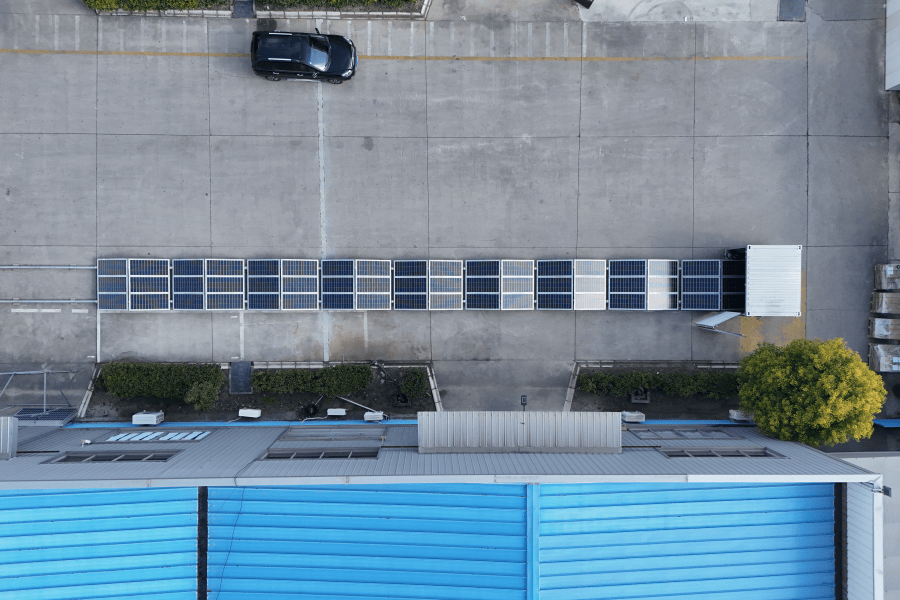
Table of Contents
- The Silent Threat to Modern Industrial Operations
- Why Traditional Backup Often Falls Short When You Need It Most
- The Mobile Power Container Advantage: More Than Just a Battery Box
- Key Factors in Your Comparison of Black Start Capable Mobile Power Containers
- A Case in Point: How a German Automotive Supplier Avoided a $2M Shutdown
- Thinking Beyond the Black Start: The Long-Term Value Proposition
- What Should Your Next Step Be?
The Silent Threat to Modern Industrial Operations
Let's be honest. If you're managing an industrial park or a large manufacturing facility in the US or Europe, you've probably spent countless hours and dollars optimizing your production line for efficiency. But here's a question I often ask clients over coffee: How many minutes of total grid outage would it take to turn that finely tuned operation into a chaotic, costly standstill? For many, the answer is sobering C often less than one.
The problem isn't just the increasing frequency of extreme weather events, though data from sources like NREL clearly shows grid stress is rising. It's the nature of modern industrial processes. A semiconductor fab, a chemical plant, or even a large food processing facility relies on sensitive control systems, continuous thermal processes, and data integrity. A sudden "black" outage doesn't just stop machines; it can destroy batches, damage equipment, and trigger days of restart procedures. The traditional response? Diesel generators. But honestly, I've seen firsthand on site how the "diesel solution" is becoming a liability in an age of net-zero commitments and stringent air quality regulations.
Why Traditional Backup Often Falls Short When You Need It Most
This is where the real agitation begins. A diesel genset can provide power, sure. But black start capability C the ability to boot up a dead electrical island from a complete blackout C is a different beast. Your genset needs a starter system (often a smaller battery that can fail), fuel that can go stale, and it can't synchronize with other sources seamlessly. More critically, it provides zero value until the moment the grid fails. It's a pure cost center, sitting idle 99.9% of the time.
I was at a plant in Texas where they had a beautiful, top-of-the-line diesel generator. It failed to auto-start during a winter storm because the block heater circuit was on the same lost grid power it was supposed to back up. The result was a frozen production line and millions in losses. This experience, repeated in different forms across my career, highlights a core flaw: passive, single-purpose backup is no longer enough. You need an active asset.
The Mobile Power Container Advantage: More Than Just a Battery Box
So, what's the solution? This is where a rigorous comparison of black start capable mobile power containers for industrial parks becomes a critical business exercise, not just a technical one. Think of these units not as "backup batteries" but as "grid-forming power plants on wheels."
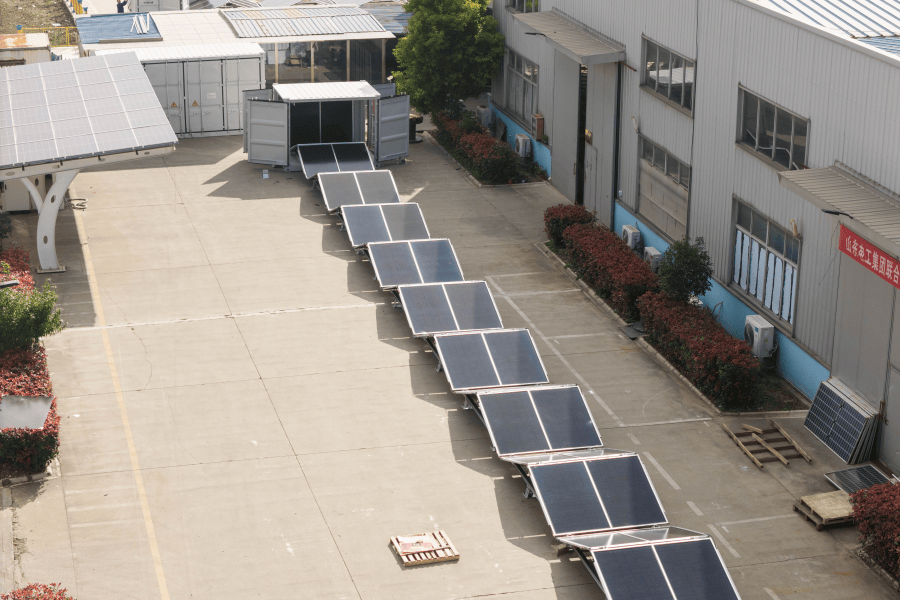
A true mobile BESS container with black start capability acts as the foundational spark and the stable anchor for your park's microgrid. When the grid goes down, its advanced inverter creates a perfect, stable voltage and frequency waveform from scratch C the "black start." It can then sequentially energize sections of your facility and even parallel with other sources like solar or, yes, a modernized genset, creating a robust hybrid system. The "mobile" aspect is genius for capex flexibility; you can lease or deploy it for a specific project, move it between sites, or use it to defer a costly substation upgrade.

Key Factors in Your Comparison of Black Start Capable Mobile Power Containers
When you're evaluating options, looking beyond just the price per kWh of storage is crucial. Here's what really matters from an engineer's perspective:
- Grid-Forming Inverter Technology: This is the heart. Can it establish a stable grid independently (IEEE 1547-2018 is key here)? Not all BESS can.
- Response Time & C-rate: Black start isn't slow. You need power now. A high C-rate (like 2C or more) means the battery can discharge its full capacity quickly, providing the massive surge of power (in-rush current) needed to start large motors and transformers instantly.
- Thermal Management: A high C-rate event generates heat. A liquid-cooled system, in my field experience, maintains performance and extends battery life far better than air-cooled in these high-stress, mission-critical applications.
- Safety & Compliance: This is non-negotiable. Look for UL 9540 (system level), UL 1973 (batteries), and IEC 62619 certifications. It's your insurance policy. At Highjoule, for instance, we design our mobile containers with multi-layered protection that exceeds these standards, because I've seen how a single thermal event can erase any theoretical cost savings.
- Energy Density & Footprint: How much power and energy can you fit in a standard 20/40ft container? A higher density means you need fewer units, simplifying your site layout and interconnection.
A Case in Point: How a German Automotive Supplier Avoided a $2M Shutdown
Let me give you a real example from North Rhine-Westphalia. A major auto parts supplier had a critical paint shop C any power dip over 200 milliseconds would cause rejects. Grid upgrades were years out. They deployed one of our mobile, black-start-capable 2 MWh containers.
The challenge was twofold: provide seamless bridging power for micro-dips and be ready for a full blackout. The container's sub-cycle response time handled the dips invisibly. Then, during a planned grid maintenance shutdown, they performed a black start test. The container energized the paint shop's delicate control systems first, then ramped up to support the full load. The test was a success, but the real win was the Levelized Cost of Energy (LCOE). Because the container also performed daily peak shaving (capping their grid demand charges), the project paid for itself in under 4 years. The black start capability, the "insurance," became essentially free.
Thinking Beyond the Black Start: The Long-Term Value Proposition
This gets to the core of the modern comparison. You're not buying a black start device. You're investing in a flexible, revenue-grade asset. When the grid is up, this same container can:
- Cut peak demand charges (a huge line item in the US and EU).
- Provide frequency regulation services to the grid operator (a direct revenue stream in many markets).
- Store excess on-site solar or wind.
- Defer expensive infrastructure upgrades.
This drastically improves the LCOE. You're spreading the capital cost across multiple value streams. Frankly, if a vendor only talks about backup, they're selling you a solution from the last decade.
What Should Your Next Step Be?
Start by mapping your critical loads and defining your "must-survive" processes. Then, engage with partners who have real deployment scars, not just theory. Ask them for specific case studies in your region, demand to see the certification reports, and have them walk you through the thermal management design under a simulated black start scenario.
The right black start capable mobile power container is more than peace of mind; it's a strategic step towards a resilient, efficient, and profitable energy infrastructure. What's the cost of one hour of downtime for your park, and what could you achieve with a mobile power asset that works for you every single day?
Tags: UL Standard BESS LCOE Europe US Market Black Start Industrial Energy Storage Microgrid
Author
James Zhang
20+ years agricultural energy storage engineer / Highjoule CTO