
Grid-forming 1MWh Solar Storage for EV Charging: The Powerhouse Solution for Modern Grids
Grid-forming 1MWh Solar Storage for EV Charging: Why It's More Than Just a "Battery"
Honestly, if I had a dollar for every time a client showed me a plan for an EV fast-charging hub that just drew a big line from the grid transformer to the chargers, well, let's just say I'd have a very nice retirement fund. The reality on the ground, from California to North Rhine-Westphalia, is far more complex. The grid isn't a bottomless well of power, and treating it like one is the fastest way to blow your project budget and timeline. I've seen this firsthand on site: the utility upgrade quotes, the demand charges that eat into profits, and the uneasy feeling when the grid flickers during peak charging hours. Today, I want to cut through the noise and talk about a specific, powerful tool that's changing the game: the Grid-forming 1MWh Solar-Integrated Energy Storage System. This isn't just a "battery comparison"; it's a discussion about building resilient, profitable, and grid-friendly EV charging infrastructure from the ground up.
Table of Contents
- The Real Problem: It's Not Just Power, It's "Grid Health"
- The Hidden Cost Trap of Conventional Thinking
- Looking Beyond the Spec Sheet: What Really Matters On Site
- Making It Real: A Blueprint for Your Project
The Real Problem: It's Not Just Power, It's "Grid Health"
The phenomenon is clear: the rapid rollout of high-power EV chargers (150kW, 350kW and beyond) is acting like a sudden, massive load on local distribution grids that were never designed for this. The IEA reports that global EV sales jumped 35% in 2023, and public charging needs to keep pace. But here's the agitating part: the grid is a delicate ecosystem of voltage and frequency. Traditional, "grid-following" inverters on solar arrays and basic batteries simply wait for a perfect grid signal to operate. When grid strength is low - which happens when you cluster six 350kW chargers in a suburban mall - these systems can trip offline or even worsen instability. You're left with chargers that either don't work at full speed or, worse, contribute to brownouts. It turns a revenue-generating asset into a community liability.
The Hidden Cost Trap of Conventional Thinking
So, the obvious "solution" many consider first is to ask the utility for a grid upgrade. Let me share some perspective from a recent project bid in Texas. The initial utility estimate to upgrade the feeder and transformer for a planned 12-stall charging plaza was over $1.2 million, with an 18-month lead time. That single-handedly killed the project's ROI. Even without upgrades, demand charges - fees based on your highest 15-minute power draw in a month - can brutalize operational costs. According to the National Renewable Energy Lab (NREL), smart charging paired with storage can reduce demand charges by 50-80%. But not all storage is created equal. A basic battery that shuts off during grid disturbances isn't providing full value. You're paying for capacity that goes offline exactly when you might need it most.
The Solution Arrives: The 1MWh Grid-Forming Power Plant
This is where the comparison shifts from "which battery is cheaper per kWh" to "which system provides the most robust and valuable service." A Grid-forming 1MWh BESS is fundamentally different. Think of it not as a backup battery, but as a mini, self-controlled power plant at your charging site.
- Grid-Forming Inverters: Instead of following the grid, they can create a stable voltage and frequency waveform themselves. This means they can start up a "microgrid" during an outage, keeping your chargers operational, or, crucially, they can strengthen a weak grid, preventing instability in the first place.
- The 1MWh Scale: This size is the sweet spot for commercial EV charging hubs. It's large enough to buffer several hours of solar generation and shave peak demand significantly, but it's also modular and standardized enough for streamlined deployment and permitting, especially under standards like UL 9540 and IEC 62933.
- Solar Integration: Pairing it with solar isn't just for green credentials. It directly lowers your Levelized Cost of Energy (LCOE) - the total lifetime cost per kWh you consume. You're fueling cars with cheaper, predictable solar energy stored locally, insulating yourself from volatile market prices.
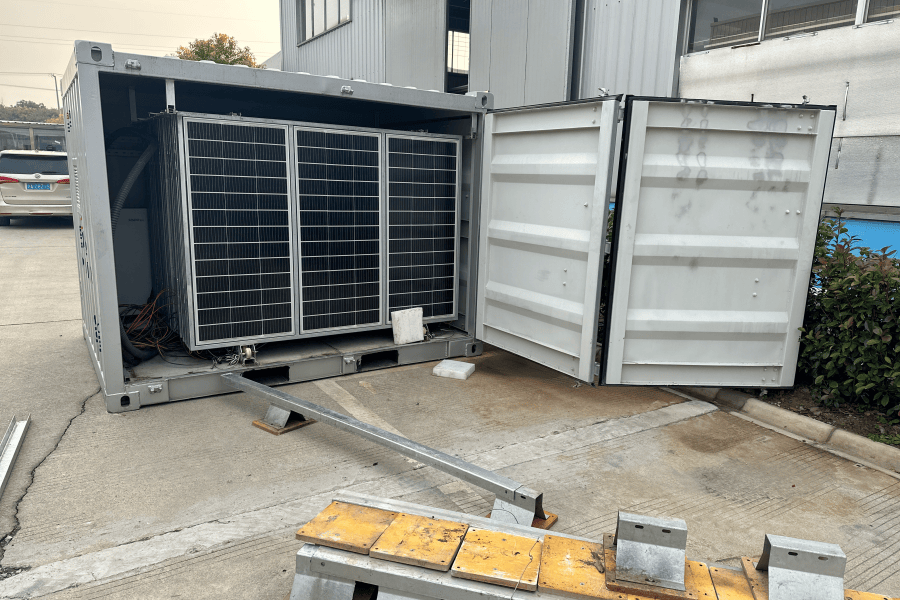
At Highjoule, when we engineer these systems, safety and compliance aren't afterthoughts; they're the foundation. Our containerized 1MWh units are built with a thermal management system that I'm particularly proud of - it's a liquid-cooled design that maintains optimal cell temperature even in Arizona heat or Canadian cold, which is the single biggest factor in extending battery lifespan and preventing safety incidents. This directly impacts your long-term LCOE.

Looking Beyond the Spec Sheet: What Really Matters On Site
Let's get technical for a minute, in plain English. When you compare systems, ask about these things:
- C-rate: This is how fast the battery can charge or discharge relative to its size. A 1MWh battery with a 1C rate can deliver 1MW of power. For EV fast charging, you need a high C-rate (like 1C or more) to support simultaneous high-power sessions. A low C-rate system might be cheaper but will struggle to keep up, defeating the purpose.
- Thermal Management: As I mentioned, this is critical. Air-cooled systems are simpler but often can't handle the sustained high-power output of a busy charging station without degrading faster. Liquid cooling is more robust for this duty cycle.
- Grid Standards Compliance: In the US, it's IEEE 1547-2018 which mandates advanced inverter functions like voltage ride-through. In Europe, it's grid codes like VDE-AR-N 4110. A true grid-forming system isn't just compliant; it's a proactive grid citizen.
Making It Real: A Blueprint for Your Project
Let me give you a condensed case from Germany. A logistics park in North Rhine-Westphalia wanted to electrify its fleet and offer public charging. The grid connection was limited. The challenge wasn't just energy, but providing stable power for multiple 150kW chargers without a costly grid reinforcement.
The solution was a 1.2 MWh grid-forming BESS coupled with a 500 kWp rooftop solar array. The Highjoule system does three things simultaneously: it stores solar excess, it caps the site's power draw from the grid at a set level (eliminating demand charges), and its grid-forming capability provides the local voltage support the weak grid connection needed. The outcome? The utility approved the connection without requiring a ?500k+ upgrade. The chargers operate at full power reliably, and the fleet operators have a guaranteed source of power even during regional grid stress. The project paid back in under 5 years based on saved demand charges and fuel switching alone.
The insight here is that the value wasn't just in the stored kilowatt-hours. The majority of the financial return came from the grid services and infrastructure deferral enabled by the grid-forming capability. That's the paradigm shift.
So, when you're evaluating your Comparison of Grid-forming 1MWh Solar Storage for EV Charging Stations, don't just look at the price tag of the container. Look at the total cost of the enabled project. How much does it save in grid upgrade costs? How reliably will it keep my chargers online? How will its thermal design affect my costs 10 years from now? These are the questions we help our clients answer every day, with real-world data and two decades of "been there, done that" experience. What's the single biggest grid constraint you're facing at your planned charging location?
Tags: UL Standard BESS LCOE Europe US Market EV Charging Infrastructure Renewable Energy IEEE 1547 Grid-Forming Inverter
Author
James Zhang
20+ years agricultural energy storage engineer / Highjoule CTO