
The High-Voltage DC Edge: Why It's a Game-Changer for Utility-Scale Solar Storage
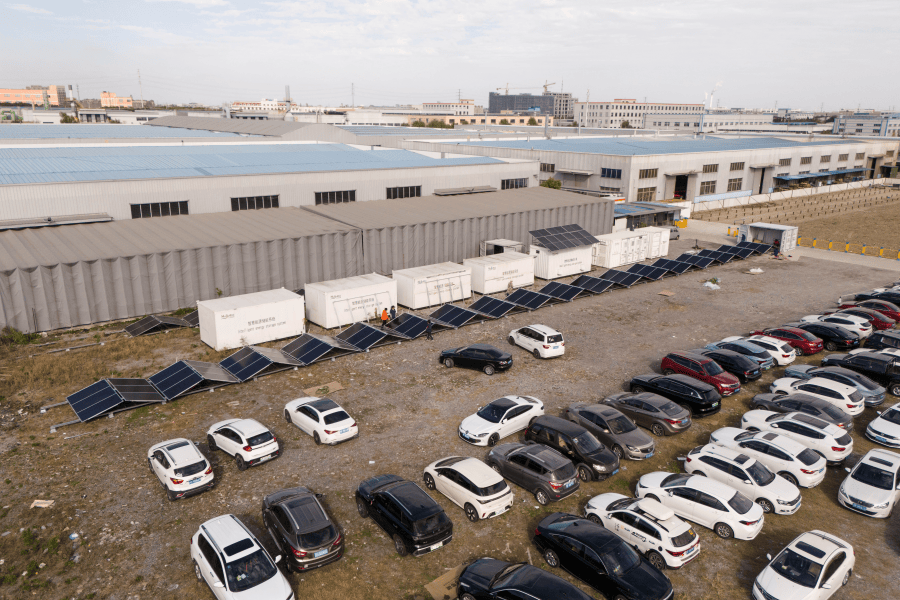
Table of Contents
- The Grid Balancing Act: A Problem We All Feel
- The Hidden Cost of "Standard" AC-Coupling
- A Cleaner Path: The High-Voltage DC-Coupled Architecture
- Case in Point: A German Grid-Stability Project
- Beyond the Hype: The Technical Nitty-Gritty
- Making It Real: What This Means for Your Project
The Grid Balancing Act: A Problem We All Feel
Let's be honest. If you're managing a utility-scale solar project or grid assets, your job has gotten exponentially harder in the last decade. It's not just about generating clean power anymore. It's about delivering it reliably when the grid needs it most, not just when the sun is shining. I've been on sites from California to North Rhine-Westphalia where the frustration is palpable. You've got gigawatts of beautiful PV capacity, but as penetration increases, the duck curve deepens, and curtailment becomes a dirty word that burns profit. The grid needs stability, and pure solar, without the right storage architecture, can sometimes add to the volatility.
The Hidden Cost of "Standard" AC-Coupling
For years, the go-to solution has been the AC-coupled battery system. It's familiar, it's modular, and it can be bolted onto existing solar farms. But after overseeing dozens of these deployments, the inefficiencies start to stack up in a way that hurts the bottom line. Here's the agitating part everyone feels but doesn't always quantify:
- Double Conversion Losses: PV power goes from DC to AC for the grid, then back to DC to charge the battery, and back to AC to discharge. Every conversion clips 1.5-2% efficiency. Over a system's lifetime, that's a mountain of wasted energy.
- Suboptimal Component Sizing: You often need separate, oversized inverters for the PV and the BESS. That's more capex, more footprint, more points of potential failure.
- Complex Control & Timing: Getting two separate AC systems (solar inverters and battery inverters) to play nicely requires sophisticated - and sometimes laggy - communication. In fast-frequency response scenarios, milliseconds matter.
The International Energy Agency (IEA) has highlighted that system-level efficiency is one of the most critical levers for reducing the Levelized Cost of Storage (LCOS). Honestly, sticking with the old AC-coupled model is leaving money on the table.
A Cleaner Path: The High-Voltage DC-Coupled Architecture
This is where the real comparison of high-voltage DC photovoltaic storage system for public utility grids becomes more than academic. The solution isn't just adding storage; it's integrating it intelligently from the DC side. Think of it as giving your solar farm a direct, high-speed express lane to its own personal bank account (the battery), bypassing the congested AC roundabouts.
In a high-voltage DC-coupled system, the PV arrays and the battery strings both connect to a common DC bus, typically at 1000V, 1500V, or even higher. A single, bi-directional power conversion system (PCS) then manages the flow to the grid. The elegance is in its simplicity.
Why This Matters on Site
I've seen this firsthand. On a retrofit in Texas, moving to a DC-coupled design cut the number of major power conversion cabinets by 30%. Fewer cabinets mean less cooling demand, simpler wiring, and believe me, a much happier installation crew. The thermal management story is simpler and more focused.
Case in Point: A German Grid-Stability Project
Let me give you a real example. We partnered on a project in Germany, aimed at providing primary control reserve (PCR) for the national grid. The challenge was brutal: respond to grid frequency deviations within 30 seconds, 24/7/365, with absolute reliability. An AC-coupled system was on the table, but the round-trip efficiency target was nearly impossible to hit economically.
We deployed a 1500V DC-coupled BESS. The PV and storage shared a single PCS platform. The result? The system achieved a consistent round-trip efficiency of over 89% from DC to AC and back. The streamlined control allowed for sub-second response times. And because the entire system, from battery modules to PCS, was designed and tested as a unified high-voltage DC system, it sailed through the local IEC 62933 and VDE-AR-E 2510-50 certifications. The operator isn't just providing a service; they're maximizing revenue from every electron.

Beyond the Hype: The Technical Nitty-Gritty (Made Simple)
Okay, let's break down the expert insight without the jargon overload. When we at Highjoule design these systems, three things are paramount:
- C-rate and Longevity: High-voltage battery strings allow us to use a lower C-rate (charge/discharge current relative to capacity) to achieve the same power output. It's like cruising your car at 2,000 RPM instead of 4,000 RPM to go 60 mph. The stress on the battery cells is lower, which directly extends operational life and protects your investment.
- Thermal Management Synergy: With fewer conversion stages, there's less waste heat generated in the first place. This means your cooling system doesn't have to work as hard, reducing parasitic loads (the energy the system uses to run itself). On a hot day in Arizona, that can be the difference between a system throttling down and one operating at full nameplate capacity.
- The LCOE/LCOS Crusher: This is the bottom line. Higher system efficiency + reduced capex on balance-of-plant + longer asset life = a dramatically lower Levelized Cost of Energy (LCOE) for your solar+storage plant. The National Renewable Energy Laboratory (NREL) has models showing DC-coupled topologies can improve the net present value of a project by significant margins. It turns a compliance project into a high-value asset.
Making It Real: What This Means for Your Project
So, what's the takeaway from this comparison of high-voltage DC photovoltaic storage system for public utility grids? It's not that AC-coupling is obsolete - it still has its place. But for new-build utility-scale solar+storage, or major retrofits where performance is critical, the high-voltage DC approach is the smarter foundation.
Our approach at Highjoule has been to build this intelligence into our core platform from the start. It's not an afterthought. It means our containerized systems are pre-integrated and pre-tested as DC systems, with all the UL 9540 and IEC 62477 safety protocols baked in. This cuts months off deployment time and de-risks commissioning. The goal is to give you a system where the technology fades into the background, and all you see is predictable, resilient performance.
The question I'd leave you with is this: As you plan your next grid-scale storage integration, are you evaluating architectures based on the standards of the past, or the efficiency and economic demands of the next 20 years? The difference, honestly, is more than just technical - it's financial.
Tags: BESS LCOE UL Standards Grid Stability Utility-scale Storage Solar Integration High-voltage DC
Author
James Zhang
20+ years agricultural energy storage engineer / Highjoule CTO