
High-voltage DC Solar Containers for Agriculture: Cut Irrigation Costs & Boost Reliability
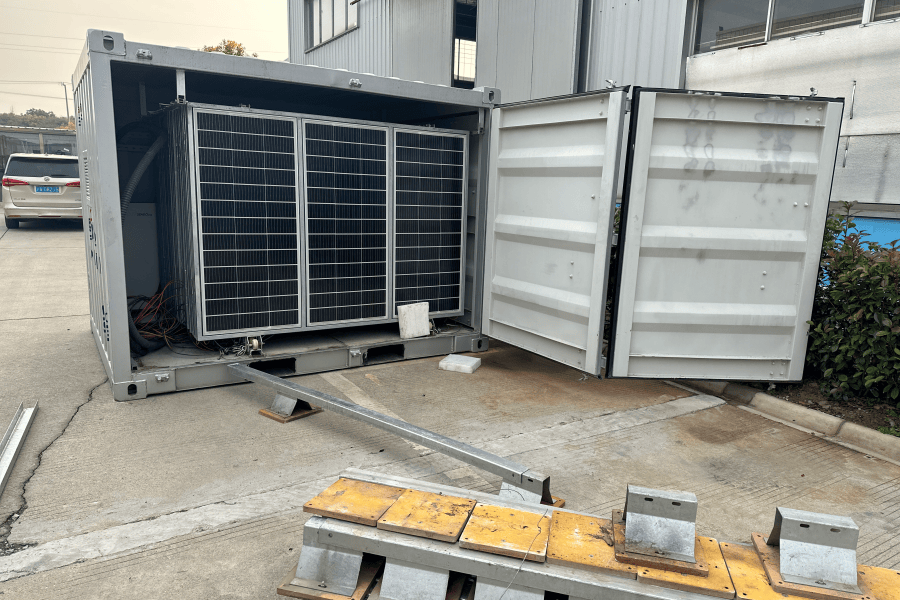
Table of Contents
- The Real Problem Isn't Water, It's Power
- Why Your Current AC Solar Setup Might Be Holding You Back
- The High-Voltage DC Advantage: Simplicity, Efficiency, Reliability
- Case in Point: A California Almond Farm's Transformation
- Beyond the Hype: Key Technical Considerations from the Field
- Making the Choice: What to Look For
The Real Problem Isn't Water, It's Power
Let's be honest. If you're managing a large-scale farm or agricultural operation in North America or Europe, you already know the two biggest variables in your irrigation budget: water availability and the cost of the electricity needed to pump it. With droughts becoming more frequent - the International Energy Agency (IEA) notes the increasing strain on traditional resources - the focus is sharpening on energy. I've been on farms where the monthly power bill for running center-pivot irrigators feels like a second mortgage. And it's not just cost. Grid outages during a critical growth period? I've seen the anxiety firsthand. A few hours without power can mean millions in lost yield. The move to solar was a no-brainer, but the conversation I'm having with forward-thinking agribusinesses today has shifted. It's no longer just about "going solar," but about how you integrate that solar power most effectively, reliably, and safely into your irrigation infrastructure. That's where the real comparison begins.
Why Your Current AC Solar Setup Might Be Holding You Back
The traditional, and still very common, approach is an AC-coupled system. You have your solar panels, they feed DC power to an inverter that converts it to AC, which then either powers the AC pump motor directly or feeds into the building's AC grid. It works, but it adds layers of complexity and cost. Every conversion from DC to AC or AC to DC (if you're adding a battery) loses energy - typically 1.5% to 3% per conversion. Those losses add up fast when you're talking about pumping millions of gallons.
More critically, it creates a single point of failure: the central inverter. If that goes down, your entire solar irrigation system is offline. I've been called to sites in the Texas panhandle where a failed inverter in peak season meant an urgent, expensive overnight replacement. The system wasn't resilient. Furthermore, for remote irrigation sites, connecting a large AC solar array often requires significant - and costly - upgrades to AC switchgear and protection equipment. You're not just buying panels; you're building a small power plant.

The High-Voltage DC Advantage: Simplicity, Efficiency, Reliability
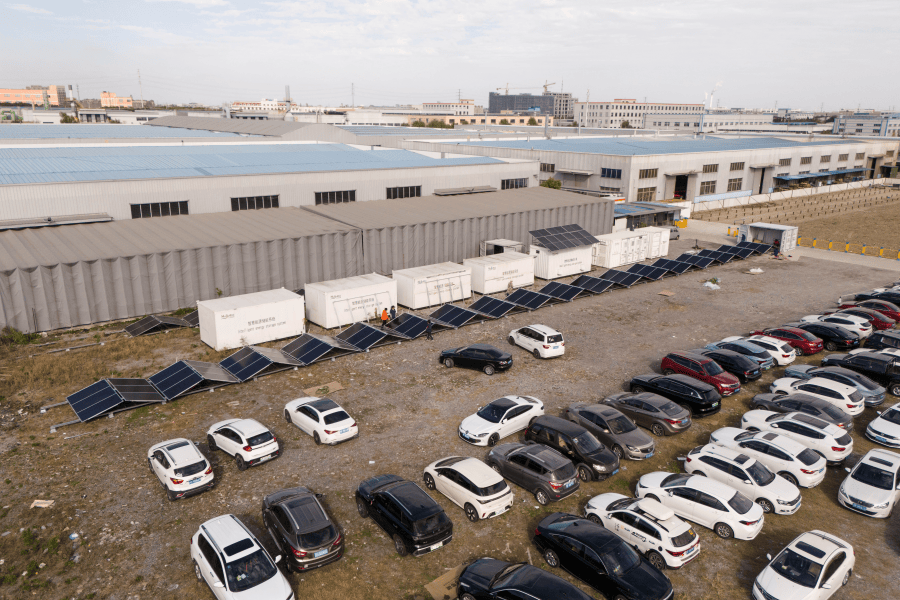
This is where the comparison gets interesting. A High-voltage DC Solar Container, like the solutions we engineer at Highjoule, flips the model. Think of it as a "power pack" designed specifically for heavy, off-grid industrial loads like large irrigation pumps. Here's the core difference:
- DC from Start to (Almost) Finish: Solar panels produce DC. The container houses high-efficiency DC-DC converters that step up the voltage to an optimal level (e.g., 1500V DC) for transmission. This high-voltage DC then runs directly to a variable frequency drive (VFD) that controls the pump motor. Modern VFDs can accept DC input directly, eliminating the need for a bulky, standalone central AC inverter.
- Fewer Parts, Higher Uptime: By removing the central AC inverter, you remove a major failure point. The system architecture is inherently more reliable. Fewer conversion steps also mean higher round-trip efficiency - we consistently see system-level gains of 3-5% compared to equivalent AC-coupled designs. That's free water pumped, directly impacting your Levelized Cost of Energy (LCOE).
- Built-in Brain and Brawn: These aren't just boxes of batteries. A proper containerized system integrates the solar MPPT controllers, DC conversion, battery storage (if needed), and thermal management into a single, UL 9540/ IEC 62933 certified unit. This isn't a theoretical advantage. Having all critical power electronics in a controlled, factory-sealed environment is a game-changer for longevity, especially in dusty, humid, or variable-temperature agricultural settings. The thermal management system isn't an afterthought; it's central to maintaining optimal battery C-rate (the speed of charge/discharge) and preventing degradation, which is something I always stress during site planning.
Case in Point: A California Almond Farm's Transformation
Let me give you a real example from California's Central Valley. A 1,200-acre almond farm was facing soaring demand charges and unreliable grid power during summer afternoons - precisely when they needed to irrigate. Their initial plan was a traditional AC solar farm with a separate battery storage unit.
We proposed a different path: a 1 MWh High-voltage DC Solar Container with integrated storage, directly coupled to their main pump station's VFDs. The challenges were clear: space was limited, and the system had to meet strict California fire codes (UL 9540 was non-negotiable) and be operational before the next irrigation season.
The deployment was telling. Because the container was pre-assembled and tested at our facility, on-site commissioning took 3 days instead of 3 weeks. The DC coupling eliminated the need for a new AC substation connection, saving over $150k in upfront capital. In the first year, they cut their peak demand charges by 95% and had zero irrigation interruptions during three minor grid outages. The farm manager told me the peace of mind was worth as much as the savings. The system just worked.
Beyond the Hype: Key Technical Considerations from the Field
Okay, so DC-coupled looks good on paper. But making it work in the dirt requires some expert insight. Here's what you, as a decision-maker, should really dig into:
- VFD Compatibility is King: This is the linchpin. Not every pump VFD can accept a direct DC input. You need to verify this with your pump supplier or ensure your storage provider can work with you on the right drive interface. It's a crucial conversation that happens at the design phase.
- Thermal Management Isn't Optional: In a container, batteries and power electronics generate heat. A passive cooling system might not cut it in Arizona or Spain. Look for active, liquid-cooled thermal systems that maintain a steady temperature. This directly protects your battery warranty and ensures you get the full power (C-rate) you paid for, even on the hottest day.
- Safety and Standards are the Foundation: Don't just look for a "UL listed" component. For a containerized system, insist on UL 9540 for the entire energy storage system and UL 1741 for inverters/converters. This means the entire assembly - batteries, cooling, fire suppression, electrical safety - has been tested as a unit. It's the difference between buying certified parts and buying a certified power plant. This is non-negotiable for our deployments at Highjoule, both in the US and EU markets.
Making the Choice: What to Look For
So, when you're comparing solutions for your agricultural irrigation, move beyond just the price per kWh of storage. You're comparing systems. Ask your potential providers:
- "Can you show me a DC-coupled system design for my specific pump horsepower and solar irradiance?"
- "Is the entire container unit certified to UL 9540 / IEC 62933, or just the batteries inside it?"
- "How does the thermal management system work, and what is the guaranteed performance derating at 40C (104F) ambient temperature?"
- "What is the projected round-trip efficiency and LCOE for this design over 15 years?"
The goal isn't to become an electrical engineer. The goal is to find a partner who can translate these technical details into real-world reliability and return on investment for your farm. The right High-voltage DC Solar Container isn't just an energy asset; it's a risk mitigation tool and a competitive advantage. It ensures that when the sun is shining and your crops are thirsty, the only thing flowing is water.
What's the one reliability challenge in your current irrigation power setup that keeps you up at night?
Tags: UL Standard BESS LCOE Solar Container Agricultural Irrigation Renewable Energy US Market High-voltage DC
Author
James Zhang
20+ years agricultural energy storage engineer / Highjoule CTO