
IP54 Outdoor BESS for High-Altitude Sites: Conquer the Tough Spots
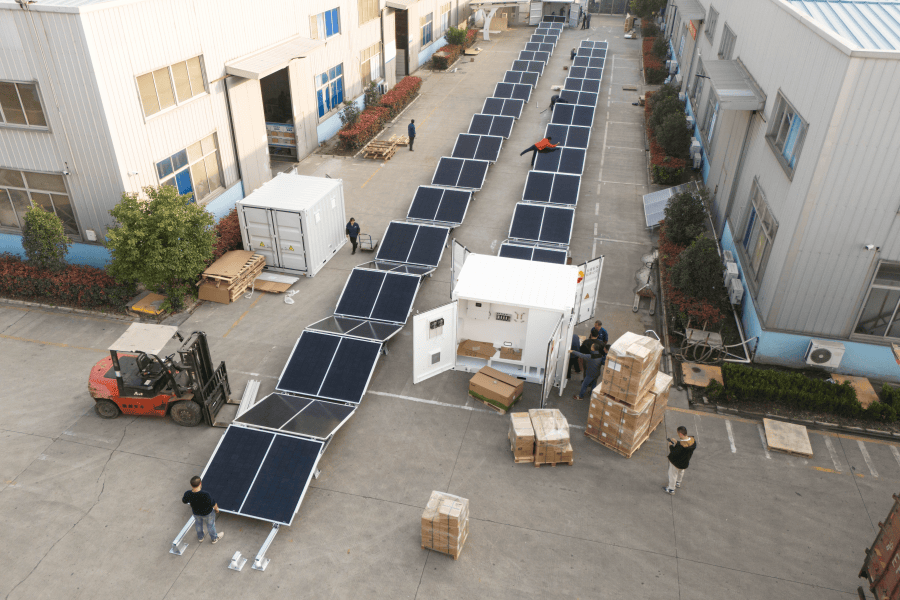
Deploying BESS Where the Air is Thin: Why Your High-Altitude Site Needs a Specialized IP54 Outdoor System
Honestly, after two decades of deploying battery storage from the Alps to the Rockies, I can tell you this: not all sites are created equal. We're seeing a real push in the market to utilize challenging terrains for renewable projects. But the very factors that make high-altitude locations attractive - often vast, unused land with great solar irradiance - are the same ones that can turn a standard battery energy storage system (BESS) into a costly liability. Let's talk about what really happens up there, and why a purpose-built, IP54-rated outdoor photovoltaic storage system isn't just an option, it's a necessity for a bankable project.
Table of Contents
- The Thin Air Problem: More Than Just a View
- When Standard Systems Struggle: Cost and Safety Implications
- The IP54 Outdoor BESS: Engineered for the Edge
- Case in Point: A 2.5 MW System in the Colorado Rockies
- Expert Insight: C-Rate, Thermal Runaway, and Real-World LCOE
- What's Your Next Mountain to Climb?
The Thin Air Problem: More Than Just a View
Here's the phenomenon we're seeing across the board: project developers are eyeing high-altitude regions (think 1,500 meters / 5,000 feet and above) for solar-plus-storage. The economics of land and solar resource are compelling. But the deployment playbook from a flat, temperate industrial park doesn't translate. I've seen this firsthand on site. The core challenge is threefold:
- Thermal Stress: Ambient temperatures swing wildly. Intense UV exposure bakes enclosures by day, while radiative cooling plunges internal temps at night. This daily expansion/contraction cycle stresses every seal, busbar, and weld.
- Low Atmospheric Pressure: Thinner air means less efficient convective cooling - a primary heat dissipation method for many indoor or lightly-rated outdoor systems. Your cooling system has to work smarter, not just harder.
- Environmental Ingress: It's not just about rain. At altitude, you contend with blowing snow, ice, dust, and condensation. According to the National Renewable Energy Laboratory (NREL), environmental factors are a leading contributor to performance degradation in harsh environments.
When Standard Systems Struggle: Cost and Safety Implications
Now, let's agitate that problem a bit. What happens when you try to force-fit a standard containerized or indoor system into this environment? First, efficiency plummets. Batteries are like athletes; they perform best within a tight thermal band. Outside that band, their internal resistance increases, meaning you waste more energy as heat and get less usable capacity. Your project's financial model, built on a specific round-trip efficiency, starts to crumble.
Then come the operational costs. I've been called to sites where a "standard" system required constant babysitting: extra HVAC maintenance, frequent filter changes for dust, and emergency heating pads to prevent electrolyte freezing. The International Renewable Energy Agency (IRENA) highlights that unexpected O&M can inflate the levelized cost of storage (LCOS) by 20-30% over a project's life. Worse yet, improper sealing can lead to moisture ingress, creating a direct path for corrosion and, in the worst cases, creating a ground fault or short-circuit risk that no one wants to think about.
The IP54 Outdoor BESS: Engineered for the Edge
So, what's the solution? It's moving beyond a simple "container" to a fully integrated, environmentally hardened system. This is where a true IP54 outdoor photovoltaic storage system designed for high-altitude comparison becomes critical. The IP54 rating isn't just a marketing bullet point; it's a promise. It means the enclosure is dust-protected (the "5") and protected against water splashes from any direction (the "4"). This is the baseline for surviving in these conditions.
But at Highjoule, we've learned that compliance is just the ticket to the game. The real engineering is in the details that go beyond the standard. For instance, our systems for these applications feature positive-pressure, NEMA 12-rated enclosures with desiccant breathers to keep internal air dry and dust-free. We spec HVAC and thermal management systems not just for the nominal temperature, but for the derated capacity at low atmospheric pressure. And it all has to be built to the standards that give financiers and AHJs (Authority Having Jurisdiction) in the US and EU confidence: UL 9540, IEC 62933, and IEEE 1547 for grid interconnection. It's about delivering a system with a predictable, low LCOE from day one, without the surprise maintenance visits.
Case in Point: A 2.5 MW System in the Colorado Rockies
Let me give you a real example. We deployed a 2.5 MW/5 MWh IP54 outdoor BESS at a ski resort in Colorado, sitting at about 2,800 meters (9,200 ft). The challenge was to store solar power for mountain-top operations and provide critical backup during winter storms. The client had initially considered a modified indoor system.
The challenges were textbook: -40C winter lows, heavy snow load, and winds that would whip any loose panel or door. Our solution centered on a fully integrated outdoor cube with a closed-loop, glycol-based thermal management system - it maintains optimal cell temperature independently of the thin outside air. The enclosure is rated for extreme snow load, and all external conduits have heated trace lines to prevent ice blockage.

The deployment was key. We pre-assembled and factory-tested the entire power conversion and battery system, then shipped it in modular sections. This cut onsite commissioning time by over 60%, a huge deal when you're working in a short weather window between seasons. Two years on, the system's availability is above 99%, and the resort's diesel backup usage has dropped by over 90%. That's the kind of real-world performance that makes a difference.
Expert Insight: C-Rate, Thermal Runaway, and Real-World LCOE
Let's get a bit technical, but I'll keep it in plain English. When we design for these sites, we think differently about C-rate (the speed of charge/discharge). A high C-rate generates more heat. At altitude, shedding that heat is harder. So, we often recommend a slightly lower, more sustainable C-rate. It might mean a marginally larger battery bank, but it drastically improves longevity and reduces thermal stress - net positive for LCOE.
Thermal management is the unsung hero. It's not just an air conditioner. It's about even heat distribution, preventing hot spots that can accelerate cell degradation. We use liquid cooling or advanced forced-air with variable speed drives for precise control. This directly mitigates the risk of thermal runaway, a top safety concern for any operator.
Finally, LCOE. Everyone talks about upfront capex. But in harsh environments, the operational capex is the killer. A system designed for the environment from the ground up - with the right IP rating, pressure compensation, and thermal design - will have far lower lifetime maintenance costs and higher availability. That's how you achieve a truly low LCOE. You're buying predictability.
What's Your Next Mountain to Climb?
Look, if you're evaluating storage for a site where the weather report is an adventure story, you need a partner who's been there. The comparison between a standard system and an IP54 outdoor system built for high-altitude isn't just about specs on a sheet; it's about risk mitigation, total cost of ownership, and ultimately, project success. At Highjoule, we don't just sell boxes, we deliver energy resilience based on two decades of solving these exact problems. What's the specific environmental challenge keeping you up at night on your next project?
Tags: UL Standard BESS LCOE Europe US Market Thermal Management Renewable Energy Outdoor Energy Storage High-altitude Deployment
Author
James Zhang
20+ years agricultural energy storage engineer / Highjoule CTO