
Liquid-Cooled PV Storage for EV Charging: Solving the Grid & Thermal Challenge
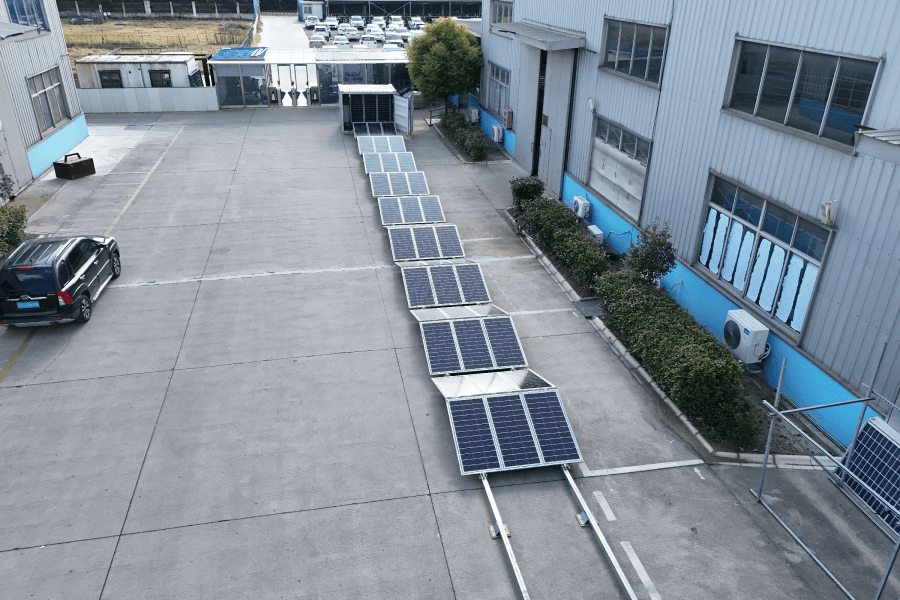
Beyond the Plug: Why Your EV Charging Station's Storage System Needs Liquid Cooling
Honestly, if I had a dollar for every time a client showed me plans for a massive EV fast-charging hub paired with a standard, air-cooled battery container... well, let's just say I could retire. It's a common vision, especially here in the US and across Europe: leverage solar canopies and on-site storage to power rapid charging, reduce demand charges, and claim true green credentials. The intent is perfect. The typical choice of technology, however, often sets the project up for hidden struggles down the road. Having spent over two decades on sites from California to North Rhine-Westphalia, I've seen this firsthand. The core challenge isn't just storing energy - it's managing how that energy is delivered and at what cost, both financially and in system longevity. That's where the real comparison of liquid-cooled photovoltaic storage system for EV charging stations versus traditional air-cooled systems becomes a make-or-break discussion for business owners and developers.
Quick Navigation
- The Real Problem: It's Not Just Capacity, It's the "Surge"
- The Hidden Cost of Getting Hot Under the Collar
- Liquid Cooling: More Than Just a Tech Spec
- A Real-World Case: Germany's 24/7 Logistics Hub
- Expert Insight: C-Rate, Thermal Runaway, and Your Bottom Line
- Making the Right Choice for Your Project
The Real Problem: It's Not Just Capacity, It's the "Surge"
The phenomenon is straightforward. EV fast chargers, especially the 150kW+ DC units, don't draw power like a household appliance. They're like sprinters - demanding massive, high-power bursts for short durations. A station with multiple chargers can see extreme, rapid-cycling load profiles that push a battery energy storage system (BESS) to its limits. The industry measures this demand intensity with C-rate - simply put, how fast you're charging or discharging the battery relative to its total capacity. A 1C rate means discharging the full capacity in one hour. Fast-charging scenarios can routinely require sustained discharge rates of 1C, 2C, or even higher.
This is where standard air-cooled systems, which rely on fans and ambient air, start to sweat. They struggle with thermal management under these high C-rate, high-cycle conditions. Heat becomes concentrated in certain cells, leading to uneven aging. According to a National Renewable Energy Laboratory (NREL) report, inconsistent temperature distribution within a battery pack can accelerate degradation by up to 200% compared to a thermally balanced system. You bought a system for a 10-year ROI, but the core asset might be fading much faster.
The Hidden Cost of Getting Hot Under the Collar
Let's agitate that pain point a bit. What does poor thermal management actually cost you on site?
- Reduced Throughput & Revenue: An overheated system must derate - it literally slows down to protect itself. Imagine a line of EVs waiting at your premium fast-charging hub, and your storage system throttles power because it's too hot. You lose customer satisfaction and direct revenue.
- Safety Compromises & Insurance Headaches: Heat is the enemy of battery safety. Local fire codes and standards like UL 9540A in the US are becoming stringent for a reason. Air-cooled systems in densely packed containers can have "hot spots" that increase thermal runaway risk. I've been in meetings with insurance underwriters who now ask specifically about thermal management design; it directly impacts your premium and project insurability.
- Skyrocketing Lifetime Cost (LCOE): The Levelized Cost of Energy Storage (LCOE) isn't just the purchase price. It's the total cost over the system's life, divided by the energy it delivered. If heat degrades your batteries 30% faster, you've effectively increased your LCOE by a similar margin. You're replacing assets sooner than planned.

Liquid Cooling: More Than Just a Tech Spec
So, what's the solution? In my professional experience, for high-duty-cycle applications like EV charging, liquid-cooled photovoltaic storage systems are not a luxury; they're a necessity for economic and operational resilience. Here's why the comparison leans so heavily in their favor:
Liquid cooling uses a dielectric fluid circulated through plates or channels directly in contact with the battery cells. It's like giving each cell its own personal, precise air conditioning system. The result is dramatically more uniform temperature control, even under those punishing 2C discharge surges needed for back-to-back fast charging.
At Highjoule, when we design systems for these scenarios - like our HJT-Stack LC series - we build this principle from the cell up. It allows for a denser, more compact footprint (critical for urban charging stations where real estate is costly) and, honestly, a much quieter operation than a bank of screaming high-speed fans. More importantly, it directly addresses those pain points: enabling higher sustained power, enhancing safety for UL and IEC certification, and ultimately delivering a lower LCOE by preserving the battery's health cycle after cycle.
A Real-World Case: Germany's 24/7 Logistics Hub
Let me give you a concrete example from a project we completed last year. A major logistics company in North Rhine-Westphalia, Germany, built a new depot with a fleet of 40 electric trucks. They had a large rooftop PV array and needed a storage system to buffer solar power for overnight charging and to shave peak grid demand during daily operations.
Their initial design specified a high-capacity air-cooled BESS. After reviewing the load profile - which showed repeated, short-duration high-power draws as trucks plugged in after shifts - we advocated for a liquid-cooled solution. The challenge was ensuring reliable, simultaneous charging for multiple trucks between 10 PM and 2 AM without causing grid demand spikes or overheating the storage.
The deployed liquid-cooled system not only handles the peak C-rate demands effortlessly but does so within a container that's 25% smaller than the air-cooled alternative would have been. The depot manager recently told me their internal monitoring shows cell temperature differentials of less than 3C across the entire pack during peak operation - a figure that's virtually impossible with air. That's the kind of performance that translates into predictable costs and uptime.
Expert Insight: C-Rate, Thermal Runaway, and Your Bottom Line
If you take one technical insight from this, let it be this: Think in terms of power density, not just energy capacity. For EV charging, you need a battery that can release a lot of power quickly and repeatedly. A liquid-cooled system's superior heat transfer allows it to be optimized for high power density safely.
Furthermore, the safety aspect is profound. In a thermal runaway event, a liquid-cooled system can absorb and dissipate heat far more effectively than air, potentially containing a single cell's failure from cascading. This isn't just theory; it's a core part of the test protocols in UL 9540A that our systems are designed to meet. For a business decision-maker, this means reduced risk, easier permitting (especially in tight urban settings), and a stronger case for your sustainability and safety commitments.
When you run the numbers, the higher upfront capital cost of liquid cooling is often offset within the first few years by higher efficiency (less energy wasted on cooling itself), greater energy throughput, and the extended lifespan of the batteries. That's how you achieve a truly competitive LCOE.
Making the Right Choice for Your Project
The evolution of EV charging infrastructure is pushing storage technology to its limits. The old paradigm of simply adding more battery modules isn't enough. You need a system engineered for the specific thermal and power dynamics of the application.
So, when you're evaluating that comparison of liquid-cooled photovoltaic storage system for EV charging stations, look beyond the spec sheet. Ask your provider about real-world C-rate capabilities, temperature uniformity data, and their track record with local standards compliance. Ask them how they'll support the system locally over a 10-year period.
At Highjoule, this is the conversation we have over coffee with every client in the EV charging space. It's not about selling a box; it's about engineering a solution that delivers promised returns for the long haul. What's the one thermal or power challenge in your current plan that keeps you up at night?
Tags: UL Standard BESS LCOE Europe US Market Thermal Management EV Charging Infrastructure Renewable Energy
Author
James Zhang
20+ years agricultural energy storage engineer / Highjoule CTO