
LFP Mobile Power Container for EV Charging: The Ultimate Guide for US & EU Markets
Beyond the Grid: How LFP Mobile Power is Unlocking EV Charging Anywhere
Hey there. Let's be honest, if you're looking at deploying EV fast chargers, you've probably hit the same wall I see on project sites from California to Bavaria. The promise of electrification is real, but the grid connection? That's often a different story. The wait times, the upgrade costs, the sheer complexity - it can stall a project before it even starts. That's where the conversation is shifting, from a pure charging hardware discussion to a holistic energy solution. And in my two decades of deploying storage systems, one solution has moved from a niche idea to a mainstream game-changer: the LFP (LiFePO4) Mobile Power Container. This isn't just theory; I've wrestled with cable trays and commissioning scripts in the rain to make these systems work. So, let's talk about what this "ultimate guide" really means on the ground.
Quick Navigation
- The Real Problem: More Than Just a Plug
- Why LFP for Mobile Power? It's About Safety and Economics
- Key Specs Decoded: C-Rate, Thermal Management & LCOE
- Case in Point: A German Logistics Park
- Making It Work: Standards, Deployment, and the Bottom Line
The Real Problem: More Than Just a Plug
The dream is a row of 350kW chargers humming away. The reality? Your chosen site's transformer is already at 90% capacity. A new substation could take 18-36 months and cost seven figures. According to a National Renewable Energy Laboratory (NREL) report, grid interconnection delays are now one of the top bottlenecks for EV infrastructure and renewable projects in the U.S. This isn't just an inconvenience; it's a direct hit to your ROI and your ability to meet sustainability targets.
I've been on calls where a commercial property manager wants to install chargers for tenants but gets a quote for a grid upgrade that's more than the entire parking lot renovation. The project gets shelved. That's the agitation point - the grid, meant to enable progress, becomes the barrier. We need a bridge.
Why LFP for Mobile Power? It's About Safety and Economics
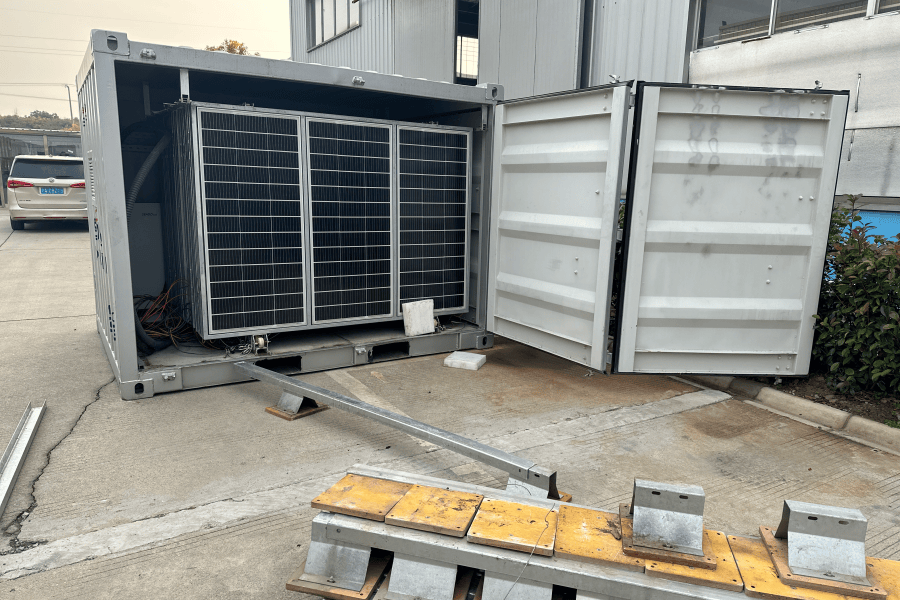
Enter the mobile power container. Think of it as a "grid-in-a-box." But not all boxes are created equal. The chemistry inside is everything. For stationary, high-cycle applications like buffering EV charging, Lithium Iron Phosphate (LFP) has become the de facto choice. Honestly, after seeing thermal runaway tests on different chemistries, the inherent stability of LFP is a relief for any site manager or fire marshal.
It's not just about safety dogma, though. It's about total cost. LFP batteries typically offer 2-3 times more cycle life than some other common lithium-ion chemistries. When you're simulating multiple fast-charge sessions per day, every day, that longevity translates directly into a lower Levelized Cost of Storage (LCOS). You're buying years of operation, not just kWh.

The Standards That Matter for Your Project
In the U.S., UL 9540 (the standard for Energy Storage Systems and Equipment) is your bible. In Europe, IEC 62933 series plays a similar role. For us at Highjoule, designing to these standards isn't a checkbox; it's the foundation. It dictates everything from cell spacing to emergency ventilation. A mobile container that isn't built to these specs isn't just non-compliant - it's a liability. I've seen containers held at port for weeks because the certification paperwork wasn't in perfect order. It pays to work with partners who breathe these standards.
Key Specs Decoded: C-Rate, Thermal Management & LCOE
Let's break down the jargon you'll hear from vendors:
- C-Rate: This is how fast you can charge or discharge the battery. A 1C rate means you can use the full battery capacity in one hour. For a 1 MWh container, that's a 1 MW discharge. For EV fast charging, you need a high C-rate (often 1C or higher) to deliver those big bursts of power when a car plugs in. A low C-rate battery would be like trying to fill a swimming pool with a garden hose - it just won't keep up.
- Thermal Management: This is the unsung hero. LFP is stable, but it still hates being too hot or too cold. An active liquid cooling system, like the ones we integrate, is non-negotiable for high-power, 24/7 applications. It maintains optimal temperature, ensuring performance in Arizona heat or Canadian winters, and maximizing that long cycle life. Passive air-cooling? I wouldn't bet a critical charging hub on it.
- LCOE/LCOS (Levelized Cost of Energy/Storage): This is your ultimate metric. It's the total lifetime cost of the system divided by the total energy it will dispatch. A cheaper upfront battery that degrades in 5 years will have a worse LCOE than a slightly pricier LFP system that lasts 15. The math always wins.
Case in Point: A German Logistics Park
Let me give you a real example. We worked with a large logistics company in North Rhine-Westphalia, Germany. They needed to power six new fast chargers for their electric truck fleet, but the local grid connection was maxed out. The traditional upgrade had a 2-year lead time.
Solution: We deployed a 1.5 MWh LFP mobile power container in under 4 months from contract signing. The container acts as a buffer: it slowly charges from the existing, limited grid connection overnight. Then, during the day, it discharges at high power to simultaneously charge multiple trucks. The grid never sees the peak load.
Outcome: The chargers were operational in a fraction of the time, at about 40% of the cost of the grid upgrade. The client now has operational data and a proven model to roll out to other depots. That's the power of mobility and speed.
Making It Work: Standards, Deployment, and the Bottom Line
So, what does it take to succeed? First, view the mobile container not as an exotic product, but as a piece of critical site infrastructure. That means planning for its placement (foundation, access), its connectivity (to the grid, to the chargers, to your management software), and its long-term health.
Partner with a provider that offers more than just hardware. Look for localized service and maintenance networks. A container in Texas shouldn't wait for a specialist to fly in from overseas for routine service. At Highjoule, our lifecycle support - from remote monitoring to on-call local technicians - is designed to give you the same peace of mind as the LFP chemistry inside the box.
The bottom line is this: The ultimate guide isn't about finding a magic product. It's about adopting a new mindset. The LFP Mobile Power Container is the tangible, deployable asset that turns grid constraints from a full-stop into a speed bump. It lets you build the charging infrastructure your customers or fleet needs, where they need it, on a timeline and budget that makes business sense.
What's the biggest grid constraint you're facing in your next EV project?
Tags: UL Standard BESS Energy Storage LFP Battery EV Charging Mobile Power Container IEEE Standard
Author
James Zhang
20+ years agricultural energy storage engineer / Highjoule CTO