
Novec 1230 Fire Suppression for BESS: A Safer Choice for Telecom Base Stations
Contents
- The Safety Dilemma at the Edge of the Grid
- Beyond the Smoke: What Really Happens in a Thermal Event
- The Suppression Showdown: A Clean Agent Comparison
- Why Novec 1230 Makes Sense for Your Telecom Site
- A Real-World Perspective: It's More Than Just a Box
The Safety Dilemma at the Edge of the Grid
Let's be honest. When you're planning a battery energy storage system (BESS) for a telecom base station, the checklist is long: power output, footprint, cycle life, upfront cost. But honestly, in my 20+ years deploying these systems from California to North Rhine-Westphalia, I've seen the safety conversation - especially fire suppression - often get pushed to a compliance checkbox, not a core design philosophy. That's a problem waiting to happen.
Telecom sites are unique beasts. They're often remote, unattended, and mission-critical. A fire event doesn't just risk asset loss; it can take down a cell tower for days, disrupting emergency services and thousands of customers. The traditional mindset was to throw a standard sprinkler system in the container and call it a day. But as the National Renewable Energy Lab (NREL) notes, lithium-ion battery fires are chemical thermal runaways, not your typical Class A fire. Water can sometimes exacerbate the situation, and the collateral damage from water to sensitive telecom electronics is often a total loss. That's the real pain point: choosing a suppression system that's not just compliant, but actually effective and sensible for the specific hazard.

Beyond the Smoke: What Really Happens in a Thermal Event
I've been on site after a thermal runaway incident. It's not pretty. The goal of suppression isn't necessarily to "put out" a battery cell that's already gone - that's incredibly difficult. The primary objectives are to cool the adjacent cells to prevent propagation, and to suppress flammable vapors to prevent a secondary explosion or fire. This is where the choice of agent becomes critical.
Many older or budget systems might use inert gases like Argon or Nitrogen, or even water mist. They work by reducing oxygen. But in a sealed BESS container, achieving and maintaining that oxygen-deficient atmosphere is tricky, and the required gas volume needs large, heavy cylinders. For a telecom site where space and weight might be constrained, that's a real aggravation. Other synthetic agents have come under scrutiny for their environmental impact or potential toxicity, which brings in a whole other set of regulatory and PR headaches.
The Suppression Showdown: A Clean Agent Comparison
So, let's talk about the clean agent options you're likely comparing. The key players for sensitive, enclosed spaces like a BESS are typically FM-200 and Novec 1230. Both are great at extinguishing fires without leaving residue. But for a battery system, the devil's in the details.
First, the thermal management aspect. One of Novec 1230's standout features is its high heat of vaporization. In plain English, it's exceptionally good at absorbing heat when it turns from liquid to gas. When deployed in a BESS, it acts like a rapid cooling blanket for the battery racks, directly addressing that #1 goal of stopping thermal runaway in its tracks. This intrinsic cooling effect is a significant, firsthand advantage I've seen in test data and system designs.
Second, let's talk about practical deployment. Novec 1230 is stored as a liquid at low pressure. This means the storage tanks are smaller and lighter than high-pressure gas cylinders for an equivalent protection level. For our team at Highjoule, when we're doing a site survey for a hilly or space-tight telecom location, that weight and footprint savings directly translates to easier logistics, lower shipping costs, and more flexible siting. It just makes the whole installation smoother.
Key Comparison Points at a Glance
| Feature | Novec 1230 | FM-200 (Typical Alternative) |
|---|---|---|
| Storage State | Low-pressure liquid | High-pressure gas/liquid |
| Primary Action | Cooling & Oxygen Displacement | Oxygen Displacement |
| Space/Weight Requirement | Generally lower | Generally higher |
| Environmental (GWP) | Very Low (1) | Higher (~1,600) |
| Safety Margin (AEL) | High | Moderate |
Why Novec 1230 Makes Sense for Your Telecom Site
This is where the rubber meets the road for a network operator. Choosing Novec 1230 isn't just about ticking the UL 9540A or IEC 62933 box - though it's excellent for that. It's a decision that impacts your total cost of ownership (TCO) and risk profile.
Think about Levelized Cost of Storage (LCOS). A big part of LCOS is longevity and avoiding catastrophic loss. A suppression system that more effectively limits damage in an event can save the majority of your BESS asset, not just the shell. Furthermore, its zero residue means if you do have an incident, cleanup is faster and cheaper - your site can potentially be back online sooner. The low global warming potential (GWP) is a big deal too, especially in Europe with its strict F-gas regulations. It's a future-proof choice that avoids potential regulatory fees or phase-outs.
At Highjoule, our BESS designs for telecom integrate Novec 1230 systems from the ground up. We don't bolt them on as an afterthought. This integration allows for smarter, faster detection and targeted agent delivery, which optimizes agent use and enhances overall system safety. It's this holistic design approach, compliant with both UL and IEC standards, that gives our clients the confidence to deploy in sensitive or remote locations.

A Real-World Perspective: It's More Than Just a Box
Let me give you an example from a project we completed last year in Bavaria. The client needed a BESS for a critical base station serving a small valley community. The site was in a protected watershed area, and the local fire authority had extreme concerns about runoff from any potential incident. A water-based system was a non-starter.
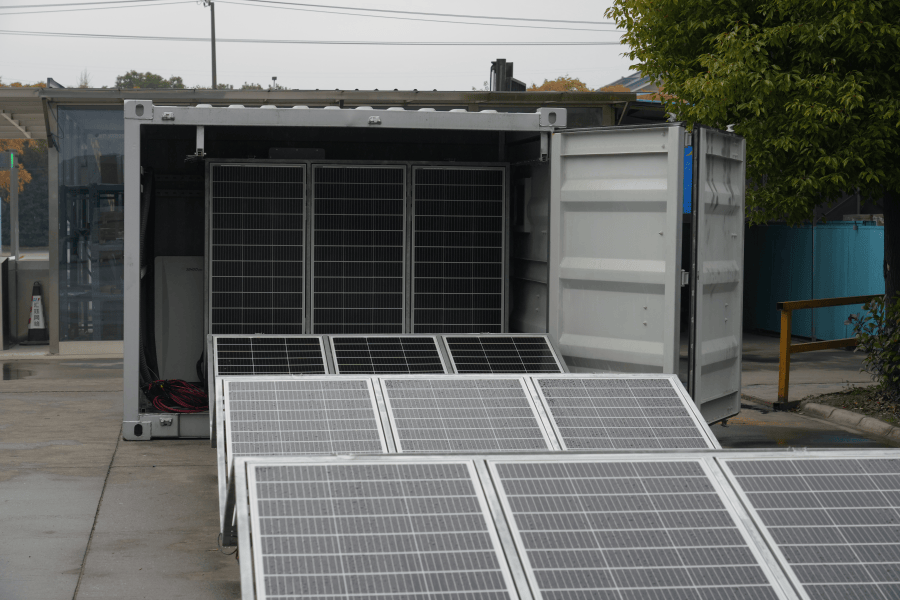
We deployed a containerized BESS with an integrated Novec 1230 system. The permitting process was smoother because the environmental profile of the agent addressed the watershed concerns head-on. The local fire marshal was impressed with the system's design and the clear safety data. But the real win for the client? Peace of mind. They have an unattended site providing vital service, with a safety system that's tailored to the actual risk, not just a generic solution. That's the value of a proper comparison and a thoughtful choice.
So, the next time you're evaluating BESS options for your telecom network, look beyond the battery chemistry and inverter specs. Ask your vendor: "What's your fire suppression philosophy?" The answer will tell you a lot about how deeply they understand real-world, on-the-ground safety. What's the one risk in your deployment plan that keeps you up at night?
Tags: UL Standard BESS US Market Europe Market Novec 1230 Fire Suppression Energy Storage Safety Telecom Infrastructure
Author
James Zhang
20+ years agricultural energy storage engineer / Highjoule CTO