
Grid-Forming 1MWh Solar Storage: Reliable Data Center Backup Power Solutions
Contents
- The Silent Crisis in Your Data Hall
- When Milliseconds Cost Millions: The Real Price of Unreliable Backup
- Grid-Forming Tech: More Than Just Another Battery Box
- A Real-World Fix: How a German Data Center Got It Right
- The Nuts and Bolts: What Your Engineer Wishes You Knew
- So, What's Your Next Move?
The Silent Crisis in Your Data Hall
Honestly, if you're managing a data center in the US or Europe right now, your backup power strategy is probably keeping you up at night. And it should. We've moved way past the days where a simple diesel generator and some lead-acid batteries were enough. The grid is getting less predictable, your power quality demands are through the roof, and sustainability mandates are knocking on your door. I've seen this firsthand on site C facilities managers are stuck between the rock of 99.999% uptime requirements and the hard place of soaring energy costs and complex compliance.
The core problem? Most traditional battery energy storage systems (BESS) for backup are what we call "grid-following." They need a strong, stable grid signal to sync up and operate. But what happens during a black start, or when there's a major frequency event? They wait. And in a data center, waiting is not an option. You need a system that can create stability, not just follow it. That's the gap the Technical Specification of Grid-forming 1MWh Solar Storage for Data Center Backup Power is designed to bridge.
When Milliseconds Cost Millions: The Real Price of Unreliable Backup
Let's talk numbers for a second. The Uptime Institute's 2023 Outage Analysis found that over 60% of outages result in at least $100,000 in total losses, with a significant portion blowing past the $1 million mark. It's not just about the outage itself; it's about the brownouts, the voltage sags, the harmonic distortion that slowly degrades your sensitive IT equipment. A traditional UPS and genset combo might handle a complete outage, but it does nothing for the daily power quality issues that shorten hardware lifespan.
On top of that, you have the operational cost. Energy is your second largest OPEX after personnel. The International Energy Agency (IEA) notes data centers consumed about 1-1.5% of global electricity demand in 2022, a figure that's only rising. Simply put, your backup system is a cost center that sits idle 99.9% of the time. But what if it could be working for you every single day, cutting your energy bills and generating revenue through grid services, all while standing ready for an emergency? That's the paradigm shift we're talking about.

Grid-Forming Tech: More Than Just Another Battery Box
This is where the spec for a grid-forming 1MWh solar-coupled storage system changes the game. Forget the passive battery bank. Think of it as an independent "mini-grid brain" for your critical load. Unlike grid-following inverters, a grid-forming inverter can generate its own stable voltage and frequency waveform from a standing start. It can black start, support the grid during faults, and seamlessly transition between grid-tied and islanded modes. For a data center, this means your backup power is online and stabilizing your microgrid in cycles, not seconds.
At Highjoule, when we design a system to these specs, we're not just throwing cells into a container. We're engineering for the specific duty cycle of a data center. That means prioritizing long-duration discharge at a sustainable C-rate to carry you through longer outages or peak shaving periods, not just a 15-minute burst. It means obsessive thermal management to ensure performance on the hottest day, because, honestly, I've seen too many systems derate when you need them most due to poor cooling design. And crucially, it means building every cabinet and conduit to not just meet, but exceed, the local fire and safety codes like UL 9540 and IEC 62933. Your risk manager will sleep better.
A Real-World Fix: How a German Data Center Got It Right
Let me give you a concrete example from a project we completed in North Rhine-Westphalia, Germany. The client was a colocation provider facing two headaches: rising grid instability in their region and stringent local carbon reduction targets. Their existing diesel gensets were becoming a liability.
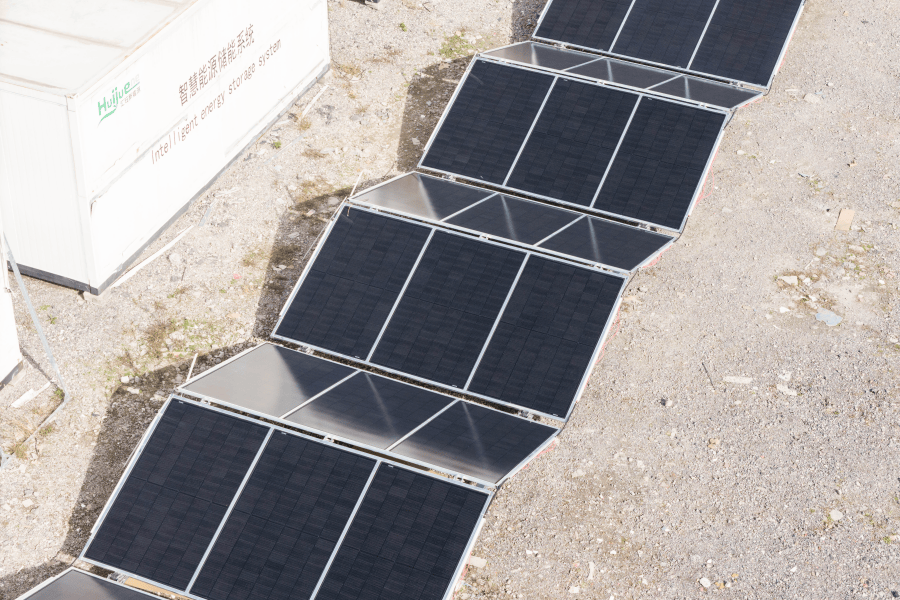
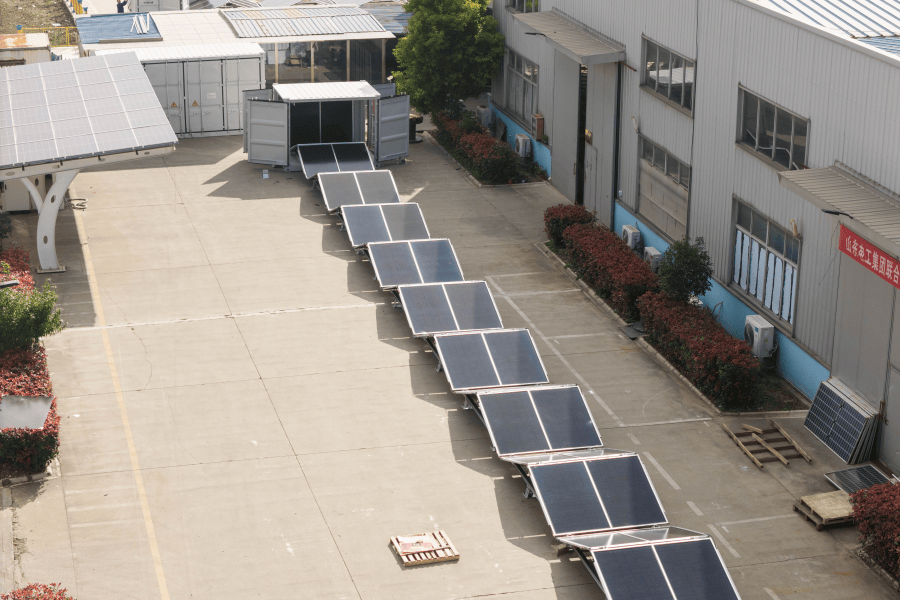
We deployed a 1.5MWh grid-forming BESS, coupled with a rooftop solar PV canopy. The challenge was integrating this new asset with their legacy electrical infrastructure without causing disruption. The solution was our system's advanced grid-forming controls, which allowed it to act as the stabilizing "anchor" for their on-site power quality, smoothing out fluctuations before they hit the servers.
The outcome? The system now provides primary backup for their most critical hall, with the gensets pushed to a secondary, less-frequently-used role. It cuts their peak demand charges by managing load daily. And, by participating in the German primary control reserve market (a revenue stream enabled by the grid-forming capability's fast response), they're turning a cost center into a modest profit center. The payback period shifted dramatically.
The Nuts and Bolts: What Your Engineer Wishes You Knew
When you're evaluating a spec sheet for a system like this, don't just look at the headline capacity (1MWh). Dig deeper. Ask about the effective C-rate. A system rated for a continuous 0.5C discharge is far more valuable for a data center than one that can only do 1C for 15 minutes. It's about sustained power, not just peak power.
Then, grill your vendor on thermal management. Is it air-cooled or liquid-cooled? Liquid cooling, while sometimes a higher capex, gives you much more uniform cell temperatures. This extends cycle life, maintains performance, and honestly, reduces fire risk C a non-negotiable in our book. It directly impacts your long-term Levelized Cost of Storage (LCOS), which is the real metric you should care about more than simple upfront cost.
Finally, understand the controls. The magic of grid-forming is in the software. Can it coordinate with your existing UPS? Does it have the grid codes for your region (like IEEE 1547 in the US) pre-programmed and certified? At Highjoule, we spend as much time on the digital twin and control logic simulation as we do on the physical hardware. It's what ensures the system works on paper, and then works perfectly on the concrete pad we pour for it.
So, What's Your Next Move?
The conversation around data center power is shifting from pure reliability to resilient, sustainable, and intelligent energy management. The technical specification for a grid-forming, solar-integrated 1MWh storage system isn't just a product datasheet; it's a blueprint for that future. The question isn't really if you'll need this capability, but when. And the smart move is to plan for it now, while you can integrate it thoughtfully into your infrastructure roadmap, rather than as a panic buy after an incident.
What's the one power quality issue in your facility that your current system just can't seem to fix?
Tags: UL Standard BESS LCOE Europe US Market Renewable Energy Data Center Backup Solar Storage Grid-Forming Inverter
Author
James Zhang
20+ years agricultural energy storage engineer / Highjoule CTO