
Novec 1230 Fire Suppression for BESS: The Safer Choice for Industrial Parks
Contents
- The Uncompromising Safety Priority in Industrial BESS
- The Real Fire Risk: It's Beyond the Battery Cell
- The Suppression System Showdown: What's Really on the Table?
- Why Novec 1230 is Gaining Traction: A Site Engineer's Perspective
- Making It Work: A Glimpse into a Real-World Deployment
- Your Next Steps: Questions to Ask Your BESS Provider
The Uncompromising Safety Priority in Industrial BESS
Let's be honest. When we sit down with facility managers or plant engineers to talk about deploying an energy storage system, the first question is rarely about the levelized cost of energy (LCOE) or the C-rate. It's about safety. "What happens if it catches fire?" That's the elephant in the room, especially for industrial parks where these containers are sitting near critical infrastructure, employee workspaces, or other high-value assets. I've seen this firsthand on site C the trust in the technology hinges completely on the answer to that question. A report from the National Renewable Energy Laboratory (NREL) emphasizes that while BESS failures are rare, a robust safety-by-design approach, including suppression, is non-negotiable for widespread adoption.
The Real Fire Risk: It's Beyond the Battery Cell
Here's a key insight from the field that often gets missed in brochures. The initial thermal runaway in a single cell is a challenge, but the real system-level fire event often involves the spread to electrical components C busbars, inverters, cabling. These can ignite and sustain a fire that traditional methods struggle to handle. A suppression system isn't just for the battery rack; it's for the entire container ecosystem. The goal is rapid knockdown of the initial event and preventing reignition, giving the system time to safely de-energize. This is where the choice of suppression agent becomes critical.

The Suppression System Showdown: What's Really on the Table?
For years, the default for many enclosures has been aerosol-based systems or water mist. They work, but they come with operational baggage. Aerosols can leave a corrosive residue that wreaks havoc on sensitive electronics over time, turning a suppressed event into a total system loss. Water mist is great for cooling, but if you're in a freezing climate, you've got a whole new set of problems with pipes and tanks. And honestly, the clean-up and potential water damage to the container interior and remaining battery modules can be a massive operational headache and cost.
This is why we're seeing a significant shift in specification, particularly for high-value industrial deployments, towards clean agent systems like Novec 1230. It's not just a "nice-to-have" anymore; for many of our clients in California or Germany, it's becoming a baseline requirement for their risk assessment.
Why Novec 1230 is Gaining Traction: A Site Engineer's Perspective
So, in a direct comparison of Novec 1230 fire suppression energy storage container for industrial parks against other options, what are the practical advantages? Let me break it down from a deployment and ops standpoint:
- Zero Residue, Zero Corrosion: This is the big one. Novec 1230 is a liquid that vaporizes upon discharge. It leaves absolutely no residue. That means after a suppression event, you're not facing a costly, corrosive clean-up. More importantly, the unaffected parts of your BESS C the inverters, the control systems, the majority of your battery racks C remain pristine and operational. This dramatically reduces potential downtime and financial loss.
- Space-Efficient & Flexible: It's stored as a liquid, so the storage tanks are relatively compact compared to some gas systems that need high-pressure cylinders. This gives us more flexibility in designing the container layout, which is always a squeeze.
- Environmental & Safety Profile: It has a low global warming potential and zero ozone depletion. But from a site safety angle, its no-ozone-depleting formula and its high safety margin for personnel (it's designed for use in occupied spaces) make permitting and insurance discussions smoother. It's listed and approved under critical standards like UL 2127 and NFPA 2010.
At Highjoule, when we engineer our containerized BESS solutions for industrial clients, specifying a Novec 1230 system integrated with our proprietary thermal management and gas detection array is a core part of our safety philosophy. It's not an add-on; it's baked into the design from day one to meet and exceed both UL 9540 and IEC 62933 standards. This holistic approach is what ultimately optimizes the long-term LCOE C by protecting the capital asset itself.
Making It Work: A Glimpse into a Real-World Deployment
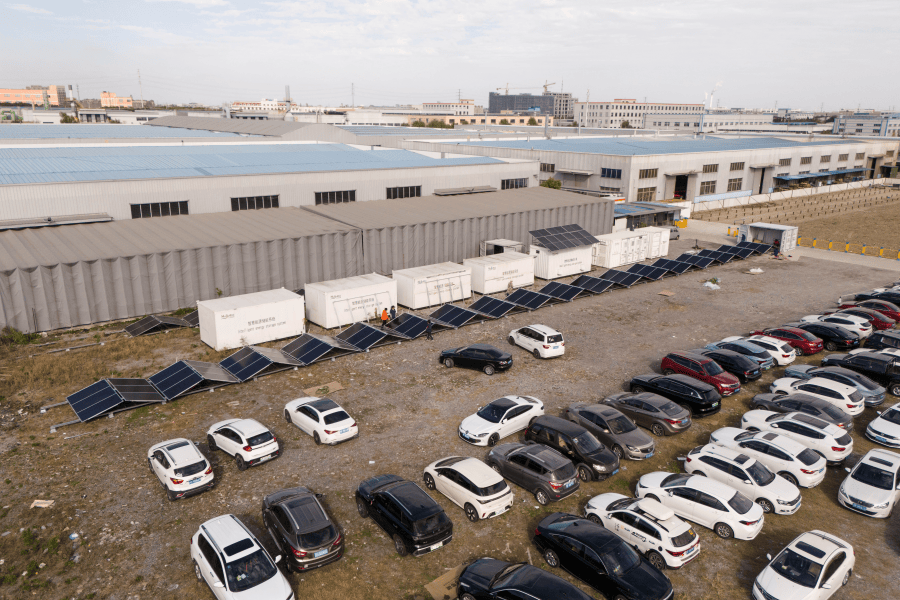
Let me give you a non-proprietary example from a project we supported in Northern Germany. An automotive parts manufacturer wanted a 2 MWh BESS for peak shaving and backup power. Their risk team was adamant: no water inside the container (due to freeze risk and corrosion concerns), and the system had to allow for potential partial operation even after a suppression event in one zone.
The solution was a container with a zoned Novec 1230 system. Each battery rack compartment had its own dedicated detector and nozzle. The thermal management system was designed to work in concert C if sensors picked up a rapid temperature rise in Zone 3, the cooling for that zone would max out while the suppression system was armed. The idea is to use every second possible to prevent discharge. But if Novec 1230 did discharge in Zone 3, only that zone was affected. The clean agent wouldn't harm the electrical gear, and the other zones could potentially remain online, maintaining some level of system functionality while the incident was investigated. This granular level of control and asset preservation was the deciding factor for the client.
Your Next Steps: Questions to Ask Your BESS Provider
You don't have to be a fire suppression expert. But when you're evaluating bids for your industrial park's energy storage system, push beyond the datasheet. Ask your provider:
- "Is the suppression system UL/IEC certified for BESS applications, and can you show me the listing?"
- "What is the clean-up and recovery process after a suppression event? What's the estimated downtime and cost?"
- "How is the system zoned? Can an event in one rack isolate the problem, or does it take the whole container offline?"
- "How does the thermal management system interface with the fire detection and suppression controls?"
The answers will tell you a lot about whether you're getting a commodity box or a resilient, safety-engineered asset. At the end of the day, the right fire suppression choice isn't just about compliance; it's about business continuity and protecting a significant investment. What's the one safety specification your team is currently debating for your next project?
Tags: UL Standard BESS Europe US Market Industrial Energy Storage Novec 1230 Fire Suppression Safety
Author
James Zhang
20+ years agricultural energy storage engineer / Highjoule CTO