
Novec 1230 Fire Suppression for Remote Island BESS: Safety, Compliance & LCOE
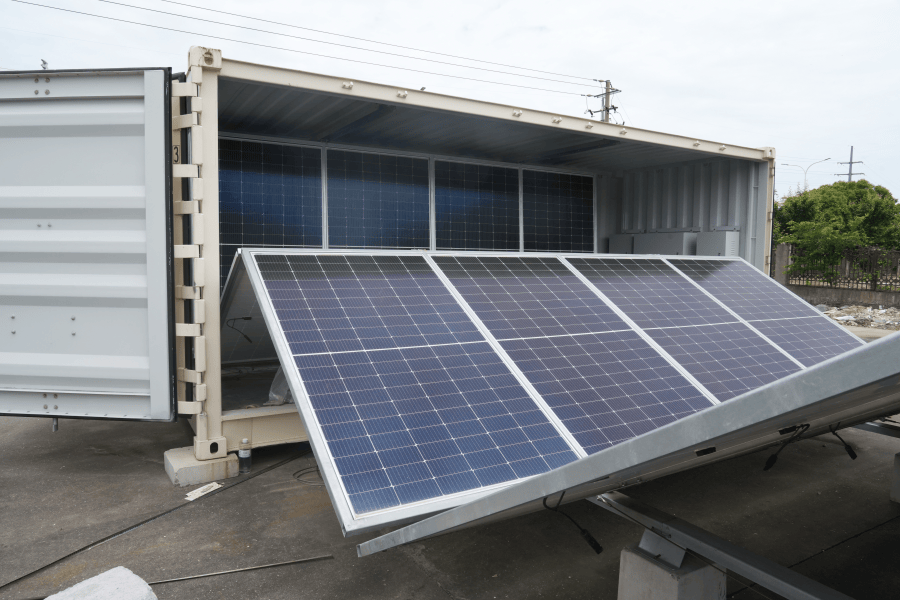
Table of Contents
- The Unique Island Microgrid Challenge
- The Fire Safety Reality Check for Remote BESS
- Why Novec 1230 is Becoming the Go-To Solution
- Beyond the Chemical: System Design & LCOE Impact
- A Real-World Lens: Deployment in the Scottish Isles
- Making the Decision for Your Project
The Unique Island Microgrid Challenge
Let's be honest, talking about battery energy storage for a remote island community isn't like planning for a suburban data center backup. Out there, your BESS container isn't just equipment; it's a critical piece of community infrastructure. A failure means more than a blip on a utility dashboard - it can mean no power for the school, the clinic, or the water desalination plant. I've seen this firsthand on site, where the "grid" is the diesel generator humming in the background and the solar field you're trying to integrate. The core mission? Maximize renewable penetration, slash diesel dependence (and its crazy logistics cost), and achieve true energy independence. But every component you specify, especially the fire suppression system inside that BESS container, carries a weight you don't feel in mainland projects.
The Fire Safety Reality Check for Remote BESS
Here's the agitating part we don't discuss enough over coffee. Traditional fire suppression in BESS - think water mist or even some clean agents - often assumes a few things: a quick fire department response, easy access for service crews, and maybe even a grid connection to power safety systems during an event. On a windswept island? Forget it. Response times are measured in hours, not minutes. Shipping in specialized technicians or replacement parts is a logistical nightmare and a budget killer.
The real cost of a thermal event isn't just the lost container. It's the LCOE (Levelized Cost of Energy) impact of the entire microgrid being down for weeks. It's the reputational damage that sets back renewable adoption for years. According to a National Renewable Energy Laboratory (NREL) analysis, unplanned downtime is the single largest operational risk factor for remote microgrid economics. So when we compare fire suppression systems, we're not just comparing chemicals; we're comparing risk mitigation strategies for the entire project's financial viability.
Why Novec 1230 is Becoming the Go-To Solution
This is where the conversation around Comparison of Novec 1230 Fire Suppression Energy Storage Container for Remote Island Microgrids gets real. In my 20+ years, I've evaluated a lot of systems. Novec 1230 fluid, when integrated into a well-designed BESS container, addresses the island dilemma head-on.
First, it's about safety and survivability. Novec 1230 is a clean agent - it extinguishes fire by removing heat, not oxygen. That means it's safe for occupied spaces (important if your container is near other infrastructure) and, crucially, it leaves no residue. After a discharge, you're not dealing with a corrosive, battery-damaging mess. This directly translates to potentially saving the battery racks themselves in a minor incident, a huge Capex salvage.
Second, compliance isn't optional. For our North American projects, UL 9540A is the benchmark for fire safety. In Europe and many other regions, it's IEC 62933-5-2. Novec 1230 systems are extensively tested and listed to these standards. This isn't just a checkbox; it's your insurance, your financing, and your permitting ticket. At Highjoule, we've built our standard container platforms around this, ensuring the suppression system isn't an afterthought but is baked into the thermal management and controls architecture from day one.
Key Comparison Points in Plain English
- Speed & Effectiveness: It acts in seconds, crucial for stopping lithium-ion battery thermal runaway chains.
- Zero Residue: No cleanup means faster recovery and no secondary damage to expensive battery cells and electronics.
- Space & Weight: It requires less cylinder storage space compared to some inert gas systems - a real benefit in a standardized shipping container where every cubic foot counts.
- Environmental Profile: It has a low global warming potential and zero ozone depletion. For environmentally conscious island communities, this aligns with the very goal of deploying renewables.
Beyond the Chemical: System Design & LCOE Impact
Honestly, the fluid is just one part. The real magic - or failure - happens in the integration. A suppression system is part of the broader Thermal Management strategy. How are you detecting the event? We use multi-tiered sensing (heat, gas, smoke) because by the time you see smoke, it's often too late. The system's C-rate (charge/discharge rate) capability directly influences heat generation. A high C-rate system for frequency regulation needs more aggressive cooling and faster detection than a low C-rate, solar-smoothing system.
At Highjoule, our design philosophy links these dots. The BMS (Battery Management System) talks to the thermal management system, which is primed to trigger the Novec 1230 system at the first unambiguous sign of thermal runaway. This integrated design reduces false alarms and ensures targeted action. This reliability directly lowers operational risk, which financiers and insurers price into your project's LCOE. A more resilient system gets better rates, period.

A Real-World Lens: Deployment in the Scottish Isles
Let me give you a case, not a hypothetical. We deployed a 2 MWh containerized BESS for a microgrid on a Scottish island last year. The challenge: integrate wind, reduce diesel use by over 70%, and meet the UK's strict fire safety regulations for unattended critical infrastructure. The location was remote, with exposure to salt spray and limited service windows.
We used our standard platform with the integrated Novec 1230 system. The clincher for the client wasn't just the compliance sheet. It was the system's "what-if" scenario. We demonstrated how, in the unlikely event of a cell failure, the agent would suppress it without damaging adjacent modules, and the container's isolation controls would prevent grid disruption. The system's clean agent nature meant no complex environmental cleanup was required - a major concern for the local ecology. Eighteen months on, the system is performing, diesel bills are down, and the community has a new level of confidence in their energy storage.
Making the Decision for Your Project
So, when you're comparing Novec 1230 Fire Suppression Energy Storage Container for Remote Island Microgrids, don't just look at the spec sheet. Ask your provider: How is it integrated with the BMS and cooling? What's the verification testing protocol (UL 9540A test data should be available)? What's the long-term maintenance and agent recharge logistics plan for my remote site?
Our approach at Highjoule is to build that resilience in from the start. It makes the container a bit more upfront, sure, but it makes the entire microgrid project infinitely more sustainable - financially and operationally - for the long haul. What's the one risk in your remote project that keeps you up at night? Is your current BESS design addressing it, or just hoping it won't happen?
Tags: UL Standard BESS LCOE Novec 1230 Remote Microgrids Fire Safety
Author
James Zhang
20+ years agricultural energy storage engineer / Highjoule CTO