
ROI Analysis of Air-cooled Industrial ESS Container for Agricultural Irrigation
Contents
- The Water and Power Problem
- Why Traditional Solutions Fall Short
- The Air-Cooled Container: A Smarter Way to Store Power
- Calculating Real ROI: Beyond the Brochure
- A Case from California: Putting It All Together
- Key Technical Insights for Decision-Makers
The Water and Power Problem
Let's be honest. If you're running a large-scale agricultural operation in California, Texas, or Southern Europe, you're not just farming crops; you're managing a massive, energy-intensive logistics system. And the single biggest power draw? Irrigation. The pumps that move water are absolute beasts on your energy bill. I've been on sites where the monthly demand charges from the utility during peak irrigation season could make you wince.
The problem is a double whammy: your highest energy need coincides perfectly with the grid's most expensive and sometimes strained periods C hot, dry afternoons. You're competing with every air conditioner in the state. The International Energy Agency (IEA) has highlighted that agriculture's energy consumption is rising, and its reliance on variable grid power is a growing cost and reliability risk. So you're left juggling: run the pumps during peak times and pay a fortune, or shift operations and risk your yield.
Why Traditional Solutions Fall Short
For years, the go-to "solution" was just to grit your teeth and pay the bill, or maybe install a diesel generator as a backup. But the generator is a Band-Aid C it adds fuel cost, maintenance, emissions, and noise. It doesn't save you money; it just lets you operate during an outage at a high ongoing cost.
Then solar PV came along, and it's a fantastic piece of the puzzle. But here's the firsthand reality I've seen on dozens of farms: your pumps need to run when the sun is strong, but also often in the early morning or evening. Solar alone has a timing mismatch. You end up exporting excess midday power to the grid at a low rate, only to buy it back hours later at a premium. That's not an optimal financial model.
The core pain point is lack of control. Your operation is at the mercy of time-of-use rates and grid stability. The financial upside of solar is capped without a way to time-shift that energy.
The Air-Cooled Container: A Smarter Way to Store Power
This is where the industrial-scale, air-cooled Battery Energy Storage System (BESS) container enters the picture. Think of it not as an extra expense, but as a productivity and financial tool for your farm. Its primary job is to give you control.
Here's how it works as a solution: You pair it with your solar array (or even just use it with the grid). During the day, it stores cheap solar energy or off-peak grid power. Then, during those expensive peak hours in the late afternoon when you need to run the big pumps, you draw from the battery. You avoid the peak demand charges and high energy rates. It's called "peak shaving" and "arbitrage," but I like to call it "common-sense energy budgeting."
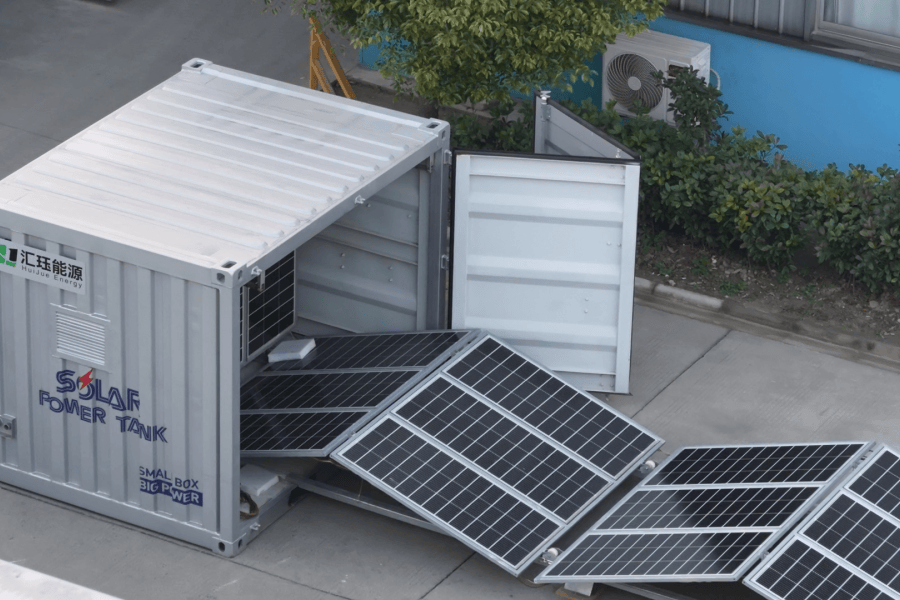
For agricultural settings, the air-cooled container is particularly compelling. It's a self-contained, UL 9540 and IEC 62933 certified unit. Everything C batteries, inverters, cooling, safety systems C is in a rugged, shipping-container-style enclosure. From a deployment view, this is key. We can deliver it, connect it, and have it running with minimal on-site construction. It's a plug-and-play asset for your energy infrastructure.

Calculating Real ROI: Beyond the Brochure
When we talk about ROI Analysis of Air-cooled Industrial ESS Container for Agricultural Irrigation, we have to get practical. The simple formula is: (Savings per year / Total System Cost) = Simple Payback Period. But the devil is in the details of those "savings."
For a farm, the savings primarily come from:
- Demand Charge Reduction: This is often the biggest hitter. Utilities charge not just for the energy (kWh) you use, but for your highest 15-minute power draw (kW) in the month. A BESS flattens that spike.
- Energy Arbitrage: Buying low (off-peak/solar), using high (peak).
- Increased Solar Self-Consumption: Using more of your own solar power directly, instead of selling it low and buying back high.
- Potential Grid Services: In some markets, you can earn small revenues by providing frequency regulation services to the grid when you're not irrigating.
Total system cost isn't just the container price. It includes installation, permitting, interconnection fees, and long-term maintenance. A high-quality, UL-certified system like the ones we engineer at Highjoule Technologies is designed for a 15-20 year lifespan with minimal operational fuss, which drastically improves the long-term ROI by lowering your Levelized Cost of Storage (LCOS) C basically, the average cost per kWh stored and discharged over the system's life.
A Case from California: Putting It All Together
Let me give you a real-world example from a client in California's Central Valley. They had a 1 MW solar array and massive center-pivot irrigation pumps. Their demand charges were crippling in summer.
Challenge: Reduce grid dependence during peak (4-9 PM), maximize solar use for irrigation, and ensure reliability.
Solution: We deployed a 500 kW / 1 MWh air-cooled BESS container. It was integrated with their existing solar inverters and farm energy management system.
Outcome: The system is programmed to charge from excess solar post-noon and from the grid just before midnight (super off-peak rates). It discharges reliably during the critical peak irrigation window. In the first year, they slashed their peak demand charges by over 60% and increased their on-site solar consumption by 40%. The calculated payback period landed firmly within their 6-year target, and that's before factoring in the intangible benefit of being a more resilient operation.
Key Technical Insights for Decision-Makers
You don't need to be an engineer, but understanding a few concepts will help you evaluate vendors and ROI models.
- C-rate: This is basically the "speed" of the battery. A 1C rate means a 1 MWh battery can discharge 1 MW in one hour. A 0.5C rate means it takes two hours. For irrigation, you often need high power for sustained periods, so a system with an appropriate C-rate (like 0.5C to 1C) is crucial. An undersized inverter (low power) on a large battery is a common mistake.
- Thermal Management (Air-cooled vs. Liquid): Air-cooled systems use fans and internal air circulation. They are simpler, have fewer parts, and are generally more cost-effective for moderate climates C exactly like most agricultural regions. The key is intelligent fan control and cell spacing design to prevent hot spots. I've seen poorly designed systems where thermal imbalance degrades battery life fast. Our design philosophy is to prioritize even cooling and safety over squeezing in an extra cell, ensuring longevity that matches the ROI spreadsheet.
- Compliance is Non-Negotiable: For the US and EU, insist on UL 9540 (system standard) and UL 1973 (battery standard) or their IEC equivalents. This isn't just paperwork; it's your guarantee of safety testing for fire, electrical, and environmental hazards.
Ultimately, the most accurate ROI Analysis of Air-cooled Industrial ESS Container for Agricultural Irrigation starts with your specific utility bill, your irrigation schedule, and your solar production data. The technology is proven and standardized. The real question is: how much control do you want over one of your largest operational costs?
What does your peak demand charge line item look like this month?
Tags: UL Standard BESS LCOE Industrial Energy Storage Agricultural Irrigation ROI Analysis Air-cooled ESS
Author
James Zhang
20+ years agricultural energy storage engineer / Highjoule CTO