
Rapid Deployment 1MWh Solar Storage for Construction Site Power: A Practical Comparison
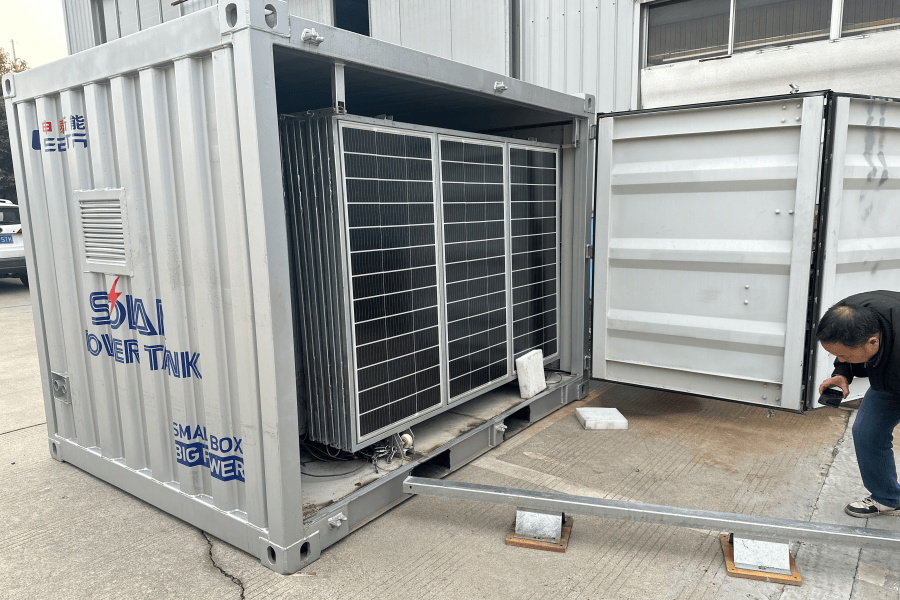
Table of Contents
- The Silent Problem on Every Modern Construction Site
- Why "Temporary" Power is a Permanent Headache
- Enter the Rapid-Deployment 1MWh Solar Storage Solution
- A Real-World Comparison: What You're Actually Evaluating
- From the Field: A Case Study in North Rhine-Westphalia
- Key Tech Made Simple: C-rate, Thermal Runaway, and LCOE
- Making the Right Choice for Your Site
The Silent Problem on Every Modern Construction Site
Let's be honest. If you're managing a large-scale construction project in the US or Europe right now, two things are keeping you up at night: budget overruns and schedule delays. And there's a silent, diesel-guzzling culprit contributing to both C your temporary power setup. We've all been there. The constant hum (and smell) of generators, the vulnerability of the grid connection, the sheer logistics of fueling, and the carbon footprint that's increasingly under scrutiny from clients and regulators. Honestly, it feels like we're powering a 21st-century project with 20th-century tools.
Why "Temporary" Power is a Permanent Headache
The problem isn't just the noise or the fumes. It's the economics and the risk. I've seen this firsthand on site: a generator goes down, and suddenly your entire concrete pour is on hold. The cost? Thousands per hour in idle labor and equipment. According to the National Renewable Energy Laboratory (NREL), construction sites can waste up to 30% of their fuel costs on generator inefficiency and idle time. That's pure burn.
Then there's the carbon angle. With the EU's Green Deal and stringent local emissions laws in US states like California, that diesel generator isn't just a cost center; it's a compliance liability. You're not just building a structure; you're managing an environmental footprint. Agitation? Think of it as a three-pronged fork: unpredictable costs, operational fragility, and mounting sustainability pressure. It's a model that's ripe for disruption.
Enter the Rapid-Deployment 1MWh Solar Storage Solution
This is where the concept of containerized, rapid-deployment Battery Energy Storage Systems (BESS) paired with solar really shines. We're not talking about a science experiment. We're talking about a practical, plug-and-play power plant that shows up on trailers, is commissioned in days (not months), and silently powers your site. The core value proposition is shifting from "power at any cost" to "predictable, clean, and resilient power on demand." For a 1MWh unit, you're looking at a system that can handle the peak loads of heavy equipment, cranes, and site offices, while the integrated solar canopy cuts your fuel draw during the day.
A Real-World Comparison: What You're Actually Evaluating
When you compare options for a 1MWh rapid-deployment system, you're not just comparing price tags. You're comparing risk profiles and operational philosophies. Here's a breakdown I often walk clients through:
| Evaluation Factor | Traditional Diesel Generators | Basic Grid Connection | Integrated 1MWh Solar + Storage (Like Highjoule's Mobile Power Unit) |
|---|---|---|---|
| Deployment Speed | Fast (but multiple units needed) | Very Slow (permits, utility delays) | Very Fast (pre-integrated, containerized) |
| Fuel/Energy Cost Predictability | Low (tied to volatile diesel prices) | Moderate (but with demand charges) | High (sun is free, known cycle cost) |
| Emissions & Compliance | High (local NOx/CO2 rules apply) | Depends on grid mix | Very Low (enables net-zero site goals) |
| Noise & Community Impact | Very High | Low | Silent |
| Key Standard for Safety | UL 2200 (Generator Std.) | N/A | UL 9540/ IEC 62933 (BESS System Std.) |
The real shift is in the Levelized Cost of Energy (LCOE) over the project lifecycle. While the capex might be higher, the elimination of fuel and significant OPM savings flip the script. You're buying certainty.
From the Field: A Case Study in North Rhine-Westphalia
Let me give you a concrete example. Last year, we deployed a Highjoule Mobile Power Unit (a 1.2MWh BESS with a 300kWp solar canopy) for a logistics hub construction site near Dortmund. The challenge? The grid connection was 9 months out, and local ordinances limited diesel run-hours due to noise.
The system was delivered on a Tuesday. By Thursday, it was powered on, handling the site's peak load of ~800kW. The solar input cut diesel generator runtime by over 60% during daylight hours. The project manager's feedback wasn't about the tech specs; it was about the peace of mind. "I stopped worrying about power," he said. That's the ultimate metric. The system was certified to IEC 62933 and VDE-AR-E 2510-50, which made local permitting smoother C a crucial detail in the EU.

Key Tech Made Simple: C-rate, Thermal Runaway, and LCOE
I know these terms get thrown around. Let me demystify them from a site engineer's perspective:
- C-rate (like the "sprint speed" of a battery): A 1MWh battery with a 1C rating can deliver 1MW of power for 1 hour. For construction sites with cranes, you might need a high C-rate (like 1.5C) to handle that sudden, massive draw without tripping. A low C-rate system is cheaper but might stumble when you need it most.
- Thermal Management (the "climate control"): This is non-negotiable. Lithium-ion batteries hate extreme heat. A poorly managed system degrades fast and, in worst-case scenarios, can lead to thermal runaway. Our units use liquid cooling C it's like having a precision air-conditioning system for every cell block. This is why UL 9540 safety testing is your bible; it rigorously tests for this.
- LCOE (Your "True Cost per kWh"): Don't just look at the lease price. Calculate: (Total System Cost + Fuel + Maintenance - Residual Value) / Total kWh consumed over the project. With solar charging, your "fuel" cost plummets. That's where the real savings, often 25-40%, materialize.
Making the Right Choice for Your Site
So, when you're comparing these rapid-deployment solutions, look beyond the brochure. Ask: Is the system built to the UL 9540 (US) or IEC 62933 (EU) system standard? What's the real C-rate under site conditions? How is thermal management handled? Does the provider offer local service and commissioning to get you online in days?
At Highjoule, we designed our Mobile Power Unit around these exact questions. It's not just a battery in a box; it's a guaranteed power partner for your project's duration. The goal is to make your temporary power so reliable, so clean, and so predictable that you forget it's there C freeing you to focus on what you build, not how you power it.
What's the single biggest power-related delay you've faced on a recent project?
Tags: Construction Site Power UL Standard BESS Rapid Deployment Energy Storage Solar Plus Storage IEC Standard
Author
James Zhang
20+ years agricultural energy storage engineer / Highjoule CTO