
Step-by-Step Installation of a 1MWh LFP Solar Storage System for Data Center Backup
Table of Contents
- The Real Problem: Data Center Resilience Isn't Just About Uptime
- Why This Hurts: The Hidden Costs of "Set-and-Forget" Backup
- The LFP Solution: More Than Just a Chemistry Choice
- The Installation Walkthrough: A 1MWh System from Truck to Turnkey
- Expert Deep Dive: The Three Things We Always Get Right On Site
- Beyond the Install: The Real Value Unlocks After Day One
The Real Problem: Data Center Resilience Isn't Just About Uptime
Honestly, when most folks think about data center backup power, they picture a roaring diesel generator kicking in during a blackout. Job done, right? Not quite. Having spent two decades on sites from Silicon Valley to Frankfurt, I've seen the real pain point evolve. It's no longer just about having backup; it's about the total cost of resilience and the operational drag of maintaining legacy systems. The traditional "genset-centric" model is becoming a financial and sustainability liability. You're not just paying for fuel; you're paying for regulatory compliance, noise mitigation, testing cycles, and a whole lot of anxiety about future carbon taxes.
Why This Hurts: The Hidden Costs of "Set-and-Forget" Backup
Let's agitate that pain a bit. A report by the National Renewable Energy Laboratory (NREL) highlights that for critical facilities, fuel supply chain risks and emission regulations are escalating operational expenses unpredictably. On the ground, this means your CFO sees a volatile, opaque cost line. Worse, that giant diesel asset sits idle 99.9% of the time - a terrible return on capital. I've been in data center yards where the space taken up by fuel tanks and generator pads could have been monetized for IT load. The model is broken. It's reactive, expensive, and frankly, out of step with corporate sustainability goals that are now board-level priorities.
The LFP Solution: More Than Just a Chemistry Choice
This is where a step-by-step, well-planned installation of a Lithium Iron Phosphate (LFP) solar-coupled storage system shifts the paradigm. It's not just a "battery." It's a dual-purpose asset. During normal operations, it's actively managing your energy costs by storing solar or off-peak grid power, reducing demand charges - a direct, calculable ROI. During an outage, it's your seamless, silent, and instantaneous first line of defense. The LFP chemistry is the star here for a critical reason: its inherent thermal and chemical stability. For a data center manager sleeping easier at night, that translates to a significantly lower fire risk compared to other lithium-ion chemistries, which is why it's become the de-facto standard for stationary storage in the US and EU. It's the workhorse we trust on site.

The Installation Walkthrough: A 1MWh System from Truck to Turnkey
Let me walk you through how a typical 1MWh LFP system, like the ones we deploy at Highjoule, goes in. This isn't theory; it's our Tuesday.
Phase 1: Pre-Site & Foundation (Weeks 1-2)
- Civil & Electrical Review: We don't just show up with a container. We verify slab specs (load-bearing, flatness), conduit routes, and utility interconnection points. Everything is pre-aligned with local AHJ (Authority Having Jurisdiction) and national codes like NFPA 855 and IEC 62933.
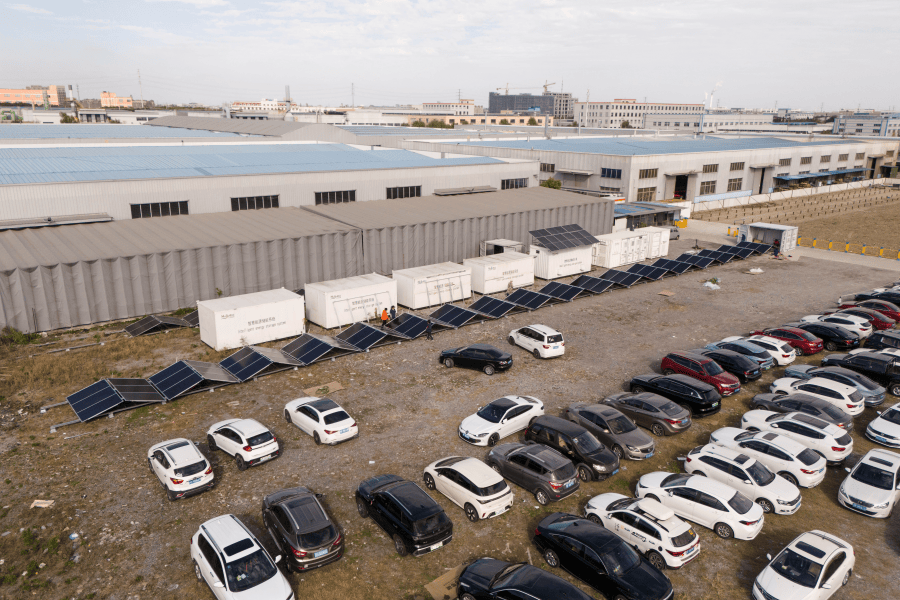
- Delivery & Placement: The containerized BESS arrives as a pre-integrated, factory-tested unit. Using a crane, we place it on the prepped foundation. The beauty? The core system footprint for 1MWh is often smaller than a couple of parking spots.
Phase 2: Mechanical & Electrical Integration (Week 3)
- Rough-In: We connect the medium-voltage or low-voltage AC cabling from the utility/generator switchgear and the DC cabling from the solar PV array.
- Thermal System Hookup: This is critical. We connect the BESS's closed-loop liquid cooling system to your site's cooling water supply or a dedicated dry cooler. Proper flow and temperature are verified immediately.
- Communications: A fiber or hardened Ethernet link is run to your facility SCADA/BMS. This isn't an afterthought - it's the nervous system for monitoring and control.
Phase 3: Commissioning & Acceptance (Week 4)
- Functional Checks: Every string, every inverter, every sensor is tested. Battery management system (BMS) talks to energy management system (EMS).
- Grid Simulation Tests: We simulate grid failures and validate the transfer sequence: Grid down -> BESS picks up critical load seamlessly -> Genset starts (if needed) -> BESS synchronizes and potentially hands off or supports load. This sequence is practiced until it's flawless.
- Safety Sign-Off: Final review with the site's safety officer and electrical inspector. All our systems carry UL 9540 and UL 9540A certifications, which is the gold standard in North America and widely recognized in Europe, making this sign-off process smoother.
A Quick Case in Point
We deployed a 1.2MWh LFP system for a colocation data center in Northern Germany. Their challenge? Grid constraints limited expansion, and diesel backup was politically untenable. The solution integrated their existing rooftop solar. The BESS now shaves their peak grid draw daily, and provides 45 minutes of full-facility ride-through, long enough for their slower-spinning combined heat and power (CHP) units to come online for longer outages. The finance team loved the capex offset by energy arbitrage, the operations team loved the automated testing, and the sustainability lead got a win for the annual report.
Expert Deep Dive: The Three Things We Always Get Right On Site
Here's the insider knowledge - the stuff that separates a smooth project from a problematic one.
- Thermal Management is Everything: People obsess over battery cycle life on paper. On site, I obsess over heat. An LFP battery's longevity is directly tied to its operating temperature. We design for a tight range (20-25C is ideal). That's why our systems use precise liquid cooling, not just fans. A well-managed thermal system can add years to the asset's life, directly improving your Levelized Cost of Storage (LCOS) - the metric that truly matters.
- C-Rate is a Tool, Not a Bragging Right: You might see specs for high charge/discharge rates (C-rates). For data center backup, a moderate, sustained C-rate (like 0.5C to 1C) is actually better. It puts less stress on the cells, extends life, and simplifies thermal management. The system is sized for your runtime needs, not for peak power bragging rights. We right-size the power conversion (PCS) to match.
- Cybersecurity from the Ground Up: This BESS is a node on your network. We implement hardware firewalls, encrypted communications, and role-based access controls as standard. It's not a bolt-on; it's baked into the EMS. Meeting standards like IEEE 2030.5 is just the starting point.
Beyond the Install: The Real Value Unlocks After Day One
The installation is just the birthday. The life of the asset is where the partnership matters. A Highjoule system comes with performance monitoring that gives you a dashboard view of state-of-charge, round-trip efficiency, and savings generated. More importantly, our service team uses that same data for predictive maintenance - flagging a potential cooling pump issue before it becomes an alarm. This proactive stance, backed by local spare parts stocking in key regions, is what turns a capital expense into a reliable, profit-contributing asset for 15+ years.
So, when you're evaluating backup power, are you looking for just a replacement, or a resilience upgrade that pays for itself? Let's chat about what your site's specific load profile and tariff structure look like. The first coffee is on me.
Tags: UL Standard BESS LCOE Renewable Energy LFP Battery US Europe Market Data Center Backup Energy Storage Installation
Author
James Zhang
20+ years agricultural energy storage engineer / Highjoule CTO