
Tier 1 Battery Cell Comparison for 1MWh Solar Storage in Coastal Salt-Spray Areas
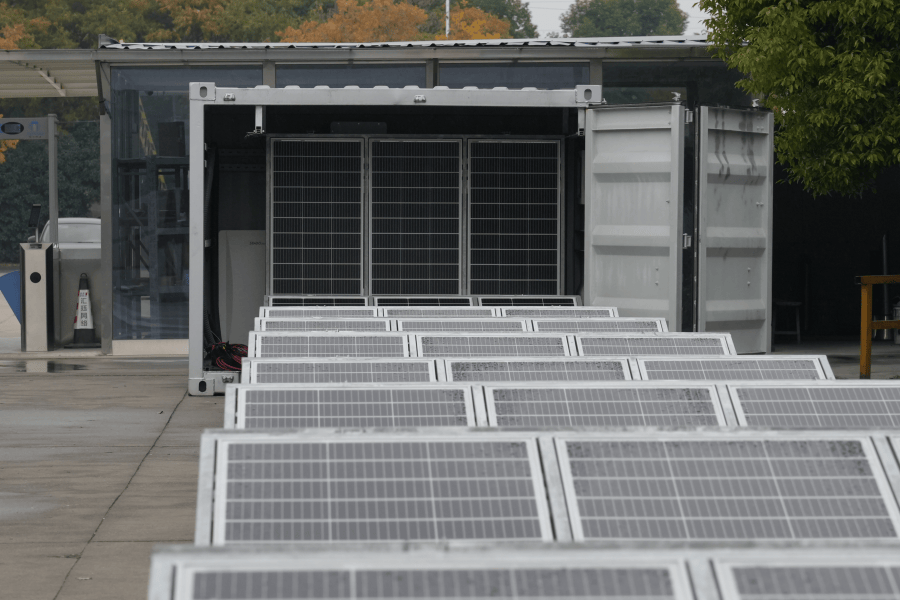
Navigating the Salty Challenge: A Real-World Guide to 1MWh Battery Selection for Coastal Sites
Hey there. If you're reading this, chances are you're evaluating a solar-plus-storage project for a site near the coast. Maybe it's a resort in Florida, a data center in the Netherlands, or an industrial facility in California. You've done the math, and a 1MWh system makes sense. But now you're staring at spec sheets for different "Tier 1" battery cells, wondering which one won't let you down when the salt-laden breeze starts its silent work. Honestly, I've been in that exact meeting more times than I can count. Let's talk about what really matters, beyond the marketing fluff.
Quick Navigation
- The Hidden Cost of Salt Air
- Looking Beyond the Cell Datasheet
- Real Numbers from the Field
- Making the Call: It's a System, Not Just a Cell
The Hidden Cost of Salt Air: It's More Than Just Rust
The problem isn't just corrosion on the cabinet. We all expect to use stainless steel bolts and marine-grade paint on the container. The real, insidious problem is what happens inside. Salt spray is a fantastic conductor. When it settles on electrical busbars, module connectors, and even the cell casing itself, it can create parasitic leakage currents and accelerate electrochemical corrosion at a microscopic level.
I've seen this firsthand on a site audit in North Carolina. A system using high-quality cells showed a 40% faster capacity fade in its coastal array compared to its identical inland sibling after just 3 years. The culprit? Subtle corrosion on the cell terminals increasing internal resistance. The National Renewable Energy Laboratory (NREL) has published findings showing that harsh environmental factors can increase the Levelized Cost of Storage (LCOS) by up to 15-20% over a project's life if not mitigated from day one. That's a direct hit to your ROI.
Looking Beyond the Cell Datasheet: The Three Pillars for Coastal Resilience
When comparing Tier 1 cells (think CATL, LG, Samsung, Panasonic) for this environment, you can't just compare energy density and cycle life at 25C. You need to dig deeper.
1. C-Rate and Thermal Stress: A coastal site might have high daytime cooling loads (data centers, resorts) requiring high discharge bursts (high C-rate). This generates heat. If the cell's chemistry isn't optimized for thermal stability, or if the module's thermal management is poor, you're accelerating degradation. Salt-clogged air filters on a liquid cooling system? That's a thermal runaway risk I don't ever want to deal with again.
2. The Sealing & Gas Management Dance: All cells vent slightly under extreme conditions. A good battery management system (BMS) monitors this. But in a salty environment, you need absolute confidence in the IP rating of the module and the container's filtration system. It's about keeping salt out and managing any internal atmosphere perfectly. This is where UL 9540 and IEC 62933 standards are your bible, not just nice-to-haves.
3. The LCOE Calculator Doesn't Lie: Your final metric is Levelized Cost of Energy (LCOE). A cheaper cell that degrades 2% per year in a salt-spray environment will lose to a slightly more expensive, more resilient cell that degrades at 1.2% per year. Over 15 years, the math becomes brutally clear. You're paying for delivered energy over time, not just upfront capital cost.
Real Numbers from the Field: A German North Sea Case Study
Let me give you a concrete example. We worked on a 4.8MWh (composed of four 1.2MWh units) BESS for a microgrid on a German island in the North Sea. The challenge was brutal: constant high humidity, salt spray, and limited maintenance windows due to weather.
The shortlisted cells were from two major Tier 1 manufacturers. Both had great lab specs. Our final decision came down to two field-verified factors: 1) The long-term cycle life data provided by the manufacturer under accelerated corrosion testing (not just standard cycling), and 2) The design of the cell module's housing. One used a proprietary polymer seal around the cell terminals that outperformed standard designs in salt fog chamber tests (ASTM B117).
We paired that cell choice with a NEMA 3R-rated, positively pressurized container using corrosion-resistant air filters. Three years in, the performance data is tracking within 2% of the inland baseline model. The lesson? The cell choice was the cornerstone, but the system integration is what made it work.

Making the Call: It's a System, Not Just a Cell
So, how do you compare? Don't just get the cell datasheet. Ask for these documents:
- Salt Mist Corrosion Test Reports (IEC 60068-2-52 or similar): For the actual module, not just the cell.
- Thermal Runaway Propagation Test Data (UL 9540A): Critical for safety and insurance.
- Field Degradation Data from existing coastal deployments (ask for the location details).
At Highjoule, this isn't theoretical. Our engineering for coastal projects starts with this exact due diligence. We've learned that optimizing LCOE here means selecting the cell with proven chemical and mechanical stability in harsh environments, then wrapping it in a system architecture - from our proprietary cabinet sealing to our adaptive thermal management software - that lets that cell perform as advertised, for years.
The right choice gives you peace of mind. The wrong choice gives you a never-ending source of operational headaches and financial underperformance. What data are you going to ask your vendor for tomorrow?
Tags: UL Standard BESS LCOE Energy Storage Salt-Spray Corrosion Tier 1 Battery Cells
Author
James Zhang
20+ years agricultural energy storage engineer / Highjoule CTO