
Mobile BESS Solutions for Rural & Remote Power: A Case Study from the Philippines
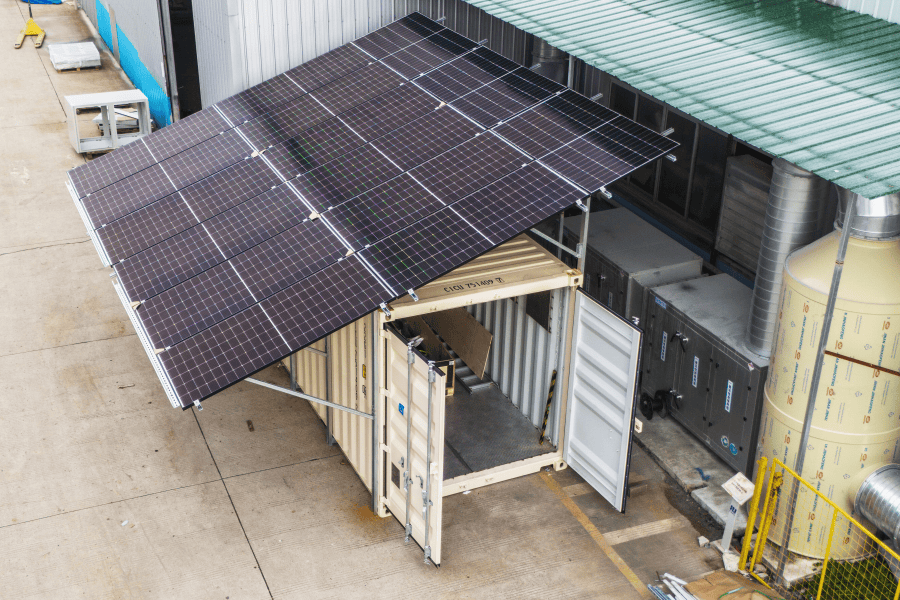
Table of Contents
- The Real Grid Challenge Isn't Always in the City
- The Hidden Cost of "Remote" and "Backup" Power
- A Solution on Wheels: Learning from the Field in the Philippines
- What's Inside? It's More Than Just a Battery in a Box
- Making It Work for Your Site: The Highjoule Approach
The Real Grid Challenge Isn't Always in the City
Hey there. If you're reading this, you're probably thinking about energy resilience, maybe for a remote worksite, a community microgrid, or as backup for a critical facility. Honestly, most of the flashy headlines are about giant grid-scale batteries, and that's great. But I've spent over two decades on the ground, and some of the toughest, most impactful problems are off the main grid. Places where the "last mile" of power is the most expensive and complex to build.
Think about a mining operation in Nevada, a seasonal agricultural processing plant in rural Spain, or a telecom tower in the Scottish Highlands. The common thread? You need reliable, clean power, but running a permanent transmission line is economically impossible, and diesel generators are noisy, polluting, and getting incredibly expensive to operate. The International Energy Agency (IEA) notes that over 700 million people globally still lack electricity access, primarily in rural areas. While our focus in developed markets is different, the core engineering challenge of delivering robust, cost-effective power to isolated locations is strikingly similar.
The Hidden Cost of "Remote" and "Backup" Power
Let's agitate this a bit. The traditional answer - diesel gensets - creates a vicious cycle. Fuel logistics are a nightmare, costs are volatile, and the carbon footprint is a non-starter for most ESG goals. I've seen sites where fuel delivery costs alone dwarf the price of the fuel itself. Then there's maintenance. Another thing I've seen firsthand on site: a generator failing during a critical period because scheduled maintenance was delayed by weather. The downtime cost was astronomical.
Permanent BESS installations are fantastic, but they require major civil works, lengthy permitting, and a huge upfront capital commitment. What if your power needs are temporary, like a 2-year construction project? Or what if you need a rapid, temporary boost for grid support during peak seasons? The rigidity of fixed infrastructure becomes its own kind of problem. You need flexibility. You need a solution that can be deployed as fast as the problem appears.
A Solution on Wheels: Learning from the Field in the Philippines
This is where our real-world case from the Philippines becomes incredibly relevant. We were tasked with providing immediate, clean electrification to a remote island community. The goal was to bridge the gap before a permanent hybrid solar microgrid could be built. The solution? A 215kWh cabinet-style mobile power container.
This wasn't a prototype. It was a fully engineered, plug-and-play system. It arrived on a flatbed truck, was positioned on a simple concrete pad, and was connected to the local distribution network and a temporary solar array. Within days, it was providing stable, daily cycling power, displacing thousands of liters of diesel. The "mobile" aspect was key - once the permanent system is online, this container can be trucked to the next community in need, maximizing asset utilization and minimizing stranded costs.

The principles here translate directly to markets like the US and Europe. Consider a project in Texas where a temporary mobile BESS was used to provide peak shaving for a natural gas compressor station during a grid congestion alert, avoiding massive demand charges. Or in Germany, where a mobile unit provided black-start capability and grid stability services during the decommissioning of a coal plant. The use case is versatile: temporary power, disaster relief, backup for data centers during transformer upgrades, or even testing the economics of storage before committing to a fixed system.
What's Inside? It's More Than Just a Battery in a Box
As an engineer, the "container" is just the shell. The magic - and the safety - is inside. Any mobile solution must be built to a higher standard than a stationary one. It faces vibration, potential impacts, and wider temperature swings.
Let's break down two critical aspects in simple terms:
- Thermal Management: This is the unsung hero. Batteries generate heat when they work hard. In a sealed container in, say, Arizona heat, that heat needs to go somewhere. A poor thermal design (just a simple fan) leads to rapid degradation and, honestly, a serious safety risk. Our systems use liquid cooling that's become the industry benchmark for high-density energy storage. It keeps cells at their optimal temperature, extending life and maintaining performance, which directly lowers your Levelized Cost of Energy (LCOE) - the total cost of owning and operating the asset over its lifetime.
- C-rate & System Design: You'll hear "C-rate" thrown around. It simply means how fast you can charge or discharge the battery relative to its total capacity. A 1C rate means you can discharge the full capacity in one hour. For a 215kWh unit, that's 215kW of power. For backup power, you might need a high C-rate for short, intense bursts. For daily solar shifting, a lower C-rate is more economical. The design must match the duty cycle. Our mobile containers are engineered with this flexibility, using UL 9540 and IEC 62619 listed cells and systems, so you know the core safety certification is baked in.

Making It Work for Your Site: The Highjoule Approach
So, how do you apply this? At Highjoule, our experience from projects like the one in the Philippines informs everything we do for commercial and industrial clients in North America and Europe. It's not about selling a box. It's about understanding your specific pain point.
Are you facing demand charge escalation from your utility? A mobile BESS can be deployed to test a peak-shaving strategy before you build a permanent system. Is your community microgrid reliant on an aging generator? A container can integrate as a spinning reserve, smoothing the transition to renewables. Our focus is on delivering a solution that meets the rigorous local standards you require - UL, IEC, IEEE - while being simple enough to deploy quickly. We handle the integration, the grid interconnection support, and the ongoing performance monitoring, so your team isn't managing unfamiliar technology.
The future of energy isn't just about building more static infrastructure; it's about building smart, flexible, and movable assets. What's the one site in your portfolio where reliable power is both critical and challenging to deliver?
Tags: Mobile BESS UL Standard BESS LCOE Europe US Market Renewable Energy Rural Electrification Mobile Power Container
Author
James Zhang
20+ years agricultural energy storage engineer / Highjoule CTO