
Environmental Impact of 215kWh Cabinet & 1MWh Solar Storage for Agricultural Irrigation
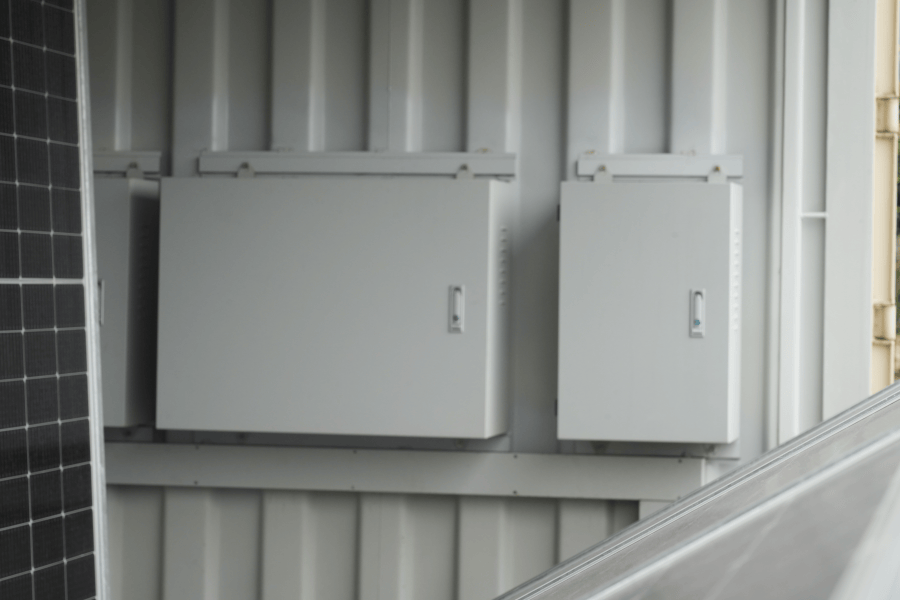
Table of Contents
- The Real Problem: It's Not Just About Going Green
- The Cost of Doing Nothing
- A Practical Solution: Rethinking Storage for the Farm
- Case in Point: California's Central Valley
- Beneath the Hood: What Makes a System Truly Sustainable?
- Looking Beyond the Box: The Full Picture
The Real Problem: It's Not Just About Going Green
Let's be honest. When we talk about solar and storage for agriculture, especially in markets like the US Midwest or Southern Europe, the conversation usually starts with energy independence or hedging against utility rate hikes. And that's valid. But there's a deeper, often unspoken driver that's becoming impossible to ignore: the direct environmental footprint of the solution itself.
I've been on enough sites to see it firsthand. A farm wants to do the right thing - deploy solar to power its massive irrigation pumps. They pair it with a large, containerized 1MWh+ storage system to shift that solar energy into the evening. On paper, the carbon math looks great. But then you look at the site prep: the concrete pad for a 40-foot container, the long cable runs, the balance-of-system components. You think about the system's round-trip efficiency and how much solar energy is essentially lost as heat. Suddenly, the "green" solution has its own not-so-green shadow. The real pain point isn't just adopting renewables; it's ensuring the enabling technology doesn't undermine its own environmental goals.
The Cost of Doing Nothing
This isn't an academic concern. The International Energy Agency (IEA) has highlighted that to meet net-zero goals, global solar PV capacity needs to grow exponentially, and with it, storage. But if every storage deployment is resource-heavy, we're solving one problem while subtly creating another. For a farm manager, the agitation comes in two forms.
First, operational inefficiency. A poorly optimized system with, say, inadequate thermal management will degrade faster. That means more frequent battery replacements - a significant environmental and financial cost. Second, and this is crucial for compliance in Europe and certain US states, is the full lifecycle impact. Regulators and consumers are starting to look at embodied carbon in equipment. A bulky, inefficient system could complicate sustainability reporting or even access to green incentives.
Honestly, the biggest cost might be reputational. Imagine promoting your farm as solar-powered, only for a savvy customer or investor to question the efficiency and footprint of your storage setup.
A Practical Solution: Rethinking Storage for the Farm
This is where the concept of modular, right-sized systems like a distributed network of 215kWh cabinet-based units, scaling to an aggregate 1MWh, changes the game. Instead of one monolithic container, think of multiple, smaller, UL 9540-certified cabinets placed strategically near irrigation clusters or solar arrays.
The environmental impact is profoundly positive. Site disturbance is minimal - no massive concrete pours. Cable losses are reduced because power is generated and stored closer to the point of use. And from a lifecycle perspective, modularity means scalability and easier maintenance. You're not replacing a 1MWh block in 15 years; you might cycle out a single 215kWh cabinet with minimal waste. This approach directly tackles the hidden footprint of large-scale solar storage for irrigation.

Case in Point: California's Central Valley
Let me give you a real example. We worked with a large almond grower in California's Central Valley last year. Their challenge was classic: high irrigation loads, expensive peak-time grid power, and a strong desire to use their abundant solar resource more effectively. Their initial plan was a single 1.2MWh container.
After a site survey, we proposed a different architecture: four of our 250kWh (similar scale to 215kWh) UL/IEC-compliant cabinet systems, placed near four major pump stations. The results? They saved about 30% on balance-of-system costs (less trenching, simpler wiring). The system's overall round-trip efficiency increased because we minimized DC/AC conversion losses. But the win they didn't initially anticipate was in sustainability reporting. The distributed design reduced the project's embodied carbon footprint by an estimated 18% compared to the containerized alternative, a figure their marketing team now proudly shares.
Beneath the Hood: What Makes a System Truly Sustainable?
As a technical guy, I need to geek out for a second on why design matters so much for environmental impact. It boils down to three things we obsess over at Highjoule:
- Thermal Management: This is the silent killer of efficiency and longevity. A cabinet using passive or mediocre cooling will force the battery to work harder, losing more energy as waste heat. Our systems use advanced, low-power active cooling to maintain an optimal temperature band. This squeezes out every possible kilowatt-hour from the solar input, meaning you need fewer panels and less storage capacity for the same irrigation output. That's a direct material and land-use saving.
- Optimal C-Rate: You'll hear specs like 1C or 0.5C. For irrigation, you rarely need to discharge the entire battery in one hour (a 1C rate). A gentler, lower C-rate discharge, say over 2-4 hours, is easier on the battery chemistry. It dramatically extends cycle life - sometimes doubling it. A longer-lasting battery is the most sustainable battery, full stop.
- Levelized Cost of Storage (LCOS): This is the metric that ties it all together - capex, opex, efficiency, lifespan. A system with great thermal management and a right-sized C-rate might have a slightly higher upfront cost but a significantly lower LCOS. For the farmer, that means a faster, more durable return on investment. For the planet, it means less frequent manufacturing and disposal cycles.

Looking Beyond the Box: The Full Picture
So, when evaluating the Environmental Impact of 215kWh Cabinet 1MWh Solar Storage for Agricultural Irrigation, the question isn't just "does it store solar energy?" It's: How efficiently does it store and release that energy over its entire life? How much auxiliary energy does it consume? How does its physical deployment affect the land?
The future of agri-energy isn't about bolting the heaviest possible industrial solution onto a farm. It's about intelligent, distributed, and efficient architecture that respects both the farmer's bottom line and the land itself. The right storage solution should feel like a natural part of the agricultural ecosystem, not an industrial intrusion.
What's the one inefficiency in your current irrigation or energy setup that keeps you up at night? Is it peak demand charges, water pumping schedules, or maybe just the complexity of it all?
Tags: UL Standard BESS LCOE Agricultural Irrigation Renewable Energy Solar Storage Environmental Impact
Author
James Zhang
20+ years agricultural energy storage engineer / Highjoule CTO