
Rapid Deployment Lithium Battery Storage Containers: Benefits and Drawbacks for Grid Operators
Contents
- The Grid's New Reality: More Volatility, Less Time
- The Allure and Anxiety of "Rapid Deployment"
- The Tangible Benefits: Why Utilities Are Making the Move
- The Critical Drawbacks You Can't Afford to Overlook
- Finding the Right Balance: An On-the-Ground Perspective
- What to Ask Your Storage Provider (Before You Sign)
The Grid's New Reality: More Volatility, Less Time
Let's be honest. If you're managing a public utility grid in North America or Europe right now, you're being pulled in three directions at once. You need to integrate a massive influx of intermittent renewables - the IEA forecasts global renewable capacity to grow by a whopping 2,400 GW between 2023-2027. You have aging infrastructure that needs support, and you're facing regulatory and public pressure to ensure reliability, all while keeping costs in check. The traditional timeline for a new substation or a peaker plant? It just doesn't cut it anymore. The problem isn't just needing storage; it's needing storage now, not three years from now.
The Allure and Anxiety of "Rapid Deployment"
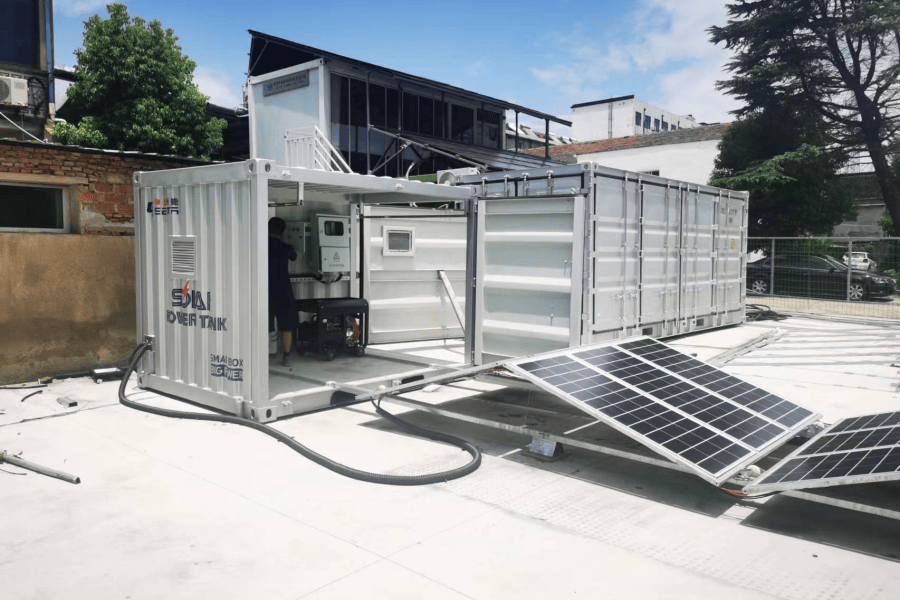
This is where the rapid deployment lithium battery storage container enters the chat, promising a near off-the-shelf solution. I've been on sites from California to Bavaria, and the appeal is undeniable. It feels like a lifeline. But over two decades in this field, I've learned that "rapid" can mean different things. Is it rapid to commission? Yes. But is it rapidly designed, rapidly sourced, or rapidly integrated into a complex grid ecosystem without proper due diligence? That's where I've seen the heartburn happen. The industry's excitement is real, but so is the anxiety among seasoned engineers who've had to fix what was hastily installed.

The Tangible Benefits: Why Utilities Are Making the Move
Let's break down the real, on-the-ground benefits that make these containers a compelling choice.
- Time-to-Grid is Unmatched: Honestly, this is the biggest seller. A pre-assembled, factory-tested container can be deployed in months, not years. I saw a project in West Texas where a utility needed to defer a costly transmission upgrade. They had a 20 MW/40 MWh container system online and providing congestion relief within 9 months of the contract signing. That speed is a game-changer for addressing immediate grid constraints.
- Predictable Costing and Scalability: The modular "building block" approach makes budgeting and planning simpler. You know the capex per container block. Need more capacity? Order another block. This modularity was key for a microgrid project we supported in Northern Germany, where they started with a base system and expanded in phases as their wind generation grew.
- Factory-Quality Control: When the battery racks, thermal management systems, and power conversion are integrated and tested in a controlled factory environment, you generally get higher reliability than with extensive field assembly. It minimizes "site effects" on critical components.
- Simplified Siting and Permitting (to a point): Because they are self-contained units with clear footprints, they can sometimes streamline the permitting process, especially if the entire system is certified to recognized standards like UL 9540 or IEC 62933. This is a major benefit in jurisdictions with strict fire codes.
The Critical Drawbacks You Can't Afford to Overlook
Now, let's have that coffee-chat reality check. The drawbacks aren't deal-breakers, but ignoring them is.
- The "Black Box" Dilemma: Some providers treat the container as a sealed unit. What's the cell chemistry's exact C-rate and degradation curve? How does the thermal management system really perform in your specific climate? I've seen systems where the cooling was undersized for a desert environment, leading to premature throttling. You need transparency into the core technology.
- Site-Specific Integration Challenges: The container might be plug-and-play, but the grid connection is not. You still need significant civil work, medium-voltage switchgear, and protection relay coordination. The "rapid" part can create a false sense that the overall interconnection process is equally fast - it often isn't.
- Long-Term Service and Technology Lock-in: You're often tied to the OEM for service and spare parts. What's their 20-year operational plan? Will they support this specific battery management system (BMS) firmware in a decade? This is a critical question for an asset with a 15-20 year design life.
- Optimization Limitations: A standard container might not be optimized for your specific use case stack. Is it for frequency regulation (requiring high C-rates) or solar shifting (requiring long duration)? A one-size-fits-all design can lead to a higher Levelized Cost of Storage (LCOS) over its lifetime because you're paying for capability you don't use, or lacking capability you need.
Safety: The Non-Negotiable
This deserves its own section. A container concentrates a huge amount of energy in one spot. The industry standard has moved beyond just having a fire suppression system. At Highjoule, for instance, our designs incorporate passive fire barriers between modules, continuous gas detection, and thermal runaway venting that directs energy away from critical pathways - all aligned with the latest NFPA 855 and UL 9540A test methodologies. The drawback? Not all containers on the market have this level of ingrained safety design, and specifying it post-procurement is costly.

Finding the Right Balance: An On-the-Ground Perspective
So, how do you navigate this? The key is to leverage the benefits while mitigating the drawbacks through smart procurement and partnership. It's not just buying a box; it's choosing a long-term grid asset partner.
Take a project we're involved with in the UK. The utility needed rapid frequency response. Instead of just accepting a standard container spec, they partnered with us to tailor the C-rate and cycling profile of the lithium-ion cells to exactly match the National Grid's requirements. This optimized the battery's lifespan and economics. The container gave us the speed, but the collaborative engineering gave them the optimized asset.
The other piece is Localized Support. A container shipped from overseas with no local service network is a liability. We made the decision years ago to establish regional technical hubs in both the EU and US. This means when a client in Arizona has a question about their thermal management performance during a heatwave, they're talking to an engineer in their timezone who understands desert conditions, not waiting 12 hours for an email reply.
What to Ask Your Storage Provider (Before You Sign)
Cut through the marketing. Here are the questions I'd ask, based on what I've seen go right and wrong on site:
| Area | Key Questions to Ask |
|---|---|
| Technology & Transparency | "Can you provide third-party test reports (UL 9540A) for this exact configuration?" "What is the specific cell chemistry and its expected degradation curve at my project's duty cycle?" |
| Performance & Optimization | "How is the BESS software configured to stack my revenue streams (e.g., energy arbitrage + frequency regulation)?" "Is the C-rate and thermal system designed for my worst-case ambient temperature?" |
| Long-Term Value | "What is your guaranteed availability rate over 10 years, and what's the service model to support it?" "How do you ensure spare part availability for the full asset life?" |
| Standards & Safety | "Does the full system, not just components, carry UL/IEC certification for my market?" "Beyond suppression, what passive and active safety systems are built-in to prevent and isolate thermal events?" |
The rapid deployment container is a powerful tool. It's reshaping how we think about grid infrastructure. But its ultimate value isn't determined when it's unloaded from the truck. It's determined by the foresight, engineering, and partnership you put into selecting and integrating it. The right partner doesn't just sell you a container; they help you navigate these very trade-offs to build a resilient, cost-effective grid asset for the decades ahead.
What's the most pressing grid constraint you're looking to solve with storage in the next 18 months?
Tags: UL Standard BESS LCOE Rapid Deployment Energy Storage Utility Grid IEEE
Author
James Zhang
20+ years agricultural energy storage engineer / Highjoule CTO