
Utility-Scale BESS for EV Charging: Solving Corrosion & Cost in Harsh Climates
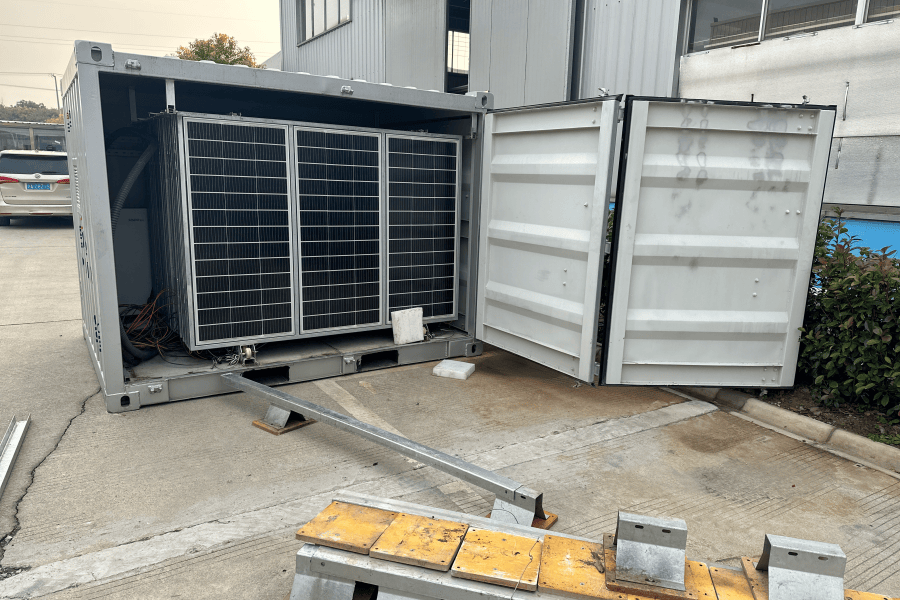
The Silent Killer of Your EV Charging BESS: It's Not the Battery Chemistry
Honestly, when most folks think about deploying a big battery system for their EV charging hub, the first things that come to mind are capacity, power output, maybe the brand of the cells. I get it. But after 20-plus years on sites from the humid Gulf Coast to salty Nordic shorelines, I've learned the hard way: the thing that quietly derails your ROI and uptime often isn't inside the battery rack. It's the environment eating your container alive. Let's talk about that over a (virtual) coffee.
In This Article
- The Real Problem: Your BESS is a Big, Expensive Sensor
- Why It Hurts: Corrosion Isn't Just a Cosmetic Issue
- The Solution: Building a BESS Like a Submarine
- Case in Point: A Coastal California Charging Depot
- Beyond the Box: The Tech That Actually Matters
The Real Problem: Your BESS is a Big, Expensive Sensor
Here's the phenomenon I see constantly in the US and Europe. Utilities and charge point operators are racing to install high-power charging (HPC) stations. These are power-hungry beasts. A single site can demand a multi-megawatt grid connection. To avoid crippling demand charges and provide backup during peak times, pairing it with a 5MWh utility-scale Battery Energy Storage System (BESS) is a no-brainer. The business case looks solid on paper.
But the paper doesn't show the salt fog, the industrial pollutants, or the constant humidity. A standard ISO container, even a ruggedized one, isn't designed for a 15-20 year life in these conditions. I've seen firsthand on site how minor corrosion on busbars can increase electrical resistance, leading to hotspots. Or how moisture ingress triggers false alarms in the environmental monitoring system, causing unnecessary shutdowns. Your BESS becomes a hyper-sensitive environmental sensor, and every alarm costs you money and reliability.
Why It Hurts: Corrosion Isn't Just a Cosmetic Issue
Let's agitate that pain point a bit. This isn't about a rusty door hinge. According to a NREL report on BESS failures, environmental factors and interconnection issues are among the top contributors to performance degradation and safety incidents. Corrosion is a slow, systemic failure.
- Safety & Compliance Risk: Corroded electrical components can lead to arc flashes. Inspection bodies following UL 9540 and IEC 62933 standards will flag this, potentially grounding your entire asset until it's remediated. That's revenue zeroed out.
- LCOE Killer: The Levelized Cost of Storage (LCOS) calculation assumes a certain lifespan and cycle count. Premature failure or derating of the system due to enclosure decay directly inflates your real-world LCOS. A 10% loss in effective capacity over 5 years can completely trash your financial model.
- Operational Nightmare: Imagine dispatching a technician not for a complex battery management software update, but to sand and repaint a corroded section, or worse, replace a $20,000 HVAC unit that failed because its coils were eaten by salt.
The Solution: Building a BESS Like a Submarine
This is where specifications stop being boring paperwork and become your project's insurance policy. The approach we took with the Technical Specification of C5-M Anti-corrosion 5MWh Utility-scale BESS for EV Charging Stations at Highjoule was simple: treat the entire enclosure as a critical, active component of the battery system, not a passive box.
It starts with the substrate. We move beyond standard galvanized steel to hot-dip galvanized steel with a multi-layer coating system - a powder coat followed by a specialized marine-grade anti-corrosion paint. All fasteners are stainless steel. Gaskets and seals are rated for extreme temperature cycling and UV resistance. Honestly, it's overkill for a warehouse. But for a site near Rotterdam's port or a windy, salty corridor in Texas? It's the baseline for survival.
The spec also mandates positive pressure inside the container maintained by filtered air intake. This keeps dust and particulate matter out, creating a cleaner internal environment for the battery racks and power conversion systems. It's a small detail with a massive impact on longevity.
Case in Point: A Coastal California Charging Depot
Let me give you a real example. We deployed a system based on this C5-M anti-corrosion philosophy for a fleet charging depot about a mile from the Pacific Ocean in California. The challenge was triple-threat: salt air, frequent fog, and high ambient temperatures in the summer.
The standard offering from another vendor proposed a basic container with a desiccant breather. Our team, drawing from experience in offshore oil & gas applications, insisted on the full C5-M package. The upfront cost was marginally higher. Fast forward 18 months: our system has had zero environmental-related alarms or maintenance interventions. A competing BESS unit at a similar site down the road, however, has already undergone a costly replacement of its air conditioning condensers and emergency patching of early-stage corrosion on cable entry points. The client's operational team sleeps better at night, and the asset owner's financial projections are holding firm.

Beyond the Box: The Tech That Actually Matters Inside
Of course, the box is just the armor. What's inside needs to perform flawlessly for the EV charging use case. This is where the spec gets really interesting for a technical decision-maker.
C-rate Isn't Just a Number: For EV charging, you need high power (a high C-rate) to dump energy into cars quickly during a demand spike. But a constantly high C-rate stresses batteries and increases heat. Our C5-M spec defines a system C-rate that's optimized, not maximized. We pair cells with a slightly more conservative peak C-rate but couple them with an industry-leading thermal management system. This means the BESS can deliver its promised 2MW+ for charging buses or trucks repeatedly, without thermal throttling, because we're keeping the cells in their absolute sweet spot for temperature. Think of it as a marathon runner with a perfect cooling vest, not a sprinter who overheats after 100 meters.
Thermal Management = Lifespan: I can't stress this enough. Liquid cooling vs. air cooling is a big debate. For a 5MWh system in a variable climate, we've settled on a forced-air cooling with a closed-loop, refrigerant-based system for the container's HVAC. Why? It gives us precise, independent control of the air temperature and humidity inside the box, regardless of whether it's -10C or 40C outside. The battery racks themselves have a dedicated, sealed air-cooling plenum. This separation of duties is key. It prevents moisture from the outside air from ever contacting the cells directly, and it allows us to maintain an even temperature gradient across all modules, which is the holy grail for preventing premature cell aging.
The LCOE Optimization Loop: All of this - the anti-corrosion, the smart C-rate, the precision cooling - feeds into one goal: lowering the real-world Levelized Cost of Energy (LCOE) for the owner. A system that lasts 20 years with < 10% degradation delivers far more cycles and energy over its life than one that dies at 12 years. Our service team's predictive maintenance platform, which we include with major deployments, monitors all these parameters (enclosure pressure, internal humidity, cell delta-T) to give clients a heads-up long before a small issue becomes a costly outage. That's the kind of partnership that makes a spreadsheet projection a reality.

So, the next time you're evaluating a Technical Specification of C5-M Anti-corrosion 5MWh Utility-scale BESS for EV Charging Stations, don't just skip to the battery datasheet. Look at the pages on enclosure protection, environmental ratings, and thermal control strategy. That's where the true durability - and your return on investment - is defined. What's the most aggressive environmental challenge your next site is facing?
Tags: UL Standard BESS LCOE Utility-Scale Energy Storage Corrosion Protection EV Charging North America Europe
Author
James Zhang
20+ years agricultural energy storage engineer / Highjoule CTO