
Environmental Impact of 215kWh Cabinet ESS for Data Center Backup Power
Contents
- The Silent Energy Hunger: Data Centers and Their Backup Dilemma
- Beyond the Diesel Genset: The Real Environmental Cost
- A Modular Answer: The 215kWh Cabinet Industrial ESS Container
- The LCOE Game-Changer for Backup Power
- Thermal Management: The Unsung Hero of Sustainability
- A Case in Point: Deploying in the Real World
- Your Next Step: A Practical Consideration
The Silent Energy Hunger: Data Centers and Their Backup Dilemma
Let's be honest, if you're managing a data center in the US or Europe right now, you're juggling a few critical pressures. The demand for uptime is absolute - we all know that. But honestly, the pressure to address your facility's environmental footprint has moved from a "nice-to-have" to a core operational and even a marketing imperative. I've sat in those meetings. The conversation inevitably circles to backup power. For decades, the answer was simple: rows of diesel generators, tested monthly, ready to roar to life. But that model is facing serious scrutiny, and not just from regulators.
Beyond the Diesel Genset: The Real Environmental Cost
The problem with the traditional model isn't just the noise or the fuel logistics. It's the environmental impact profile that's becoming untenable. We're talking about local emissions (NOx, particulate matter) during testing and actual outages, the carbon footprint of diesel fuel, and the sheer inefficiency of keeping massive engines on standby for 99% of their life. The International Energy Agency (IEA) has highlighted that data centers are significant and growing consumers of global electricity, and their backup strategies are part of that equation.
I've seen this firsthand on site. A client in Germany was facing tightening local air quality regulations. Their monthly generator test was becoming a logistical headache, requiring permits and causing community relations friction. The cost wasn't just in diesel; it was in compliance overhead and social license to operate. This is the real aggravation: your critical backup system starts to feel like a liability, both financially and reputationally.
A Modular Answer: The 215kWh Cabinet Industrial ESS Container
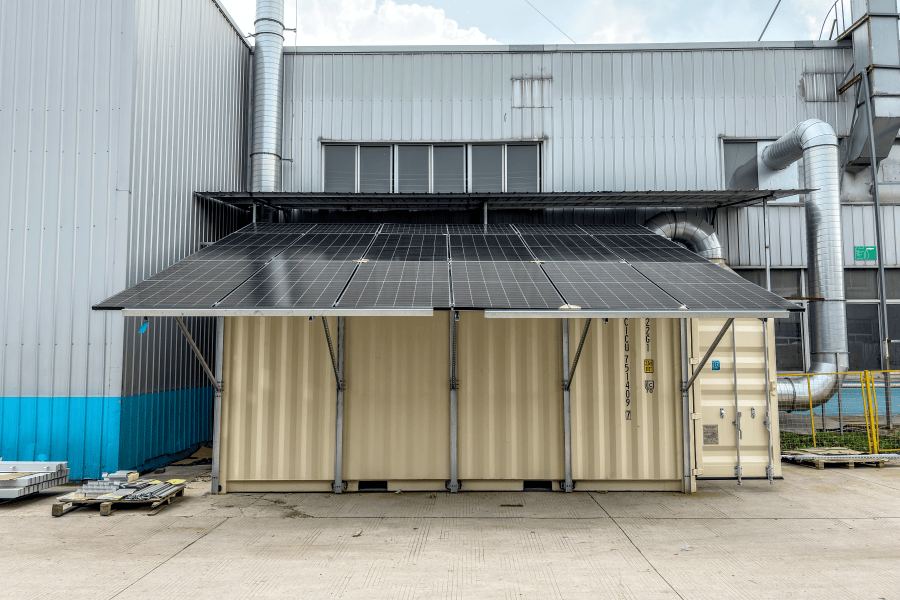
So, what's the solution? This is where the Environmental Impact of 215kWh Cabinet Industrial ESS Container for Data Center Backup Power becomes a fascinating conversation. We're not talking about replacing the entire backup system. We're talking about a smarter, cleaner first line of defense. Think of these cabinet-style containers as a "bridge" battery. They're designed to handle short-duration outages, voltage sags, or the critical 30-60 seconds it takes for your generators to synchronize and pick up the full load.
The environmental benefit is immediate and multi-layered. First, zero local emissions. Silence. Second, it drastically reduces the runtime - and thus the fuel burn and wear-and-tear - of your diesel gensets. At Highjoule, when we design these systems, we start with a deep dive into your load profiles. That 215kWh capacity isn't arbitrary; it's sized to carry your critical IT load for a specific, engineered duration, allowing for a cleaner, more controlled transition. And because it's a cabinetized, containerized solution, it's pre-engineered, tested to UL 9540 and IEC 62933 standards, and drops into your existing infrastructure with minimal site disruption.

The LCOE Game-Changer for Backup Power
Now, let's get a bit technical in a simple way. You might hear "LCOE" or Levelized Cost of Electricity thrown around for solar farms. But it's a crucial lens for backup power too. Traditionally, the cost of backup was purely a capex (the generators) plus an operational risk. With a Battery Energy Storage System (BESS), you introduce a new variable: cyclical use and long-term value.
A 215kWh cabinet isn't just sitting there. With the right power conversion system, it can participate in grid services (where market structures allow, like in Texas or parts of the EU), providing frequency regulation and earning revenue. Or, it can be used for peak shaving during normal operation, cutting your demand charges. This active use spreads the capital cost over multiple value streams, improving its effective LCOE. Suddenly, your backup asset is also a daily financial asset, offsetting its own cost and improving the overall economics of your data center. The environmental impact is tied directly to a better business case.
Thermal Management: The Key to Longevity (And Lower Impact)
Here's a piece of hard-won, on-site wisdom: the sustainability of a BESS is directly linked to its battery life. And the single biggest factor in battery life, besides how you charge and discharge it (that's the C-rate), is temperature. A poorly managed thermal system leads to degradation, premature replacement, and a bigger environmental footprint from manufacturing and waste.
Our approach at Highjoule is to design for the real world. A cabinet in Arizona faces different challenges than one in Norway. That's why our 215kWh container solutions use an advanced, passive-cooling-first thermal management system that minimizes parasitic load (the energy needed to cool itself). We specify cells with a lower inherent C-rate for backup applications - they don't need to discharge in 15 minutes, they need to be rock-solid reliable for years. This careful matching of technology to duty cycle is what ensures the system delivers on its promised environmental impact reduction over a 15+ year life.
A Case in Point: Deploying in the Real World
Let me give you a concrete example from a project we completed last year in Northern California. The client was a colocation provider needing to enhance redundancy for a specific high-value hall. Their challenge was space (they had a tight yard) and a corporate mandate to reduce scope 1 emissions.
We deployed two of our 215kWh cabinet-style ESS units. They were configured for a 75kW critical load for about 2.5 hours, covering >99% of their historical grid interruption events. The environmental impact benefits were quantified from day one:
- Eliminated 24+ hours of annual diesel generator runtime (from monthly testing and short outages).
- Enabled participation in the utility's Demand Response program, generating ancillary revenue.
- The UL 9540 certification streamlined the permitting process with the local Authority Having Jurisdiction (AHJ).
The system integrated seamlessly with their existing power distribution and generator controls. The feedback? The facility manager loved the quiet, the finance team appreciated the new demand charge savings, and the sustainability officer got a solid win for the annual report.

Your Next Step: A Practical Consideration
So, where does this leave you? The move towards sustainable backup isn't an all-or-nothing revolution. It's a pragmatic evolution. The Environmental Impact of 215kWh Cabinet Industrial ESS Container for Data Center Backup Power is really about adding a layer of intelligence and cleanliness to a mission-critical system.
The next time you walk your data center yard and hear those generators test, ask yourself: Could a modular, silent battery cabinet handle the first critical minutes? Could it turn a cost center into a value stream? What would that do for your operational resilience and your environmental goals? The technology is here, it's proven, and it's ready to work. The question is, when does it make sense for your site?
Tags: UL Standard BESS LCOE Industrial Energy Storage Renewable Energy Data Center Backup
Author
James Zhang
20+ years agricultural energy storage engineer / Highjoule CTO