
Mining Energy Solution: 20ft Solar Container BESS for Remote Operations
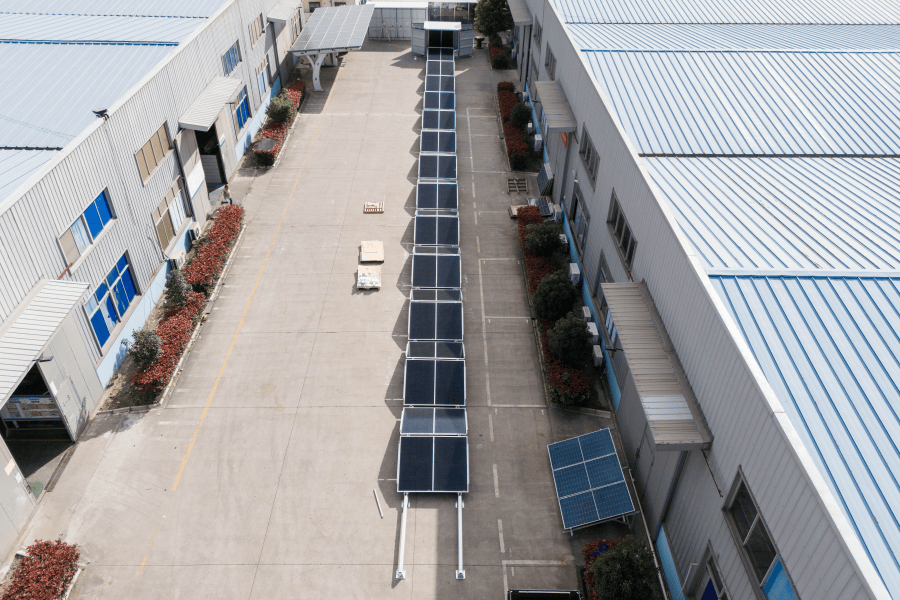
Table of Contents
- The Remote Power Problem Isn't Just About Location
- Why This Hurts Your Bottom Line: More Than Just Fuel Costs
- A Real-World Solution: The 20ft Container That Changed the Game in Mauritania
- Beyond the Box: The Tech That Makes This Work for You
- Making It Work Here: Standards, Safety, and Service
The Remote Power Problem Isn't Just About Location
Let's be honest. If you're managing operations in mining, agriculture, or even a large industrial facility on the edge of the grid, you know the drill. The further you are from a stable utility connection, the more your power strategy becomes a constant headache. It's not just remote mines in the Sahara; I've seen this same core challenge on sites in Nevada and rural parts of Scandinavia. The problem isn't simply distance - it's the triad of cost, reliability, and complexity that comes with generating your own power 24/7.
For decades, the default answer has been diesel gensets. They're a known quantity, you can get them anywhere, and they get the job done. But that's like saying a horse and cart gets the job done for transportation. It does, but at what ongoing cost and operational hassle? You're tied to a volatile fuel supply chain, you've got constant maintenance, noise, and emissions to deal with - which, let's face it, is becoming a bigger deal for corporate ESG goals every single quarter.
Why This Hurts Your Bottom Line: More Than Just Fuel Costs
We need to talk about Levelized Cost of Energy (LCOE). It's a fancy term, but it just means the total lifetime cost of your power setup, divided by the total energy you get out of it. With diesel, your LCOE is sky-high and unpredictable. The International Energy Agency (IEA) has consistently highlighted the price volatility of diesel as a major risk for off-grid industries. Every time the geopolitical winds shift, your operational budget gets hit.
But the pain goes deeper. What happens during a critical process when a genset fails? Downtime in mining isn't just an inconvenience; it's revenue literally stopping. I was on a site in Chile where a genset overhaul caused a 36-hour stoppage. The cost ran into six figures, easy. Then there's the human cost - the stress on your team managing this complex, noisy, dirty system. It's a drain on efficiency before you even start your core work.
A Real-World Solution: The 20ft Container That Changed the Game in Mauritania
This brings me to a project that really cemented my thinking. We were approached by a mining operator in Mauritania. Their site was brutally remote, relying entirely on a massive bank of diesel generators. Their goals were clear: cut fuel costs by at least 40%, create a buffer for critical operations during genset maintenance, and integrate their existing but underutilized solar array to actually use the free sun beating down on them.
The solution was a pre-integrated, plug-and-play 20ft High Cube Solar Container. This wasn't a science experiment; it was a rugged, industrial-grade product. Inside that one shipping container was a 1 MWh battery energy storage system (BESS), a bi-directional inverter, a sophisticated thermal management system, and all the control electronics - pre-assembled, pre-tested, and ready to ship.
Here's how it worked on the ground: The container was dropped in, connected to the existing solar PV field and the main power distribution board. The control system we configured makes all the decisions. During the day, solar power runs the operations and charges the batteries. At night, or when a cloud passes, the BESS seamlessly takes over. The diesel gensets now only kick in as a last resort or for peak shaving during exceptionally heavy loads. The result? They're hitting their 40% fuel reduction target, the site is quieter and cleaner, and they have a rock-solid backup for their most sensitive processes. Honestly, seeing the relief on the site manager's face when he realized he could schedule genset maintenance without worrying about a blackout was worth it.

Beyond the Box: The Tech That Makes This Work for You
Now, you might think, "That's great for the desert, but my site has freezing winters" or "I need to discharge power fast for heavy machinery." This is where the engineering inside the box matters more than the box itself.
Let's break down two key terms simply:
- C-rate: Think of this as the "speed" of the battery. A 1C rate means a 1 MWh battery can discharge 1 MW of power in one hour. For industrial equipment with high starting surges, you might need a higher C-rate. Our systems are designed with this in mind, using LiFePO4 chemistry that balances energy density with safe power delivery.
- Thermal Management: This is non-negotiable. Batteries hate extreme temperatures. A cheap system will overheat in Arizona or underperform in Norway, degrading rapidly. Our containers have an independent, closed-loop liquid cooling/heating system. It keeps the battery cells at their perfect 25C (3C) sweet spot year-round, whether it's +50C or -30C outside. This is what gives you a 10+ year lifespan.
This is what optimizes LCOE. By protecting the asset and letting it perform optimally, your cost per kWh over 10 years plummets compared to a system that degrades in 5.
Making It Work Here: Standards, Safety, and Service
For my clients in North America and Europe, the Mauritania case study is a proof of concept, but the deployment details change. The core value - reducing LCOE and increasing resilience - is the same. What matters here is compliance and local support.
Any system you deploy must be built to UL 9540 (the standard for BESS safety in the US) and IEC 62619 (the international standard for industrial battery systems). These aren't just stickers. They mean the system's electrical safety, battery management, and fire containment have been rigorously tested by a third party. It's your insurance policy. Our containerized solutions are designed and certified to these from the ground up.
Let me give you a local example. We have a similar, though smaller, containerized BESS supporting a microgrid at a lumber processing plant in Oregon. Their challenge was grid instability during storms and high demand charges. The 20ft container, tied to their rooftop solar, now provides "islanding" capability during outages and shaves their peak demand from the utility. The permitting process was smooth because we walked the local authority having jurisdiction (AHJ) through every UL certification and our detailed installation manual.
That's the final piece: you're not buying just a container. You're buying the expertise to site it, connect it, and maintain it. We provide the full system modeling, the interconnection drawings, and remote monitoring. My phone is on if the site manager has a question. Because at the end of the day, this technology is about removing headaches, not creating new ones.
So, what's the biggest energy reliability risk your remote or grid-edge operation is facing next quarter?
Tags: UL Standard BESS LCOE Europe US Market Solar Container Renewable Energy IEEE Standards Mining Energy
Author
James Zhang
20+ years agricultural energy storage engineer / Highjoule CTO