
Step-by-Step Installation of 215kWh Cabinet BESS for Remote Island Microgrids
Table of Contents
- The Real Problem: It's More Than Just "Plug and Play"
- Why It Hurts: The High Cost of Getting It Wrong
- A Better Way: The 215kWh Cabinet BESS as a Turnkey Solution
- The Highjoule 215kWh Cabinet: A Step-by-Step Field Guide
- Case in Point: Lessons from a Greek Island Project
- Expert Insights: What the Spec Sheets Don't Tell You
- Your Next Step: From Blueprint to Reality
The Real Problem: It's More Than Just "Plug and Play"
Honestly, when we talk about deploying Battery Energy Storage Systems (BESS) for remote island microgrids, the glossy brochures and high-level proposals make it look simple. But having spent over two decades on sites from the Caribbean to the Scottish Isles, I can tell you the gap between theory and reality is wide. The core challenge isn't just buying a battery; it's the installation and integration in logistically tough, environmentally sensitive, and standards-strict locations. You're not just installing a system; you're building a critical piece of community infrastructure, often with a skeleton crew and limited access to spare parts.
Why It Hurts: The High Cost of Getting It Wrong
This isn't just an inconvenience. A botched or delayed installation directly hits the two things every project owner cares about: safety and the Levelized Cost of Energy (LCOE). I've seen firsthand how unclear installation protocols can lead to thermal management issues down the line, or how a component that's not fully UL 9540 or IEC 62933 compliant can derail the entire project approval with local authorities. According to the National Renewable Energy Laboratory (NREL), integration and "soft costs" can account for up to 30% of a standalone storage project's total cost - a percentage that skyrockets on remote islands. Every extra day of complex on-site assembly is a day of lost diesel displacement revenue and continued operational vulnerability.
A Better Way: The 215kWh Cabinet BESS as a Turnkey Solution
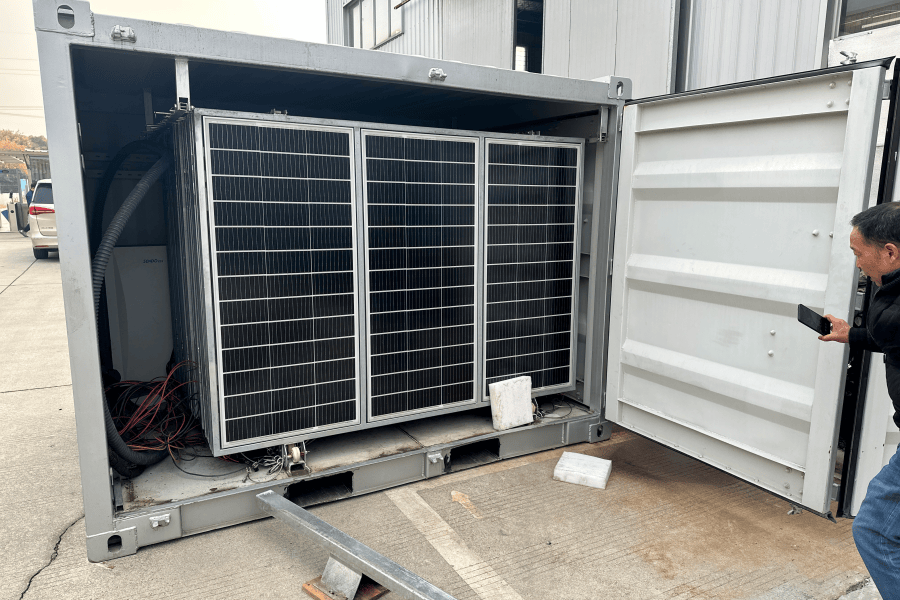
This is precisely why we at Highjoule Technologies have evolved our approach. For remote microgrids, we focus on the Step-by-step Installation of a pre-integrated 215kWh Cabinet BESS. The philosophy is simple: maximize factory assembly and testing under controlled conditions (where our UL and IEC certifications are rigorously validated), and minimize complex, error-prone work in the field. The goal is to deliver a system that arrives on-site more as a "power plant in a box," ready for streamlined connection. This isn't just about selling hardware; it's about delivering predictable, lower-LCOE outcomes.
The Highjoule 215kWh Cabinet: A Step-by-Step Field Guide
Let's break down what this actually looks like on the ground. This isn't generic advice; it's the distilled process from our deployment playbook.
Phase 1: Pre-Site Delivery (The Most Critical Phase)
Foundation & Pad: We send exact specs for a simple, reinforced concrete pad. No exotic foundations needed. The key is levelness and proper cable conduit stubs pre-installed.
Utility Interconnection: All paperwork and protection settings (like IEEE 1547-2018 for grid interconnection) are pre-coordinated. The cabinet's power conversion system is pre-configured to the agreed specs.
Local Crew Briefing: We conduct a virtual walkthrough with the local team weeks in advance, so they know exactly what to expect when the container arrives.
Phase 2: Site Installation (The "Plug and Play" We Actually Mean)
Day 1 - Placement & Grounding: The cabinet is craned onto the pad. The first and most crucial physical task is establishing a robust, low-resistance grounding grid - non-negotiable for safety and surge protection.
Day 2 - DC & AC Hookup: Our pre-terminated, labeled DC cables from the battery racks to the PCS are connected. Similarly, the AC cabling to the step-up transformer or main distribution panel is bolted on. This is where factory pre-testing pays off - no splicing or custom cable fabrication on-site.
Day 3 - Commissioning & Grid Sync: We power up the system, run automated self-checks, and initiate the first controlled grid synchronization or microgrid black-start procedure. A local operator is side-by-side with our remote support engineer for this.
Case in Point: Lessons from a Greek Island Project
Let me give you a real example. We deployed a 430kWh system (two of our 215kWh cabinets) on a Greek island in the Aegean. The challenge was classic: replace diesel generation hours, stabilize the grid for new solar PV, and do it all within a tight tourist season window. The local team had electrical experience but no specific BESS training.
The step-by-step framework was a lifesaver. Because the cabinets were 95% pre-assembled, the on-site work was reduced to foundation, placement, and connection. The most valuable step? The pre-delivery briefing. When the cabinets arrived, the local crew already knew the lifting points, the cable entry locations, and the sequence. The system was synchronized and operational within 72 hours of the hardware arriving on the dock. The key takeaway? Empowering the local team with a clear, sequential plan is as important as the technology itself.
Expert Insights: What the Spec Sheets Don't Tell You
Here's the insider perspective I share with every client considering an island microgrid BESS:
- C-rate Isn't Just a Performance Number: A cabinet like ours is often rated at a 0.5C or 1C discharge. For an island, this is crucial. A higher effective C-rate means the system can respond faster to load spikes (like a hotel turning on all its ACs) or a sudden drop in solar generation, preventing frequency excursions. It means you might need fewer kWh of storage to achieve the same grid-stabilizing effect.
- Thermal Management is a Long-Term Health Issue: In a hot island climate, a passive thermal design just won't cut it. Our cabinet uses an active liquid cooling system that maintains optimal cell temperature. Why does this matter on-site? It eliminates the need for a massive, space-consuming external HVAC unit and significantly reduces the maintenance burden and auxiliary power draw (which comes right off your LCOE).
- The LCOE Winner is Determined During Installation: A smooth, fast installation reduces capital outlay (less labor cost) and gets the system earning revenue faster by offsetting diesel fuel. More importantly, a robust, well-grounded, and properly commissioned system has a longer, healthier life with fewer failures. That longevity is the single biggest driver of a low LCOE. Every shortcut during installation risks shortening that life.
Your Next Step: From Blueprint to Reality
If you're planning a remote microgrid project, the question isn't just "which battery?" but "how does it get from the port to producing power, reliably and safely?" The step-by-step methodology is the bridge. At Highjoule, we've baked this philosophy into our 215kWh cabinet design and our global service protocol. We provide the clear roadmap, the pre-validated components, and the on-call expert support to make the on-site phase as predictable as possible.
What's the one logistical hurdle in your next project that keeps you up at night? Is it the local crew readiness, the permitting maze, or the interconnection timeline? Let's talk specifics - over a virtual coffee, of course.
Tags: UL Standard LCOE Renewable Energy Battery Energy Storage System Island Microgrid BESS Installation Remote Power
Author
James Zhang
20+ years agricultural energy storage engineer / Highjoule CTO